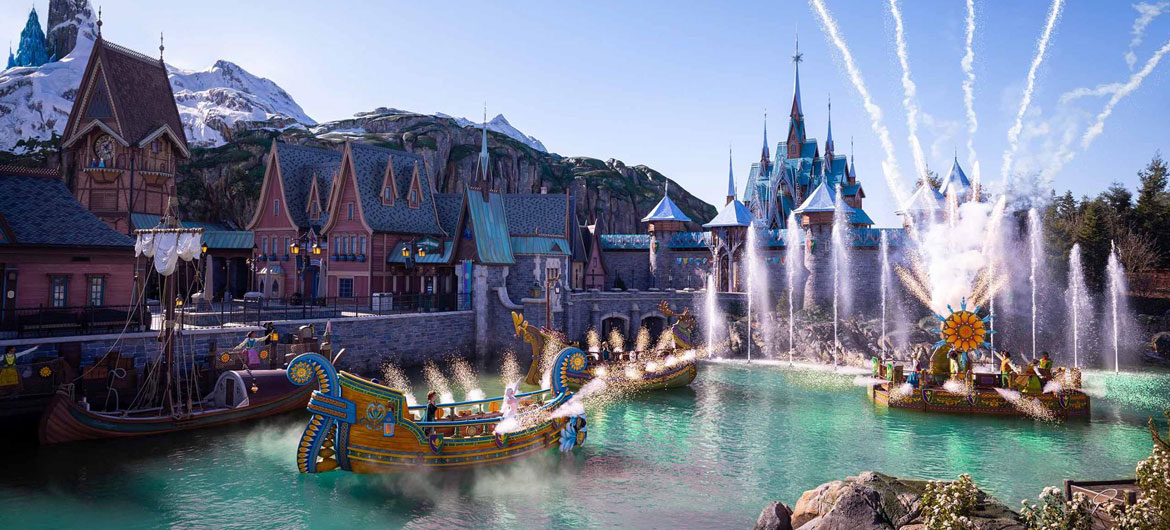
“Oh my god, this is unbelievable. … I can’t believe this. It’s real. This is Arendelle,” “Frozen” writer and director Jennifer Lee exclaims, and chokes up, as she tours the “World of Frozen” before its world premiere at Disneyland Paris in 2026.
The scene arrives at the middle of “Worldbuilders,” the hour-long documentary, which began streaming on Disney+ on Aug. 20. The show comes from Leslie Iwerks, granddaughter of Ub Iwerks, the Disney animator who co-created Mickey Mouse. Her previous Disney documentaries “The Imagineering Story” and “Disneyland Handcrafted” were rich and terrific. This new film, as beautiful as all her work, unfortunately has too many cliches about creativity, and too few detailed stories explaining how things are created.
The focus of “Worldbuilders” is how major Disney movie directors dream up fictional worlds–and the company’s strategy to turn their films into immersive theme park areas. Featured are Lee; Pete Docter, co-writer of Pixar’s groundbreaking first feature-length computer-animated film “Toy Story” in 1995 and co-writer and co-director of 2001’s “Monsters Inc.”; James Cameron, creator of 2009’s “Avatar“; Jon Favreau and Dave Filoni of “Star Wars”; Jared Bush, co-writer and co-director of 2016’s “Zootopia“; and Kevin Feige of the Marvel “Cinematic Universe.” Also appearing are Bob Iger, the longtime CEO of The Walt Disney Company, who acquired Pixar, “Star Wars,” Marvel and 20th Century Fox for Disney, and his successor Josh D’Amaro, who took over in March 2026. Imagineers, Disney’s park designers, are absent.
As Iwerks tells it, there’s no greater honor for these creators of beloved, hugely (financially) successful films than having “Avatar” or “Zootopia” or “Guardians of the Galaxy” turned into Disney park experiences, places you can actually walk and taste and touch.
“And what I learned about these filmmakers is that they were all inspired by the Disney parks,” Iwerks recently told The Los Angeles Times. The documentary shows them visiting the parks as kids. “Unbeknownst to me, they had a spark going to a Disney theme park. It excited their imagination.”
“Worldbuilders” doesn’t note it, but the projects featured exemplify a major shift in theme park design over the past two decades. When Disneyland opened in California in 1955, Walt Disney’s major innovation in amusement park design was to turn them into tangible stage sets, but built to last and inviting you to explore them in full three-dimensions. Disneyland was divided into themed zones–Adventureland’s tropical adventures, Tomorrowland’s space-age futures, Fantasyland’s medieval fair tents in which “Snow White,” “Peter Pan” and other Disney animated films came to life.
The generational turning point in theme park design probably arrived when “The Wizarding World of Harry Potter – Hogsmeade” premiered at Disney rival Universal Studios parks in Orlando, Florida, in 2010. Instead of one area providing an umbrella for many different stories, the whole area was devoted solely to Harry Potter’s world, from Hogwarts Castle, which housed one of the few rides, to Honeydukes candy shop. You were transported into the world of the movies, not for just one ride, but down a whole street of shops. You could even visit The Three Broomsticks pub to taste Butterbeer. More square footage seemed to be devoted to shopping, eating and immersive design, less to rides. Park attendance reportedly increased that year by 36 percent.
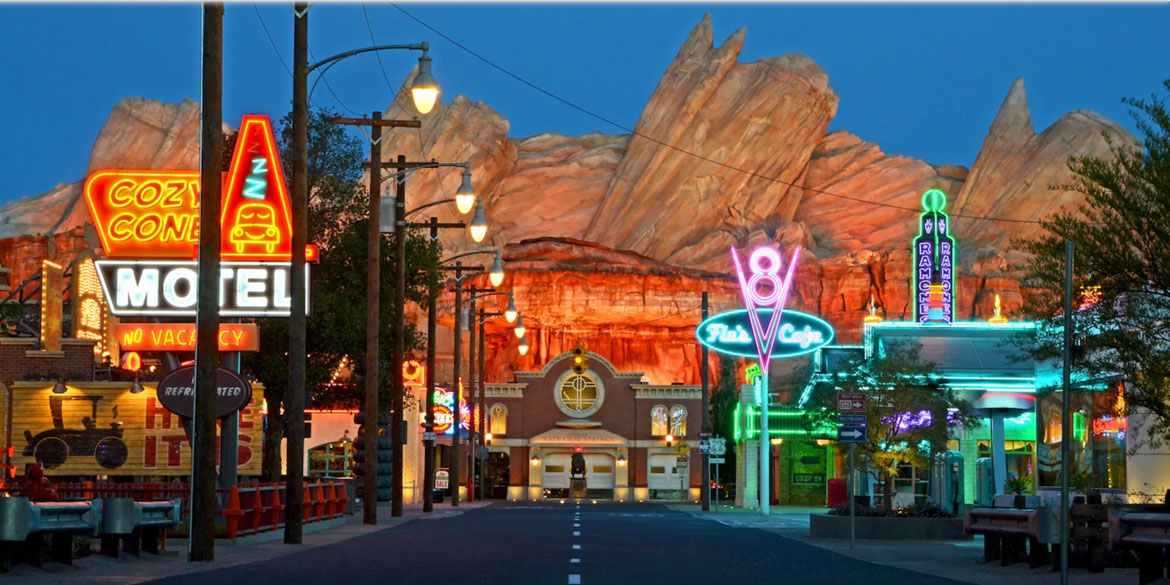
Disney followed with “Cars Land” in 2012, where you stroll the Pixar film’s Radiator Springs at Disney California Adventure in California; “Pandora – The World of Avatar” at Animal Kingdom in Florida in 2017, where you wander among the bioluminescent plants and floating mountains of James Cameron’s films; and “Star Wars: Galaxy’s Edge” at both California and Florida in 2019, a vast warren of space gangster restaurants and shopping stalls, culminating at a life-sized Millennium Falcon (an icon for one of the area’s few rides).
Last year, Universal continued the design/business rivalry as it debuted “Epic Universe,” offering separate areas devoted to “Super Nintendo World,” “How To Train Your Dragon,” and more Harry Potter, including a magical 1920s Paris of the “Fantastic Beasts” films and a 1990s British Ministry of Magic.
“You truly feel like you’re walking into the story. It’s incredible,” Lee breathlessly says in “Worldbuilders” while touring the Scandinavian-styled harborfront shops, castle, and icy mountain of Disney Paris’s Arendelle. “For all of us who grew up with Disney and got see what Walt created, you just wanted to touch it. That’s all. You didn’t even think about contributing to it in any way that it’s going to be part of something that he started.”
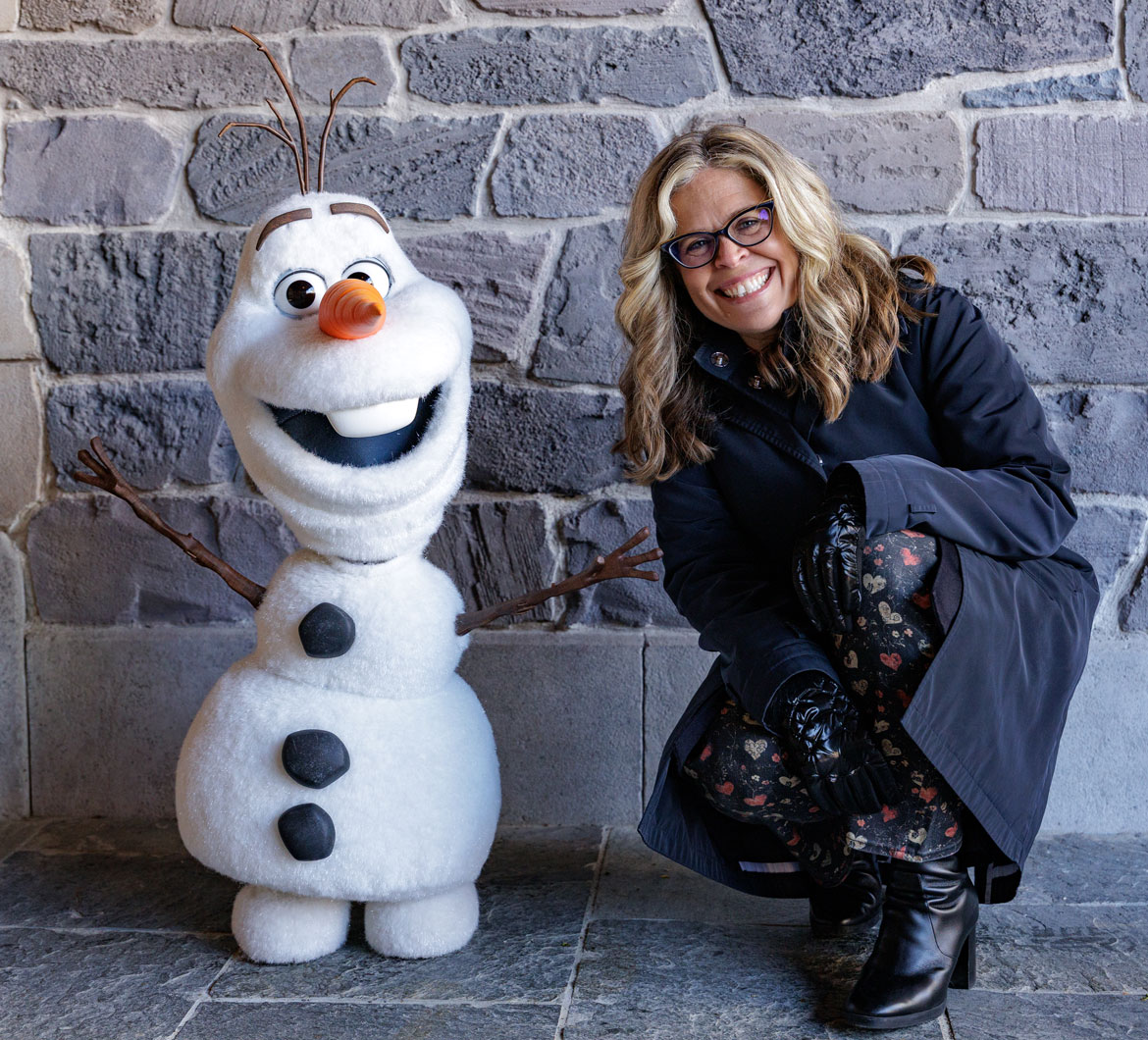
Lee gets choked up again when she meets the toddling robot embodiment of “Frozen”‘s cartoon snowman Olaf, a responsive, free-roaming innovation in Disney’s Audio-Animatronics that debuted late last year.
“I wish,” Lee says, “I could spend the whole day with you.”
If this is the kind of coverage of arts, cultures, and nature that you appreciate, please support Wonderland by contributing to Wonderland on Patreon. And sign up for our free, occasional newsletter so that you don’t miss any of our reporting. Follow us on Instagram and tell us what you really think on Facebook. (All content © Greg Cook 2026 or the respective creators.)