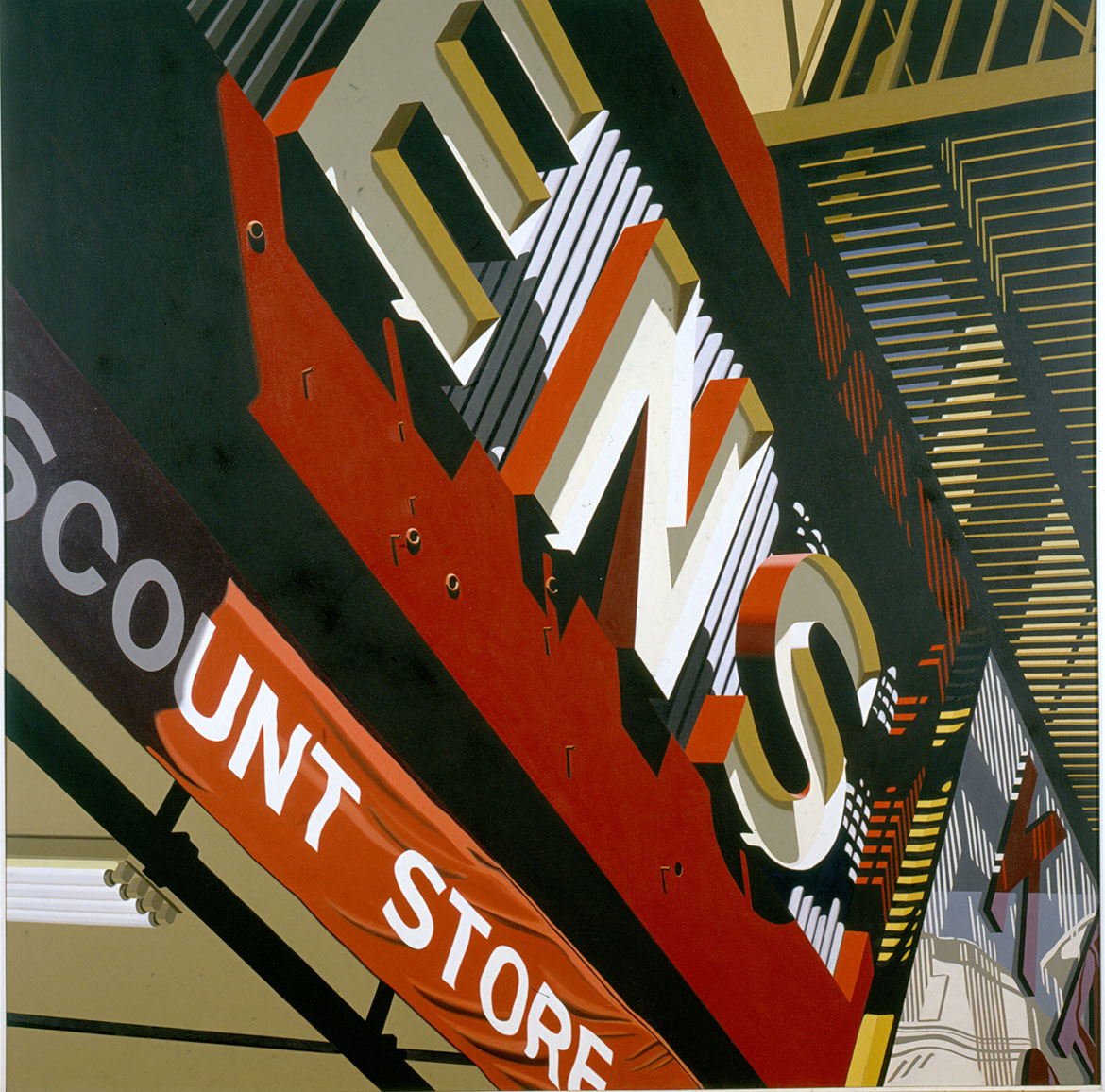
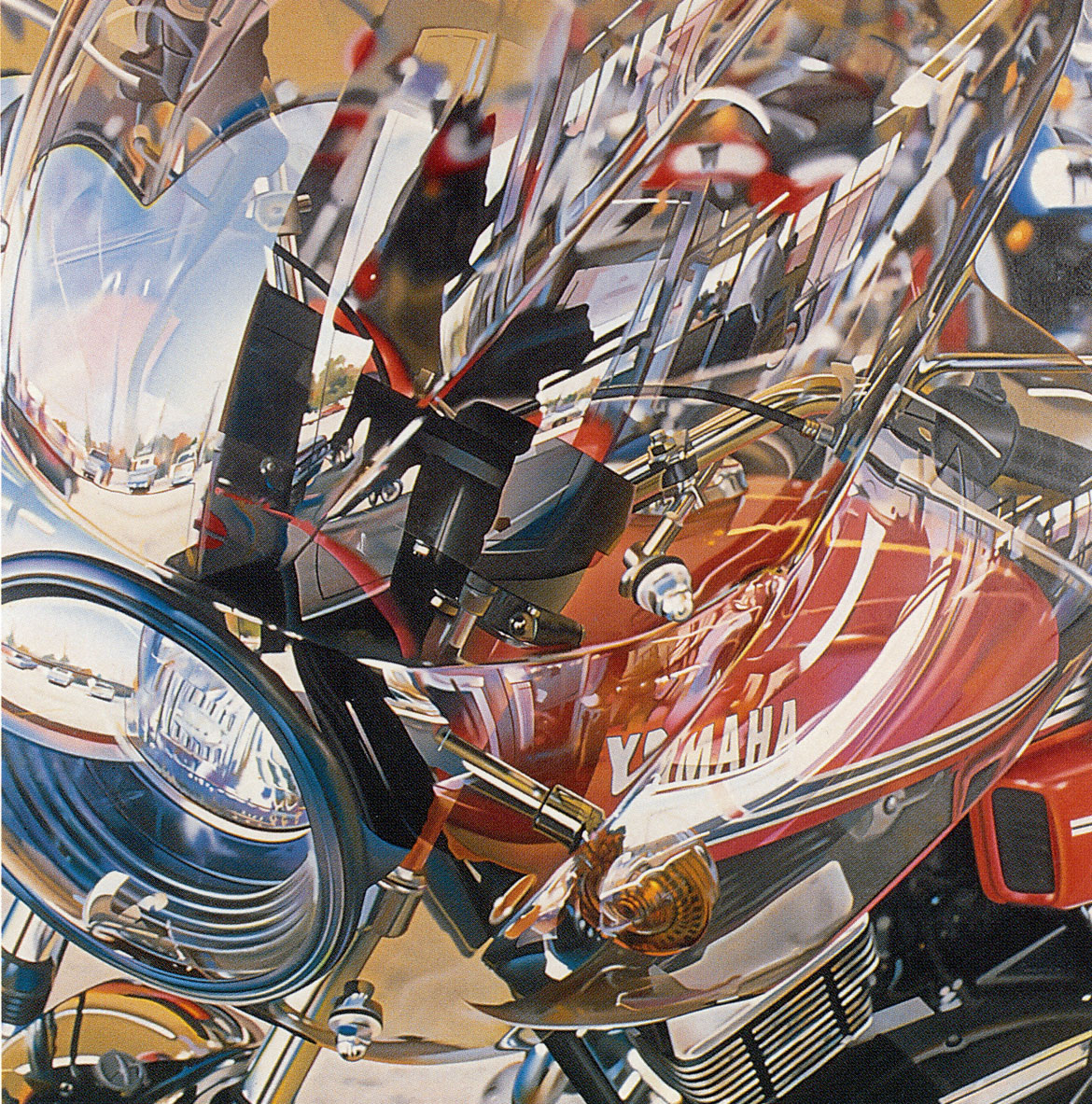
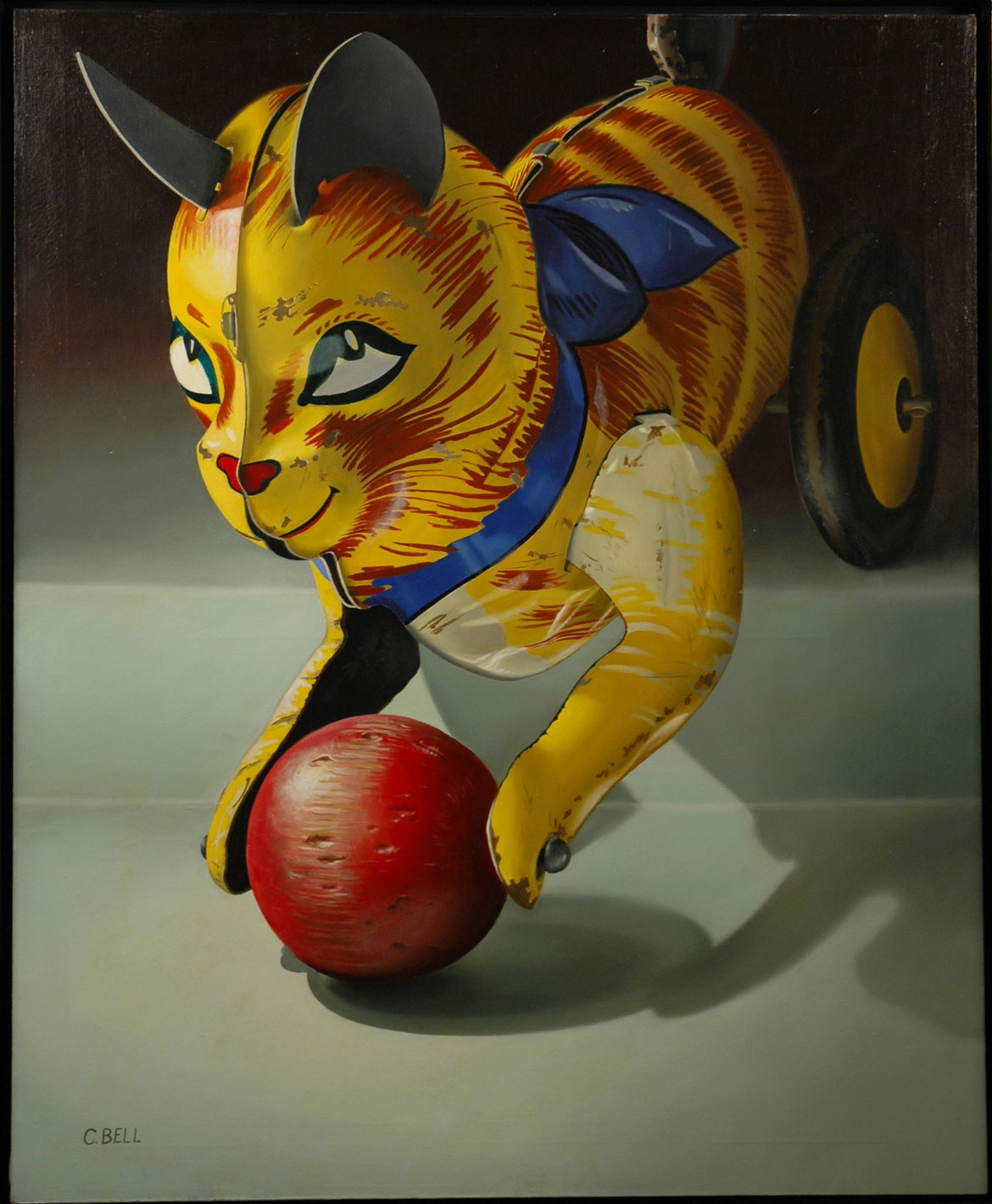
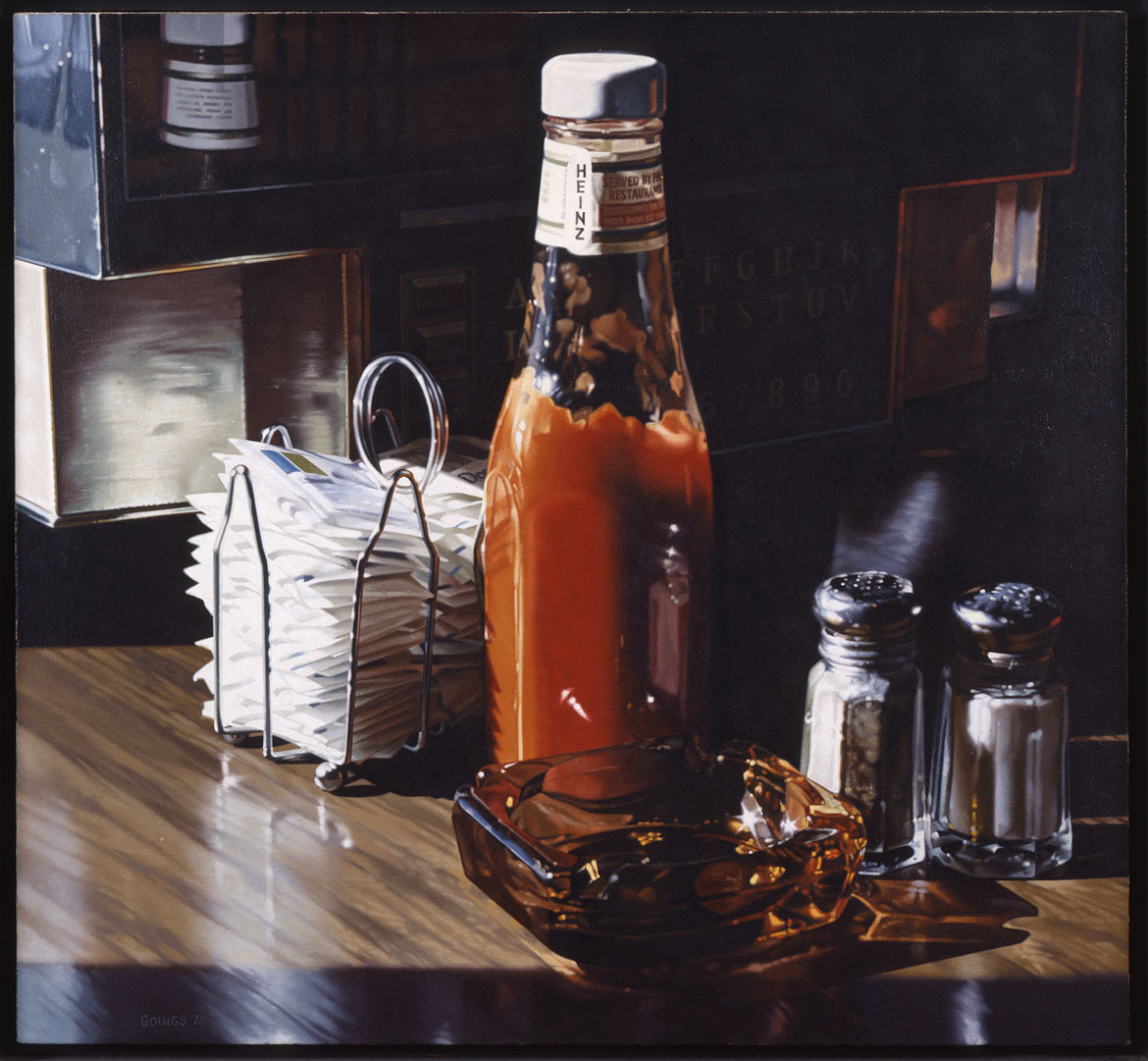
The paintings and sculptures in the survey exhibition “Photorealism in Focus” at Brandeis University’s Rose Art Museum in Waltham from Feb. 11 to May 31, 2026, dazzle with the handcraft the produces wondrously realistic feeling (or photographically realistic feeling) art. It’s the wow of how did they do that!?! How did they make those portraits feel so present? How does that giant tumble of apples seem so real? How did they make those scenes of grungy Manhattan streets feel like you’re right there? It often feels like magic.
“Emerging in the late 1960s, Photorealism redefined the relationship between painting and photography, embracing technical precision to create images that blur the boundary between illusion and reality,” the exhibition website says. “The exhibition highlights the movement’s continued relevance and evolution, showcasing a range of subjects from urban landscapes to psychologically charged portraits.”
Photorealism arrived in reaction to the contemporaneous rise of cool minimalist abstraction and the deadpan realism of early 1960s New York Pop art, which was a response to the cosmic emotionalism of New York 1940s and ’50 Abstract Expressionism. By so closely imitating photos, it continued the formal exploration of the other styles, while being freshly rooted in contemporary gritty New York reality.
The exhibition is somewhat light on the famous names of the founding of the movement. Richard Estes, who is still busy painting in Maine, gets three paintings; the late Chuck Close, whose reputation took a hit when several women accused him of sexual harassment late in life, gets one post-photorealist painting; and the late sculptor Duane Hanson is absent. In exchange, Rose Director Gannit Ankori thankfully adds in a few women, who were often left out of the original telling—like Audrey Flack—and others active in more recent years.
Even adding the new art, it can feel like the movement is still a time machine to the 1960s, still enamored by vintage neon signs, glass storefronts, old cars, gritty New York streets, and vintage toys.
Randall Rosenthal’s tricky sculptures, like “Smithsonian Hush Money,” 2024, of piles of documents precisely carved from wood (!) and painted add a frisson of meaning to the movement that is mostly focused on eye candy. All that stunning visual dazzle can come to feel like empty calories.