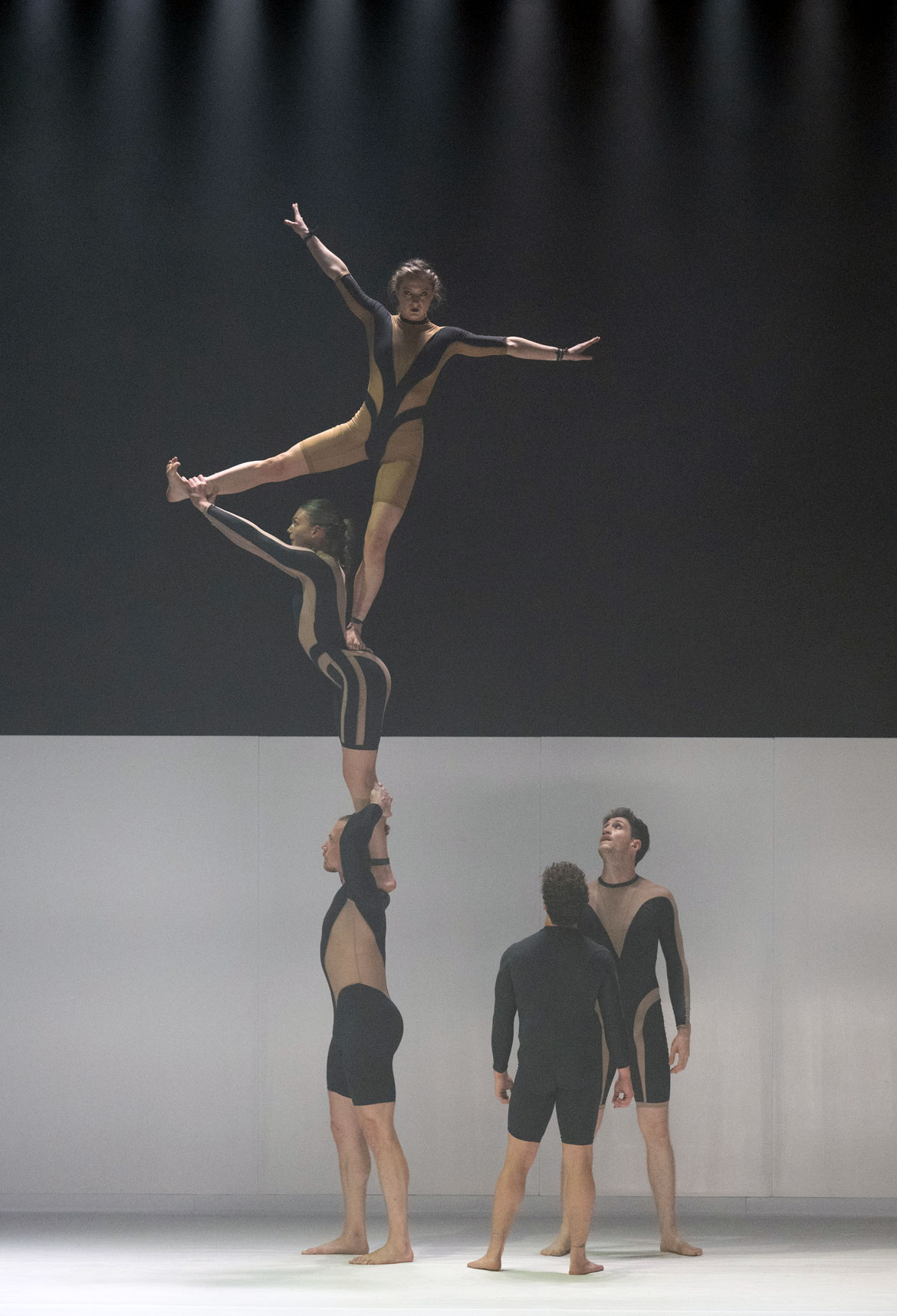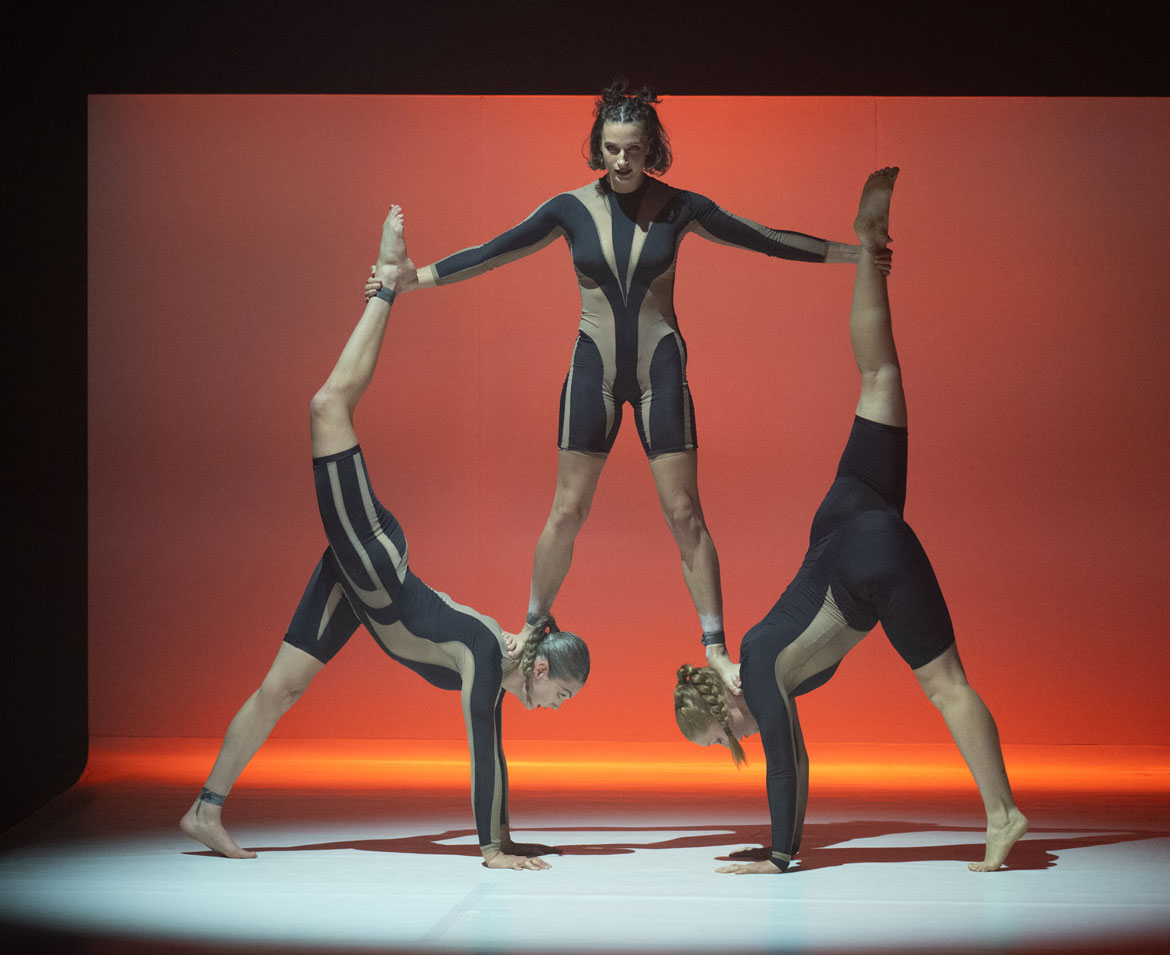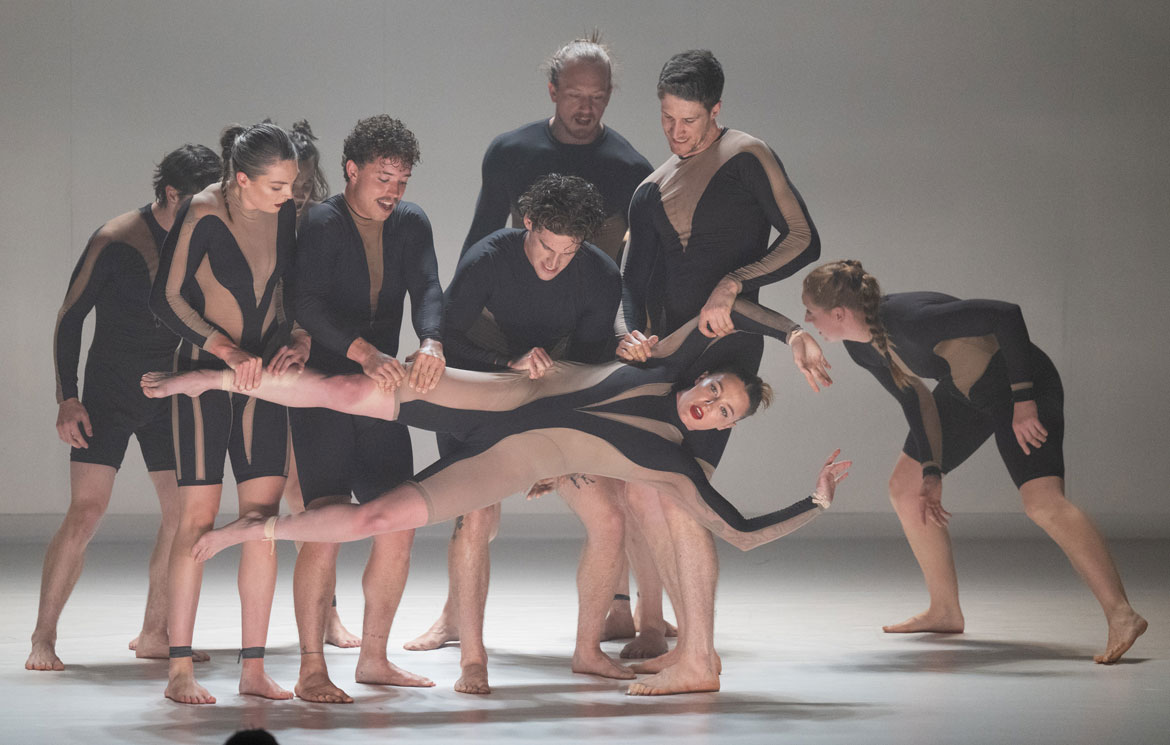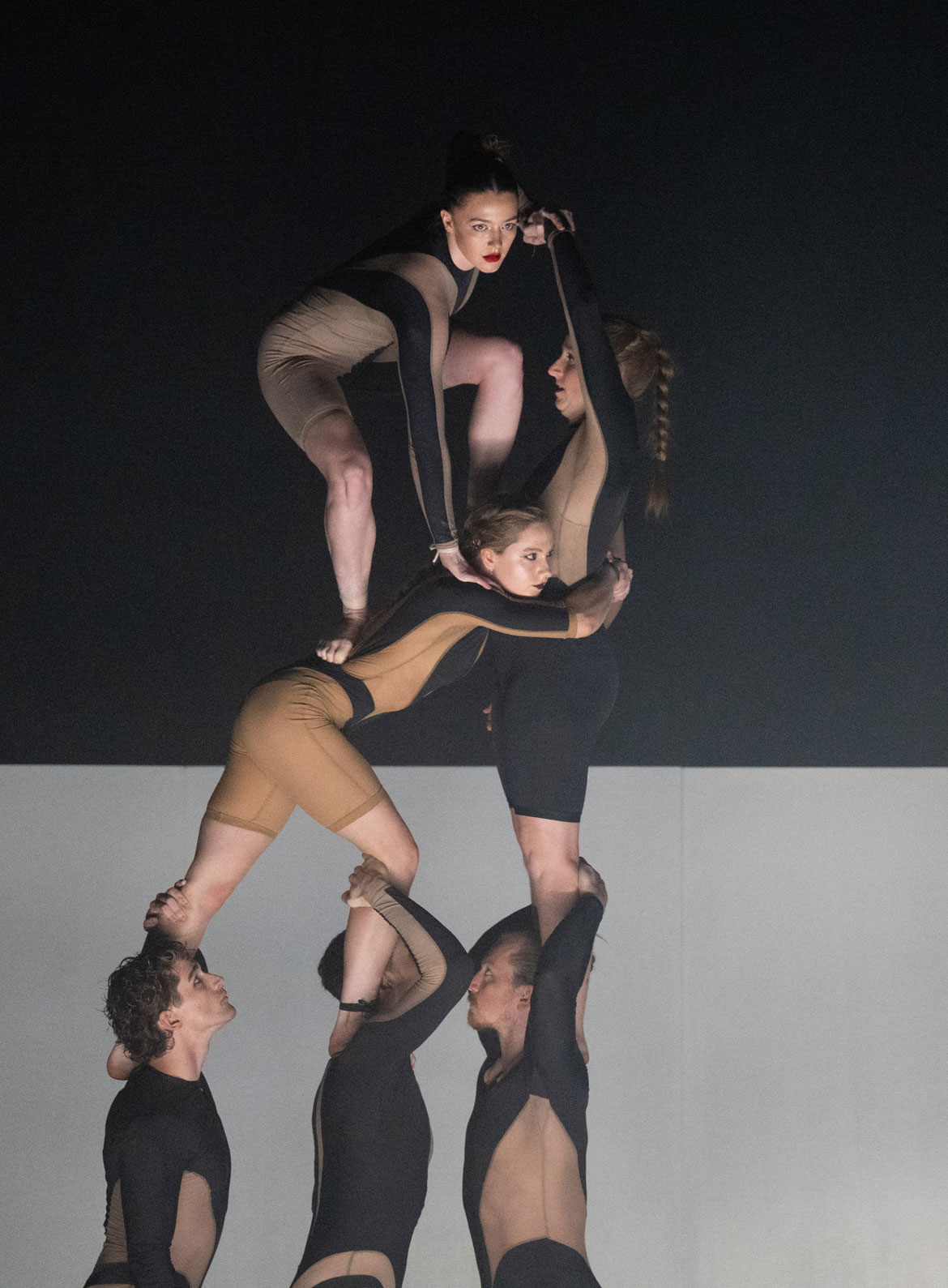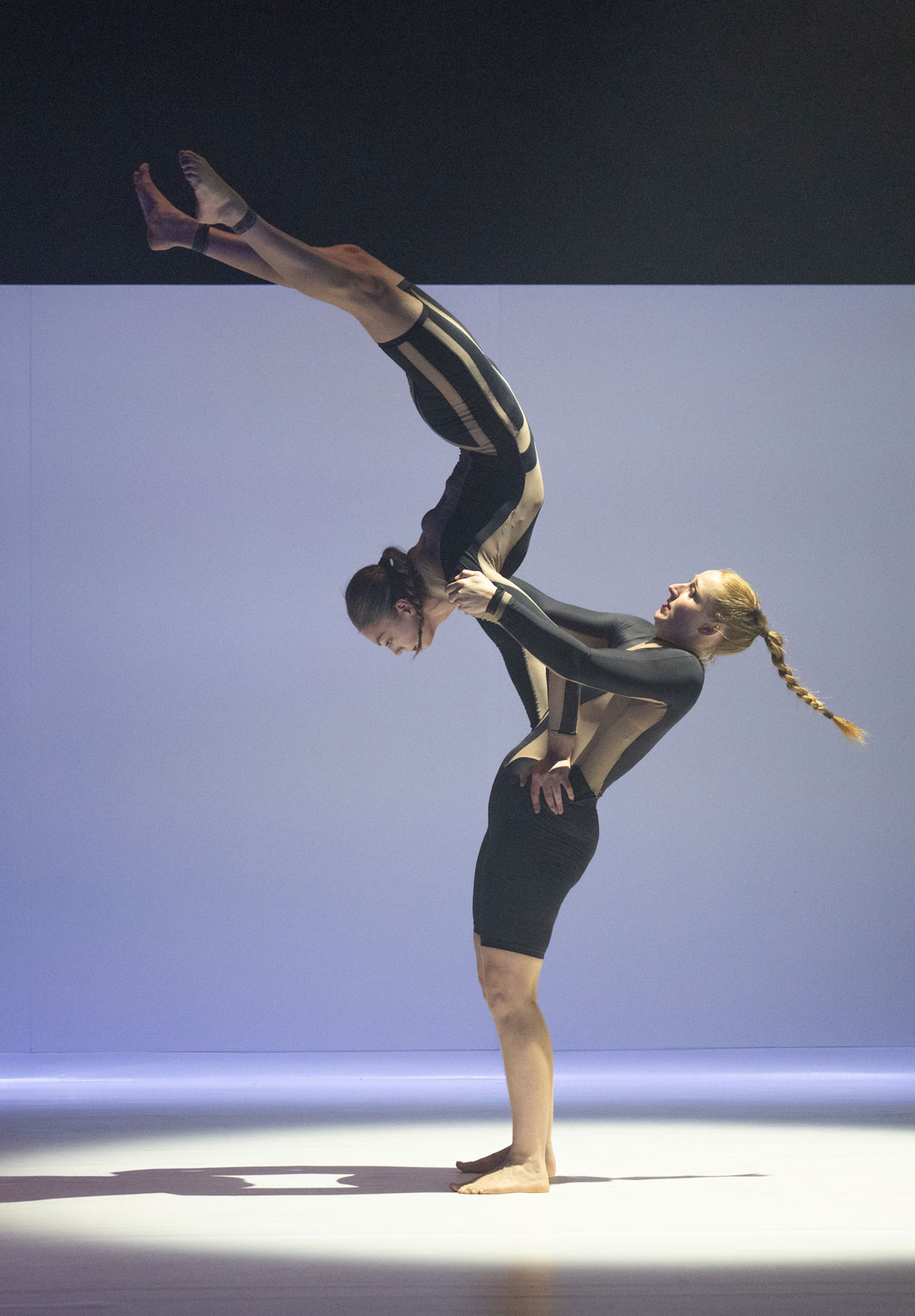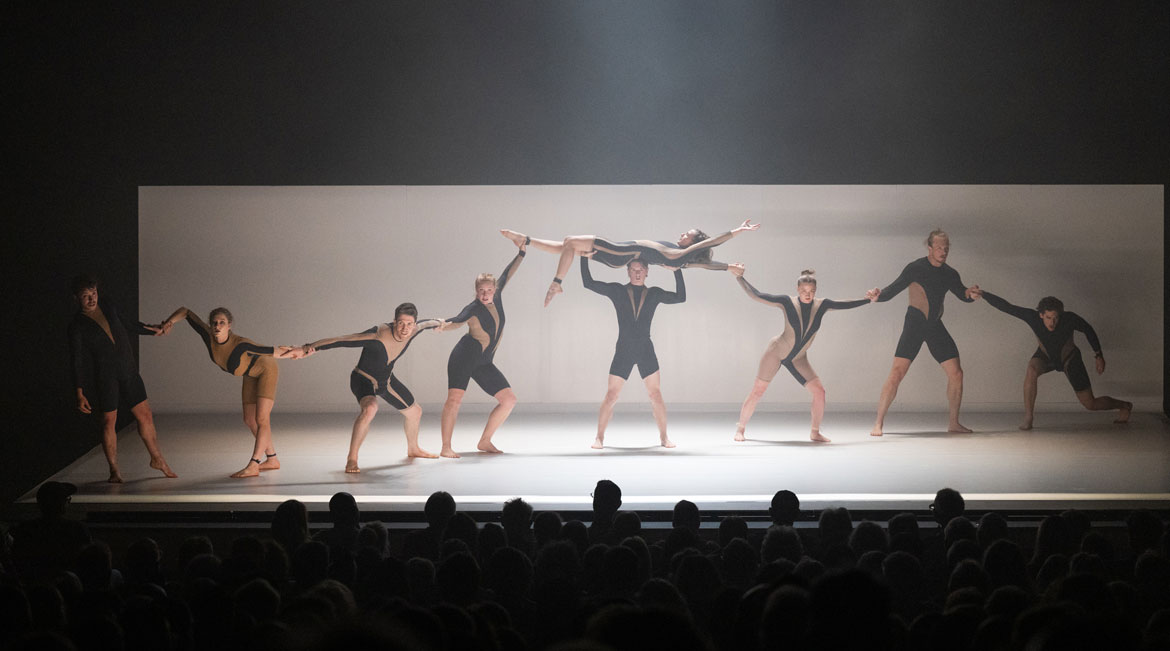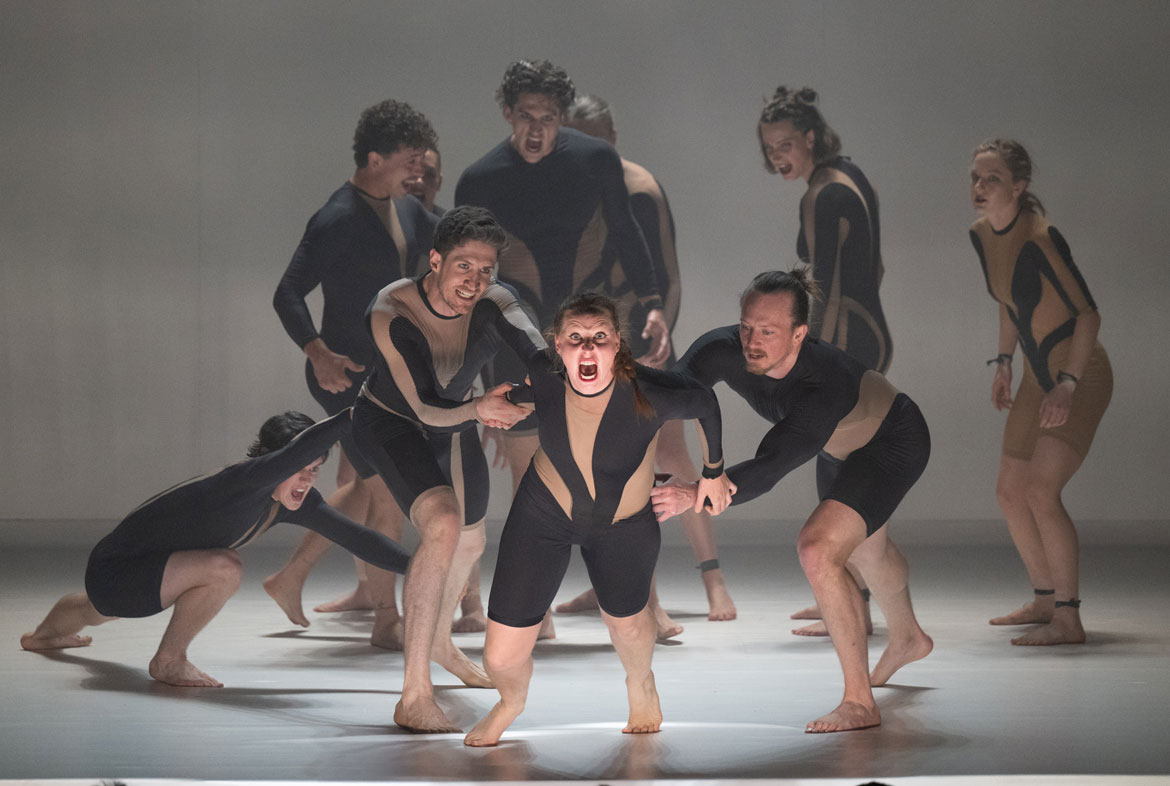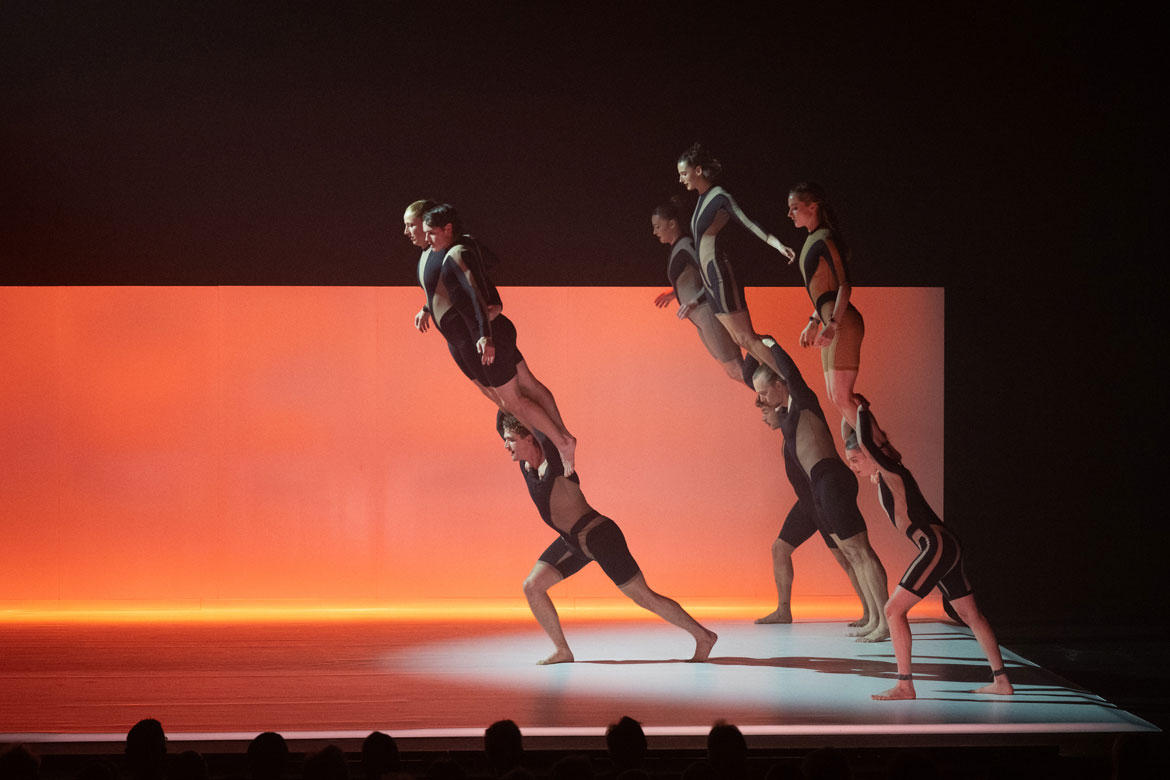
In the astonishing acrobatics and slinky aerialists and feats of strength, in the modern showgirls and strongmen of Australia’s Circa Contemporary Circus, you can sense their traditional circus roots—even as the cast of 10 is dressed in subdued beige and black striped, form-hugging costumes of contemporary dance and moving to Ori Lichtik’s pulsing techno nightclub beats. There are also strongwomen, carrying, as if it’s nothing, two people atop their shoulders to form human towers. And there are men dancing belly-to-belly until a third wrestle-wedges himself in between, which becomes a whole motif.
Circa grew out of the Rock ’n’ Roll Circus, for which Yaron Lifschitz was the first artistic director in 1999. He transformed the troupe into Circa in 2004. Currently based in Brisbane, Australia, it’s circus and dance and physical theater. And acrobatics akin to cheerleading, though Circa mostly eschews the sparkle and explosiveness of cheer for performances more fascinated by slowing things down, showcasing steady strength and control.
Circa researched the movement patterns of wolves for inspiration, Pamela Tatge, executive and artistic director of Jacob’s Pillow, told the crowd before the curtain went up for the opening night of company’s run there in Becket, Massachusetts, from July 22 to 26, 2026. It was the United States premiere of “Wolf” in the Pillow’s Ted Shawn Theatre, which Circa debuted in 2020. “For director Yaron Lifschitz, the wolf is a symbol of our untameable selves: liberating, anarchic, and savage,” Pillow’s announcement reads.
Circa’s shows are developed through group improvisation, Katherine Profeta, a professor at the Yale School of Drama and choreographer for the New York theater company Elevator Repair Service, explained in a pre-show talk. For ‘Wolf,’ one of director Lifschitz’s prompts for the artist-acrobats was to “explore your inner animal.”
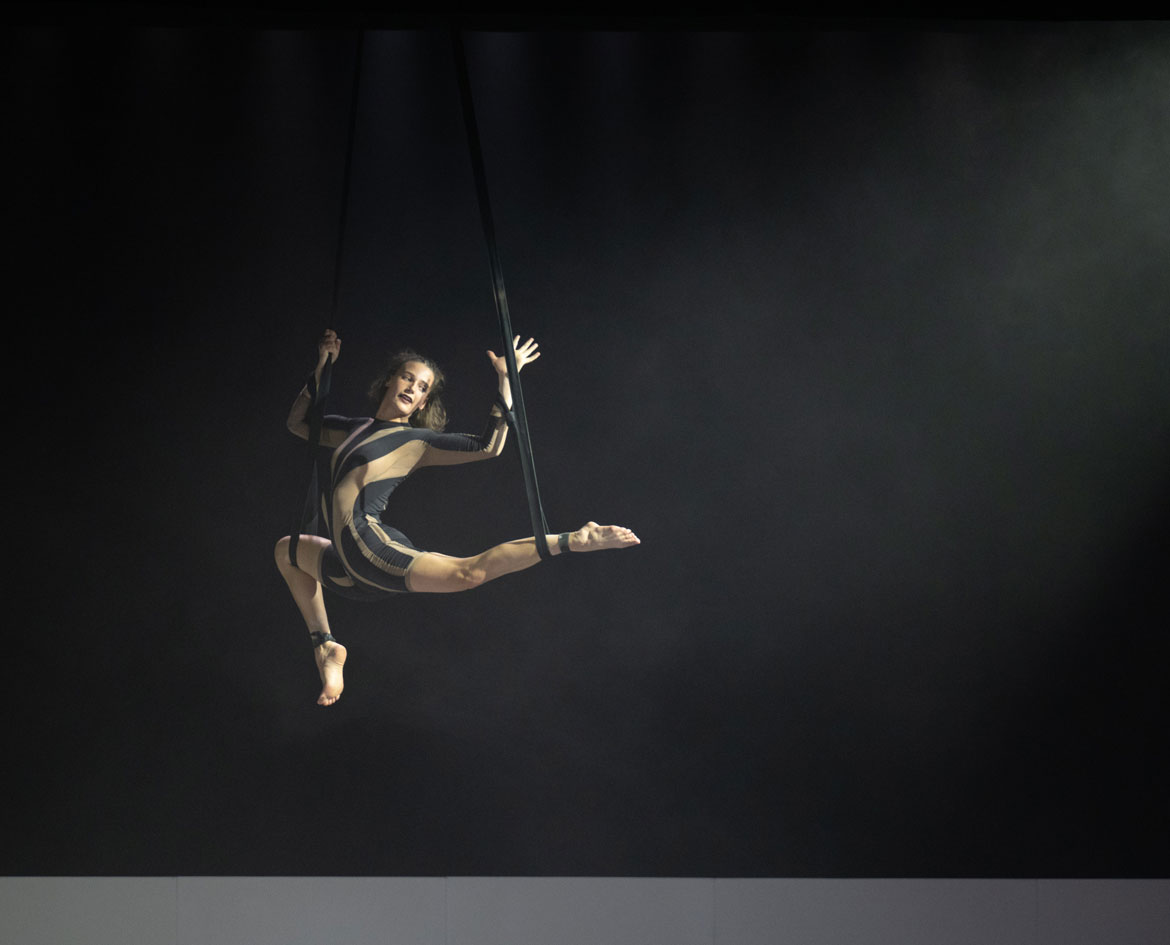
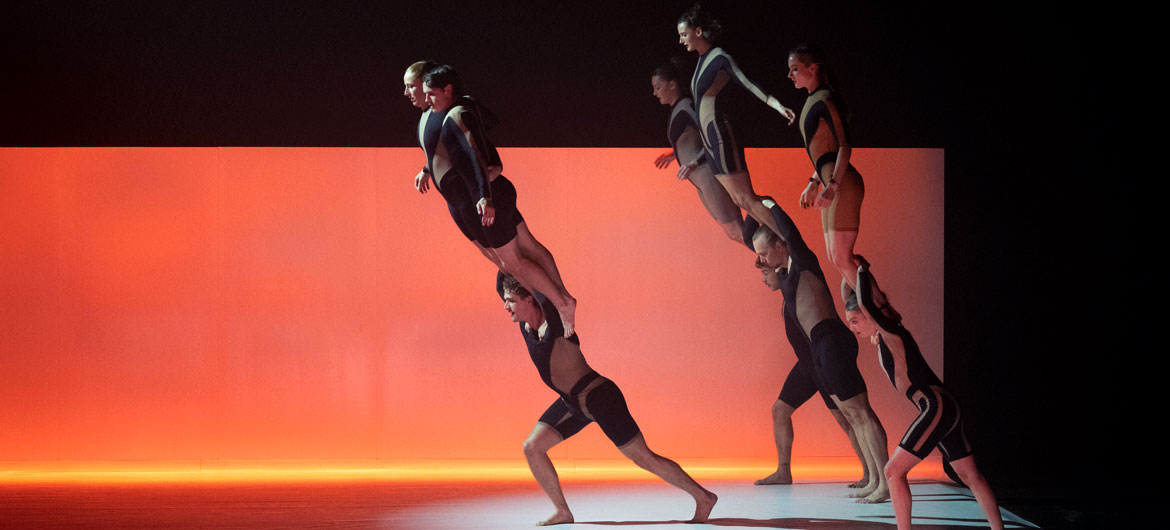
Performers are hurled through the air—and caught. Aerialists twist and preen, bind themselves up in their cords, then wildly unwind, spinning down their straps toward the floor. Acrobats crawl up and over each other, assembling into pillars three people high. Tumbling and somersaults and flips. Balance. The difference between embrace and clutch and subdue and grab. Fearing the acrobats would fall, fearing someone would get dropped, fearing they would get hurt (they didn’t).
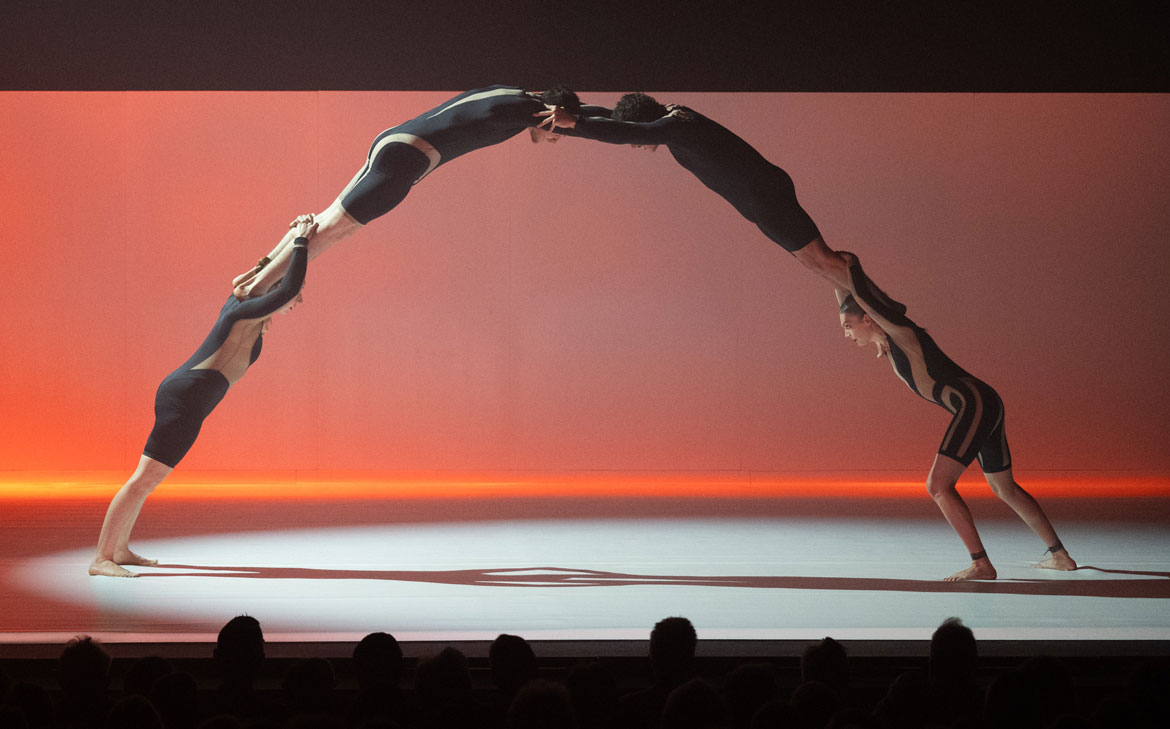
One strongmen preciously balances his hands and feet on four standing performers’ heads, before they spread out and away from him and he clings-balances on. A spidery aerialist walks on her straps like a marionette. Counterbalance allows paired performers to swing out from pillars of people. The physics of arches allows performers to form human bridges across the stage.
Contemporary circus was birthed in the 1970s and ‘80s when circus training shifted from apprenticing in shows and coming up through families to learning in circus academies, Profeta said. Circa’s cast’s backgrounds include ballet, circus, acrobatics, hula hoop, gymnastics, musical theater, aerial performance, and a farm boy throwing himself off bales of hay. As all these styles merge together in Circa, she noted, “It’s in the body that differences in forms are least relevant.”