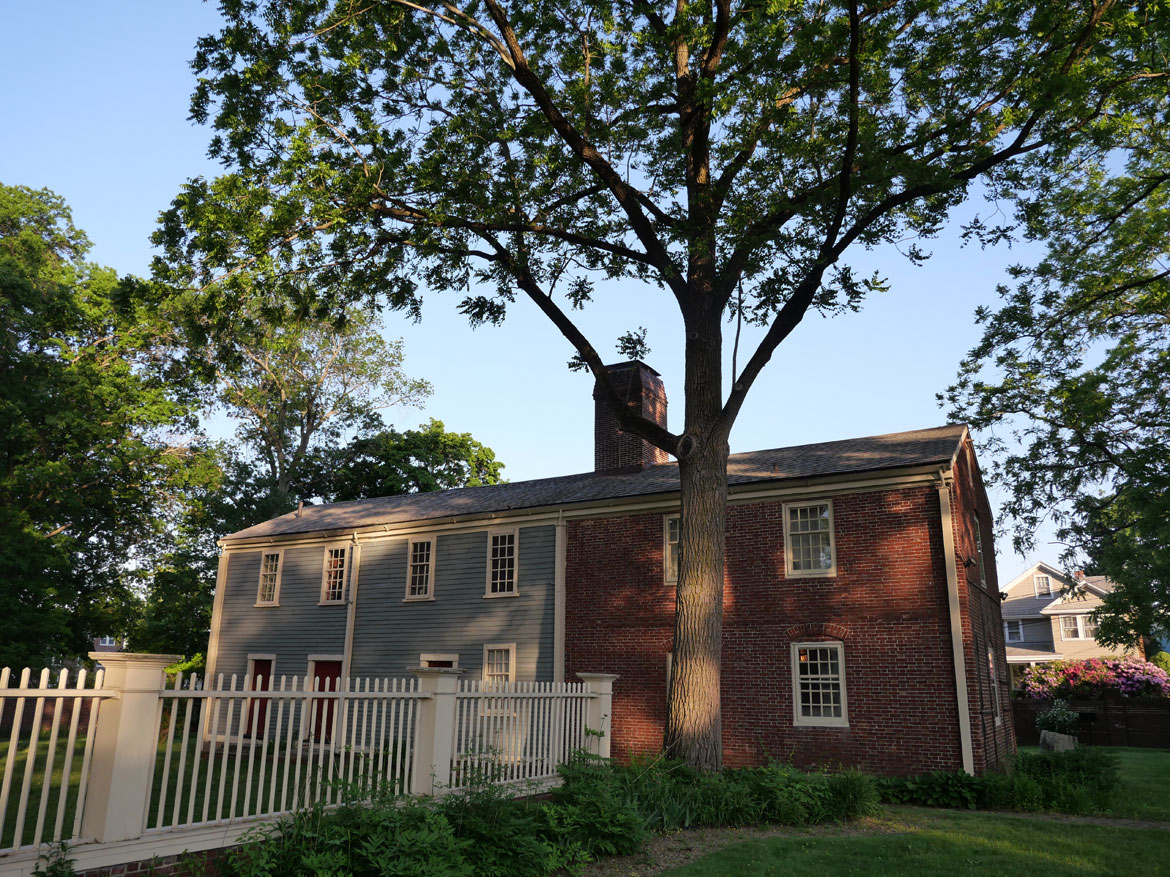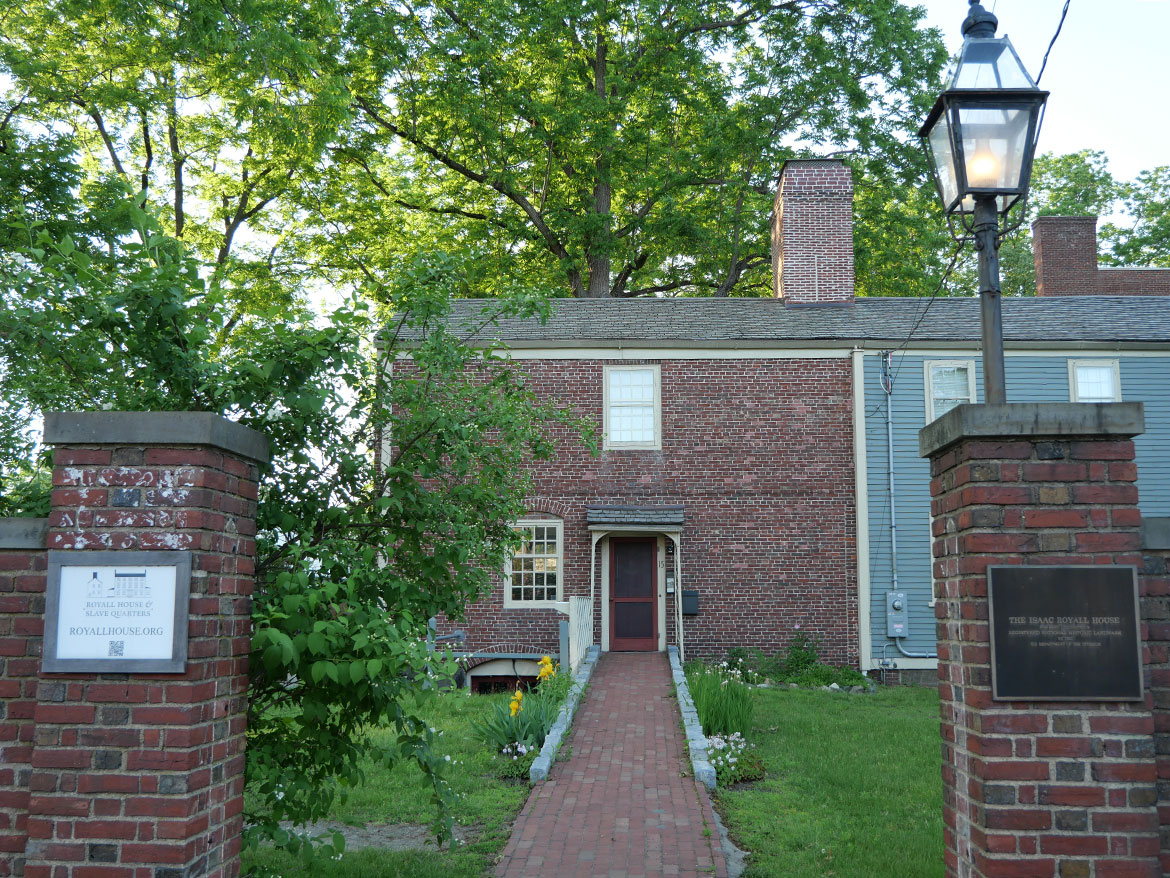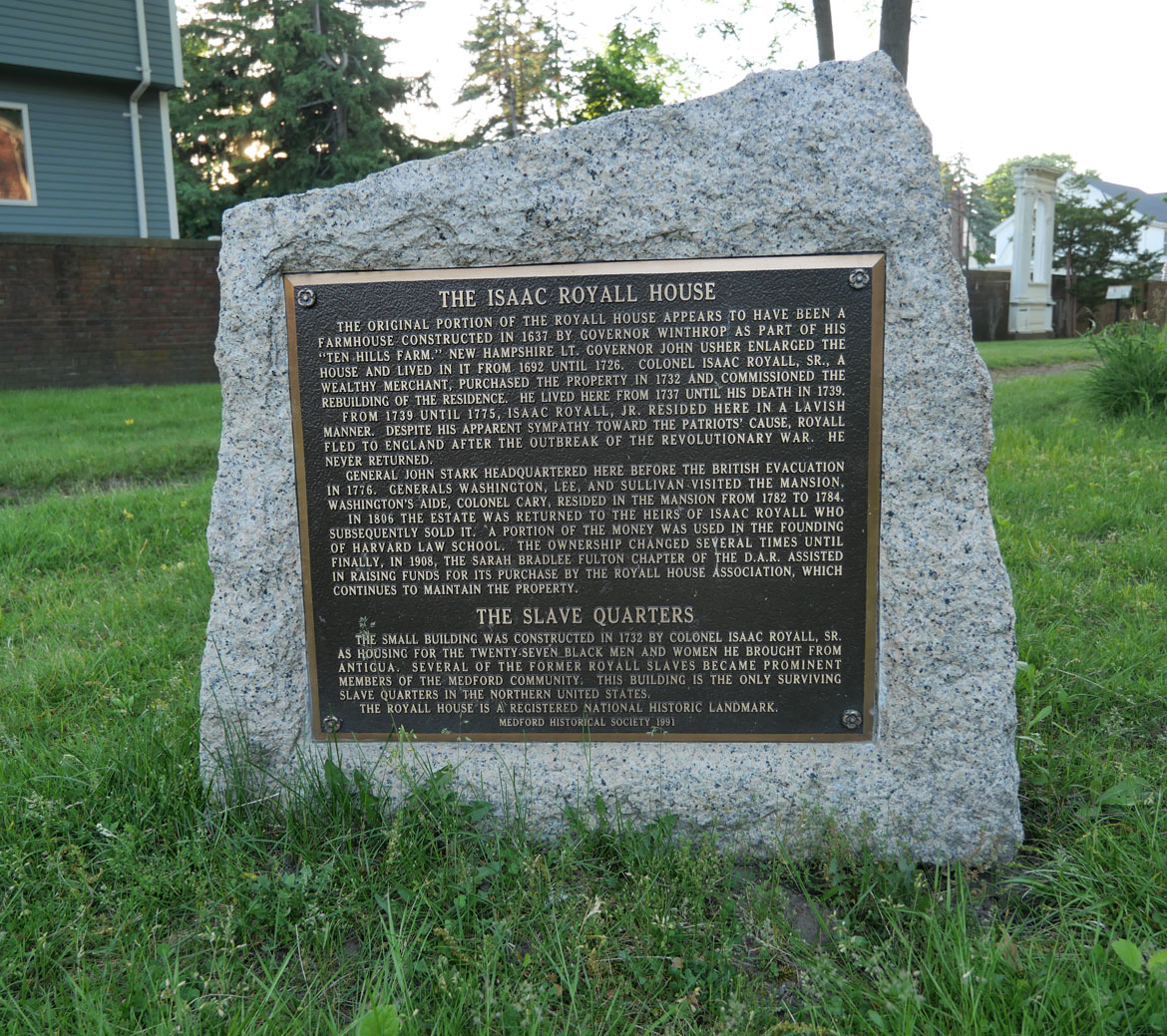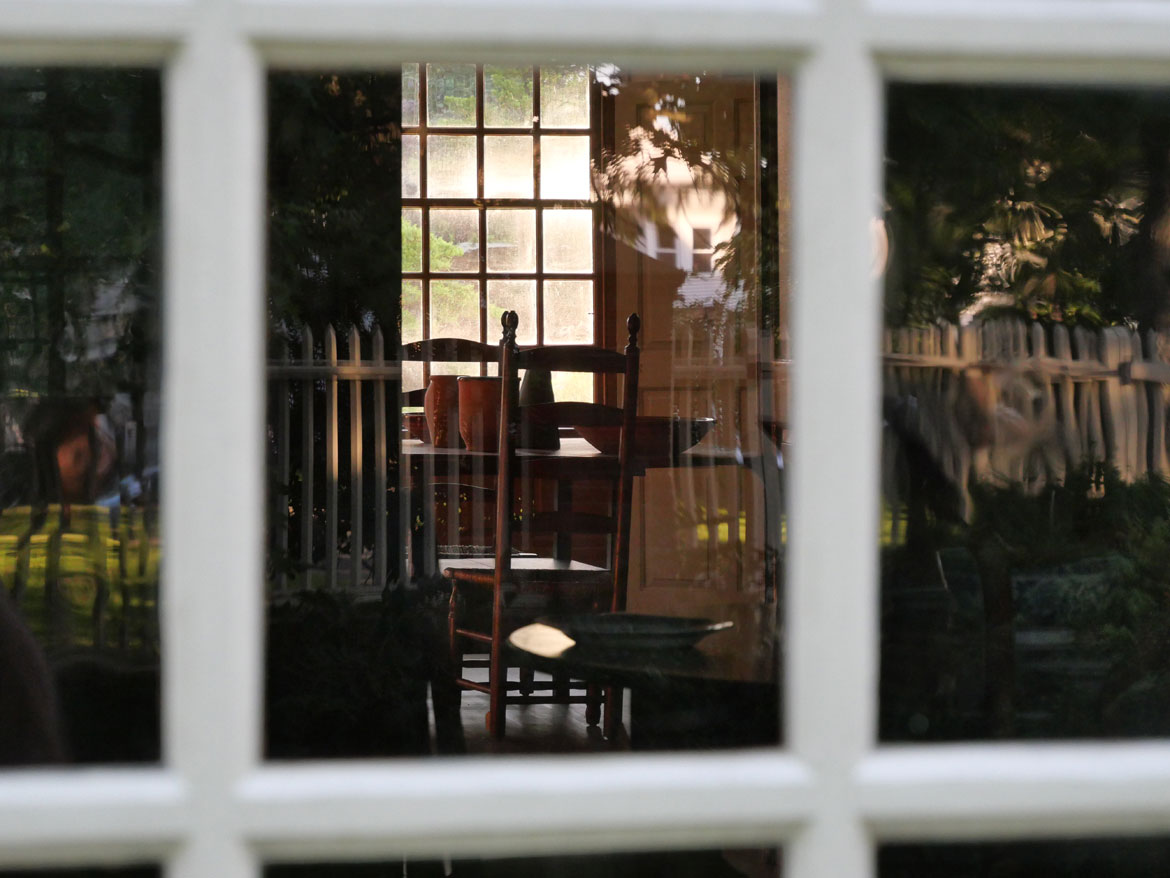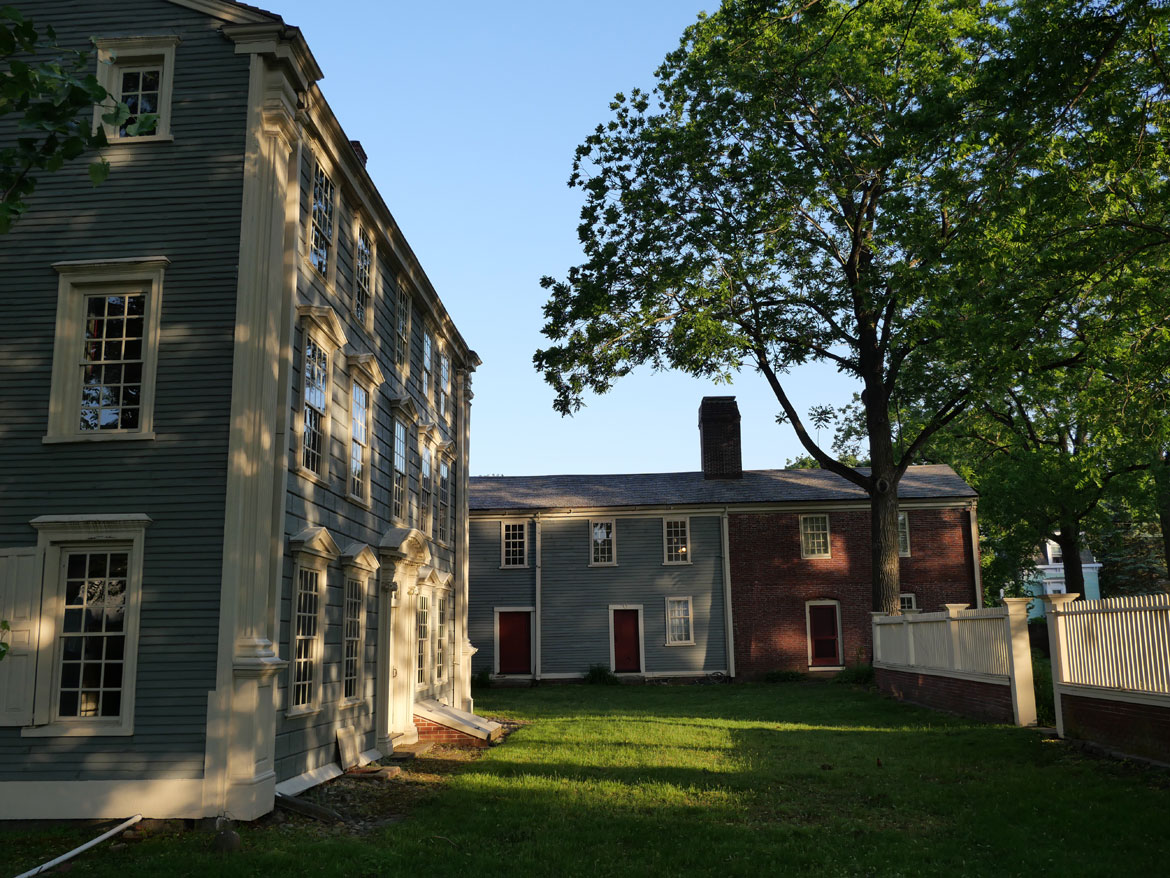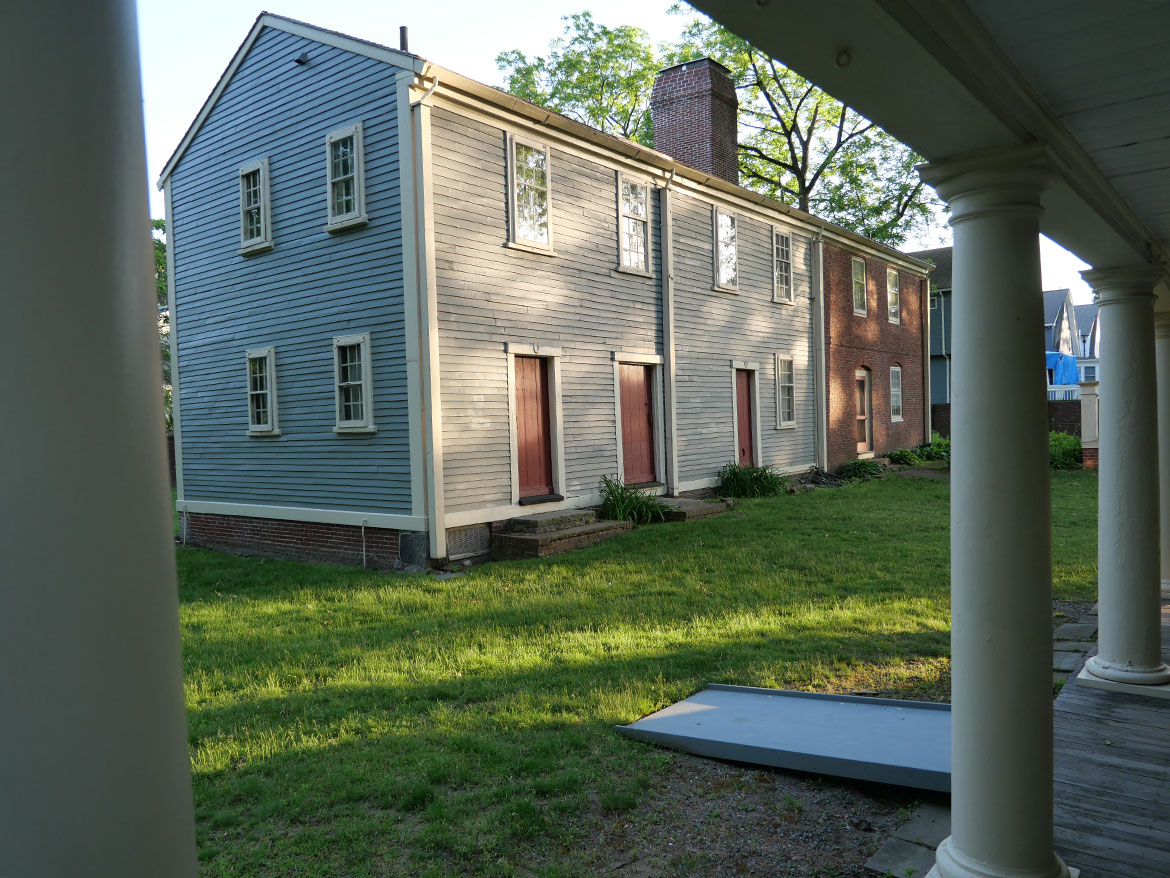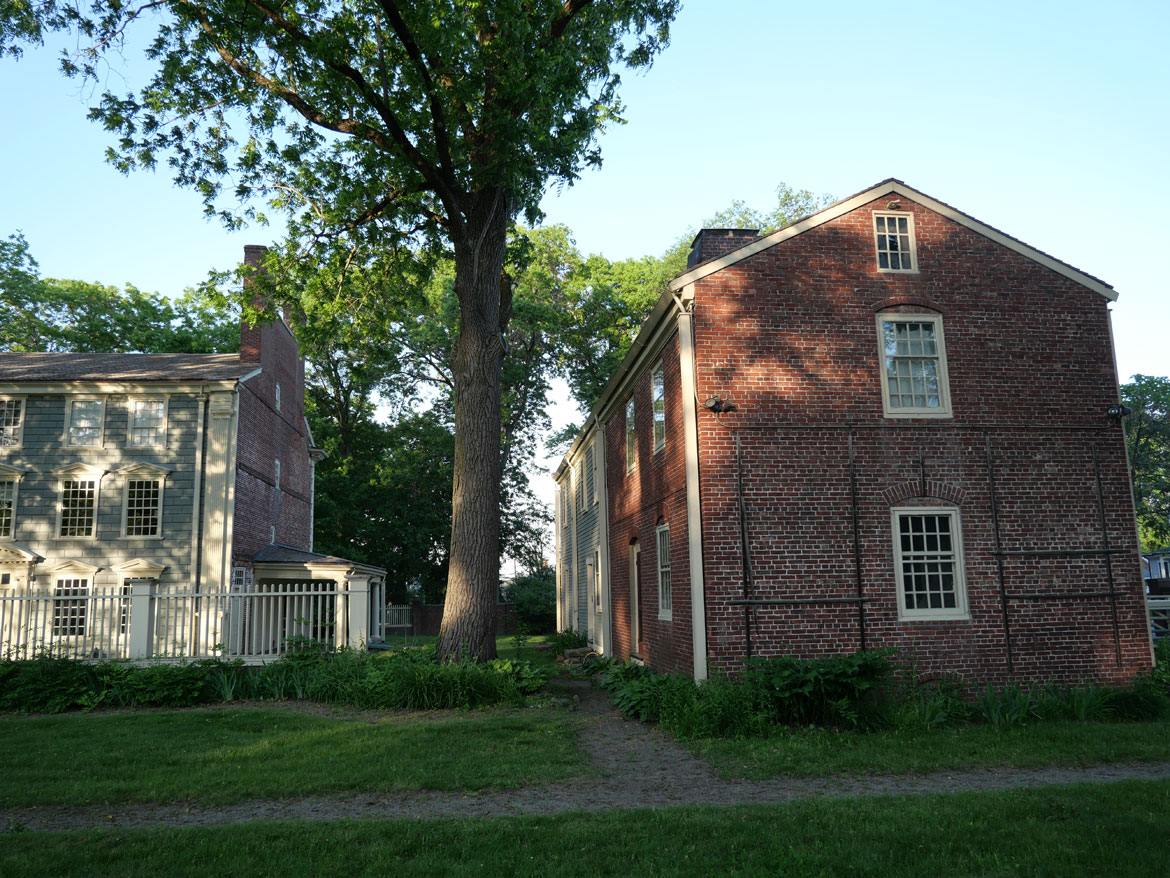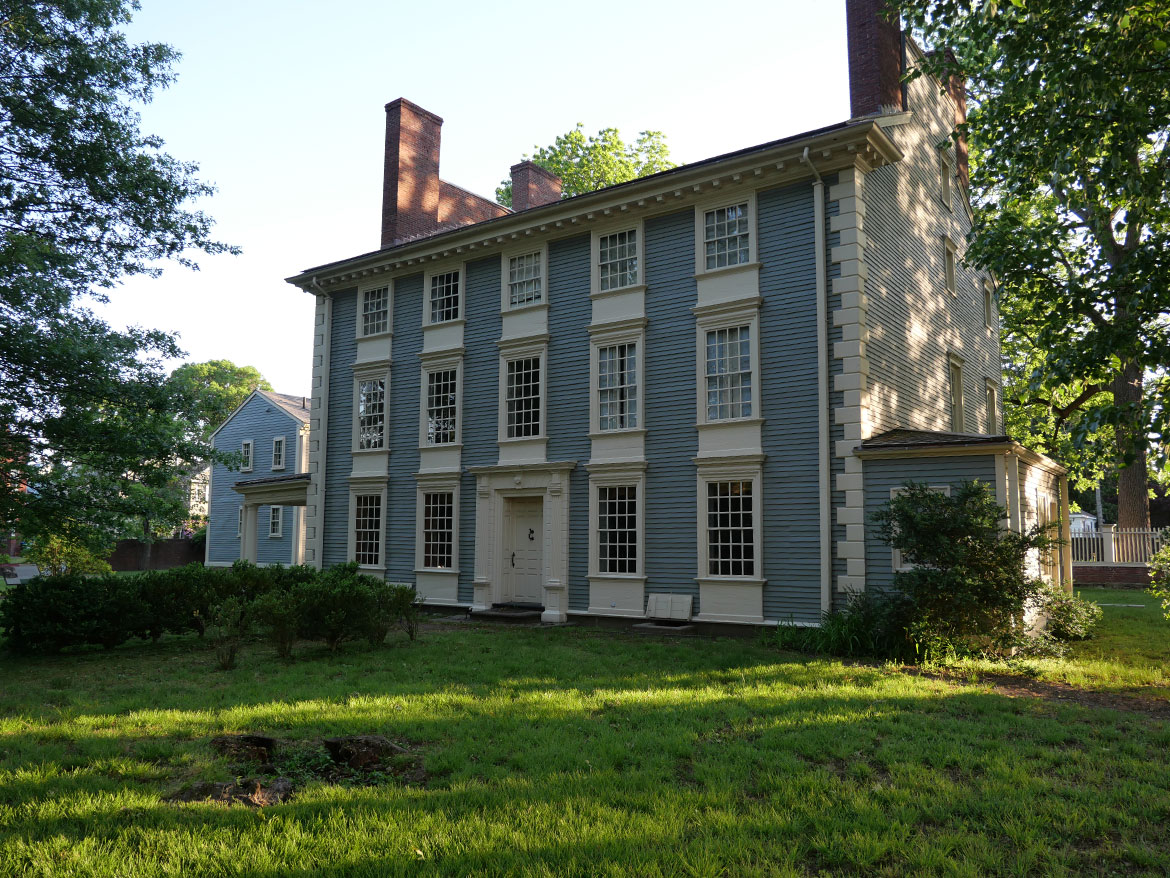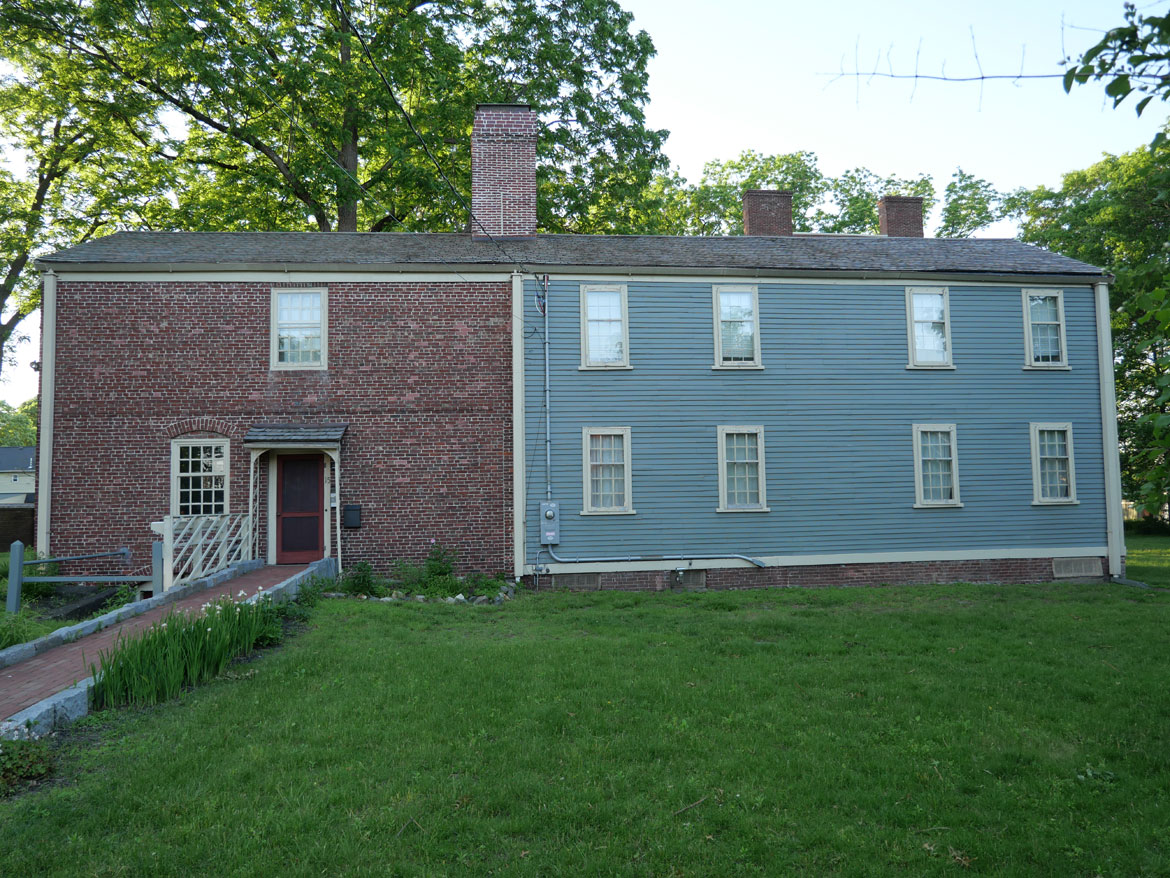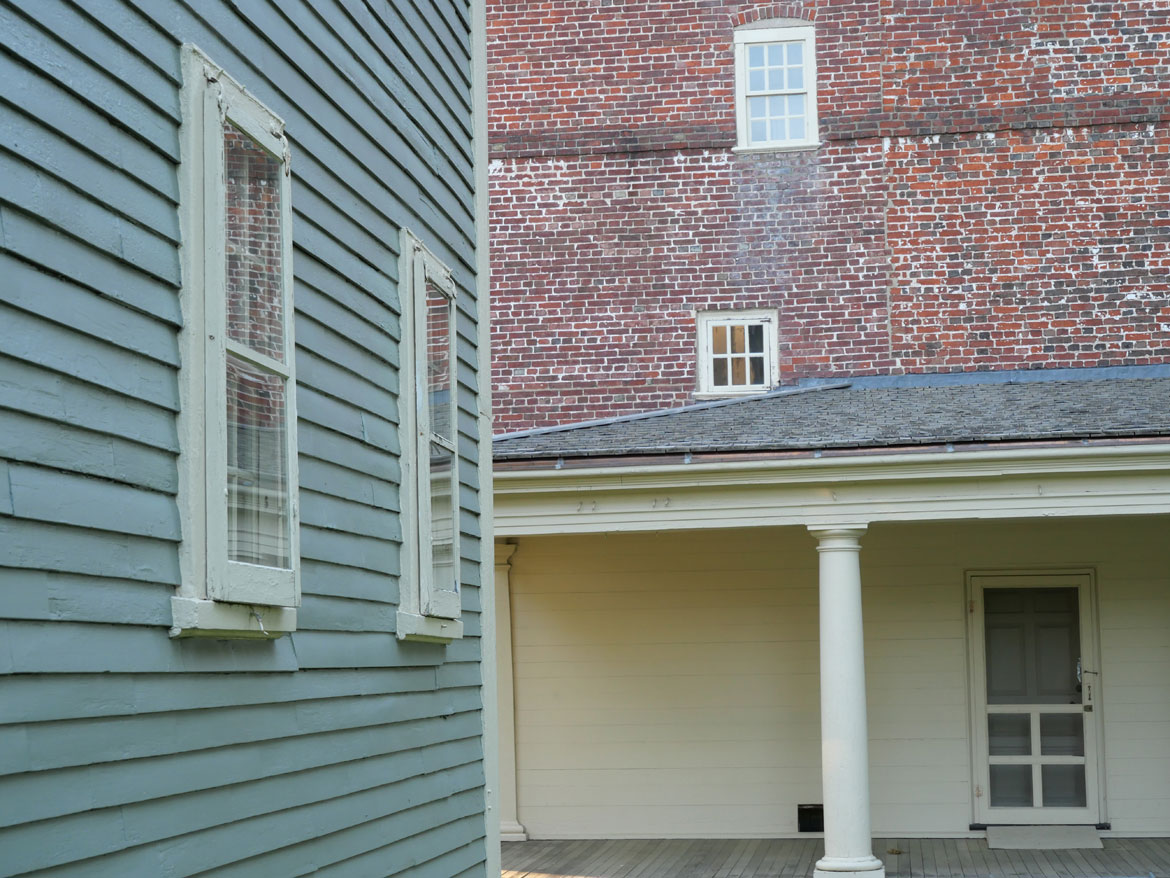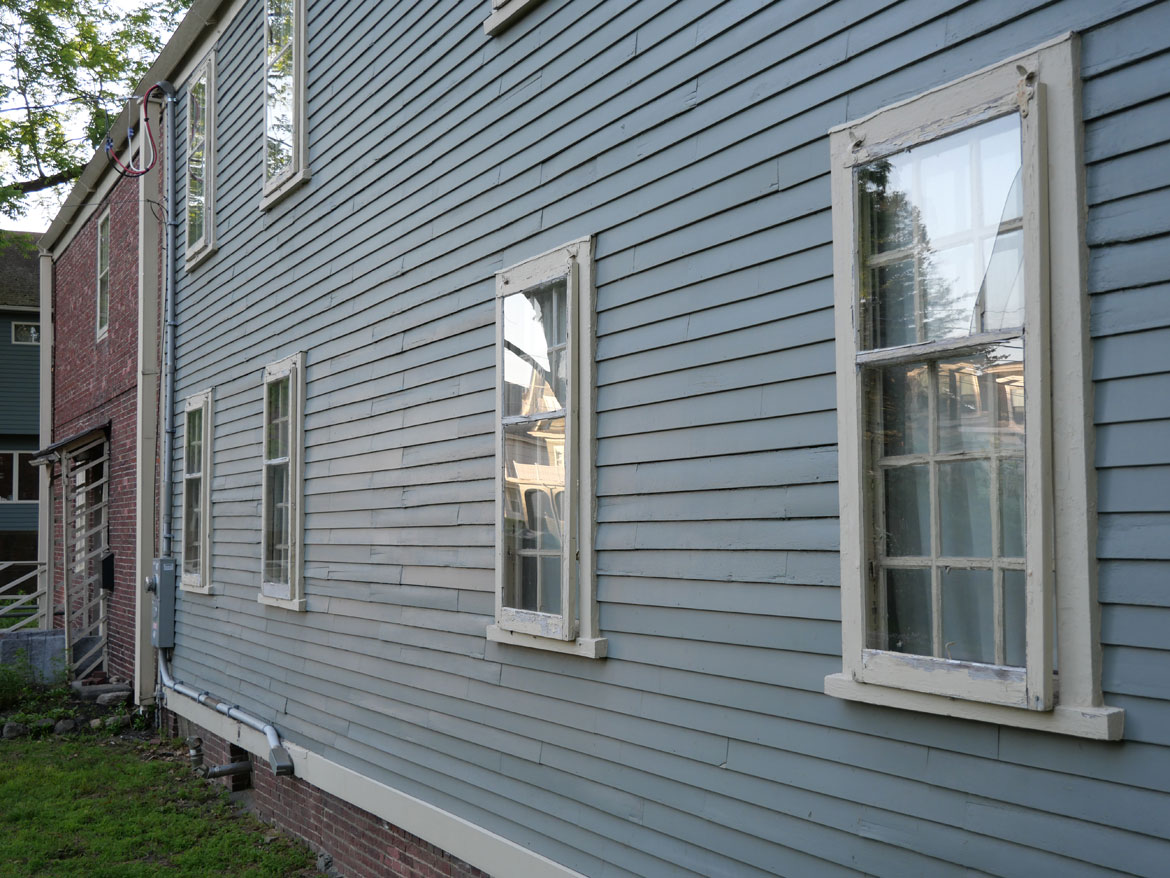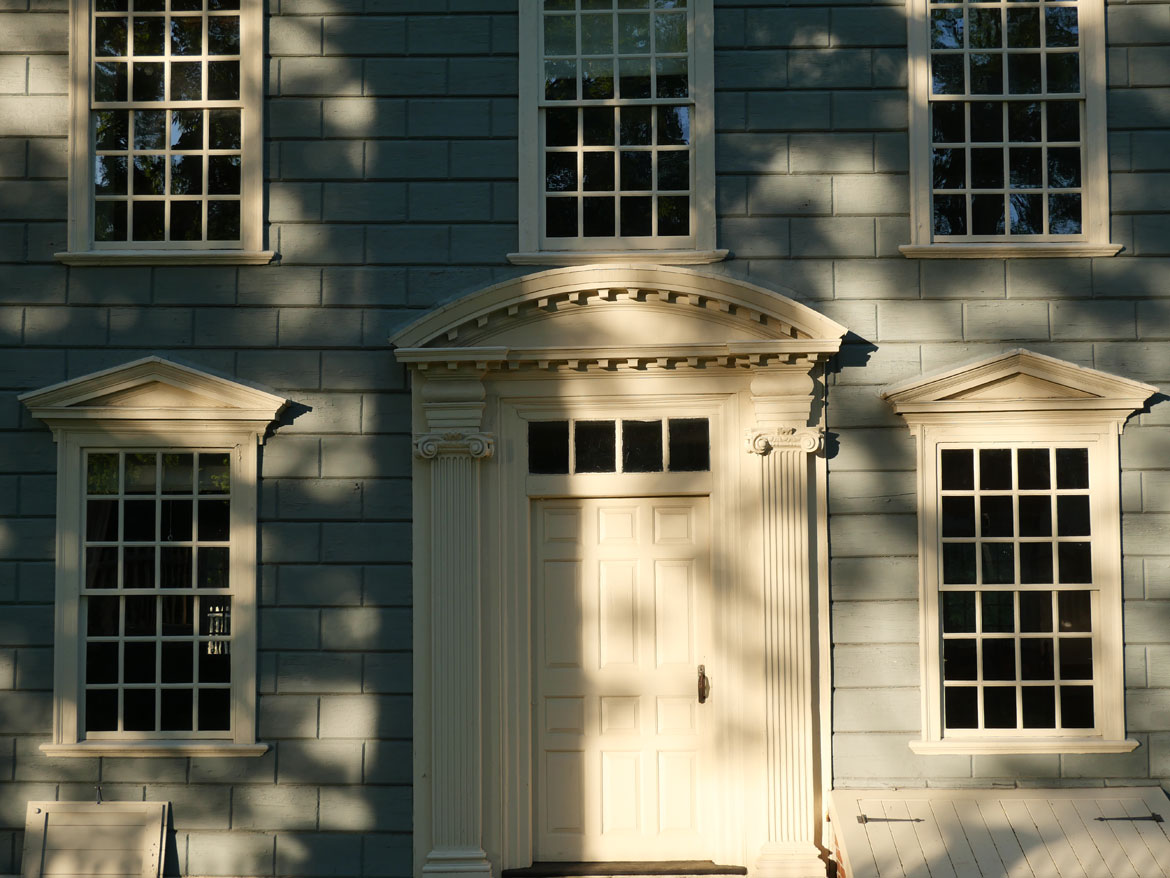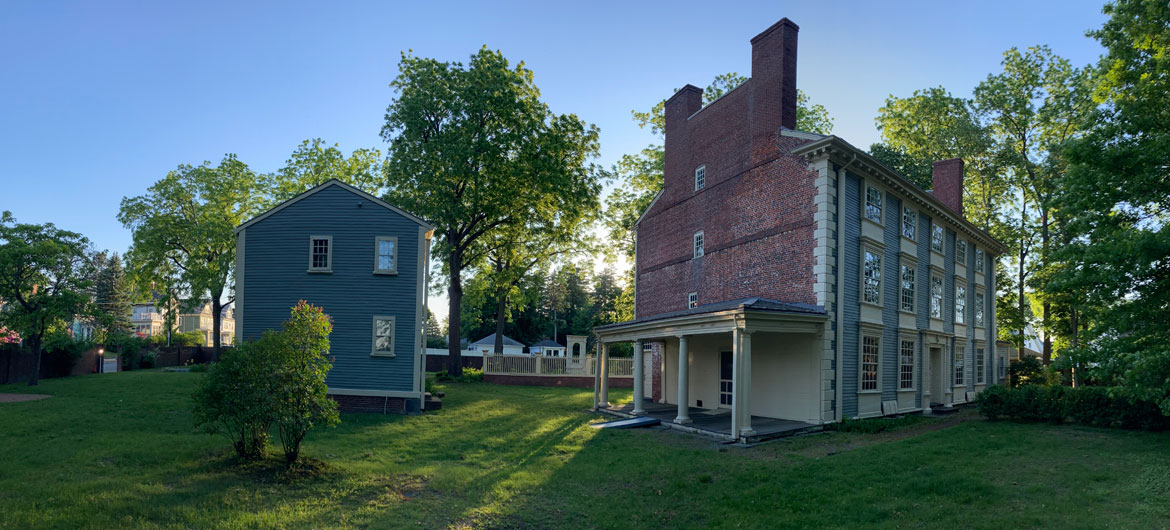
The slave quarters at Medford’s Royall House and Slave Prison are believed to be, according to the museum, “the only known extant separate slave quarters in the northern United States.” The building to house the children, women and men the Royall family forced into labor is evidence of the wealth and villainy that took place here. But of course, scratch at any wealthy local property from this era and you’re likely to find it too was a slave camp–including, as far as I can tell, the land upon which the Massachusetts State House stands in Boston.
Isaac Royall (1672-1739), a shipping merchant, who changed the family name from “Ryall” to “Royall,” and married into money, amassed a great fortune running a sugar cane plantation on the Caribbean island of Antigua and “trading in sugar, rum, and enslaved people,” according to the museum. After word of a planned slave revolt swept through the Caribbean island of Antigua in 1736, Whites convicted 132 Blacks of participating in the conspiracy and executed 88, most burned alive.
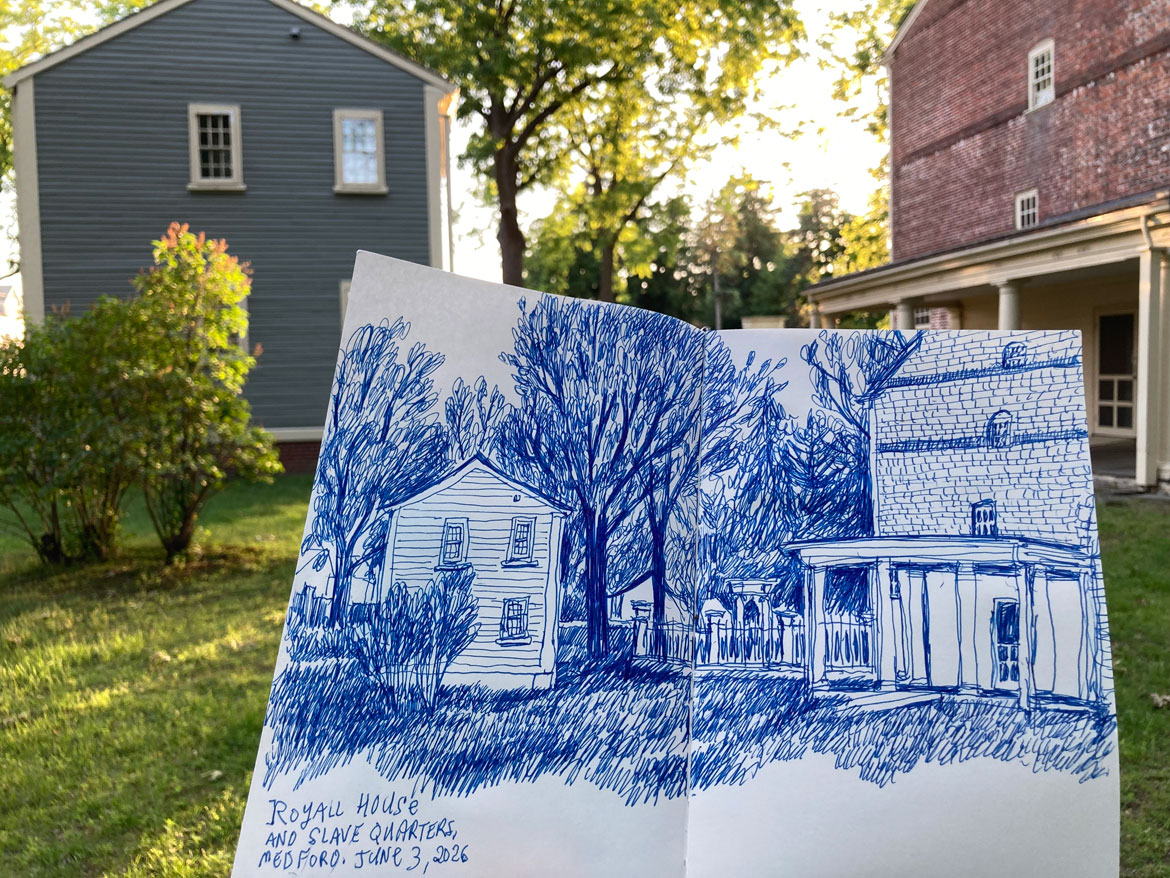
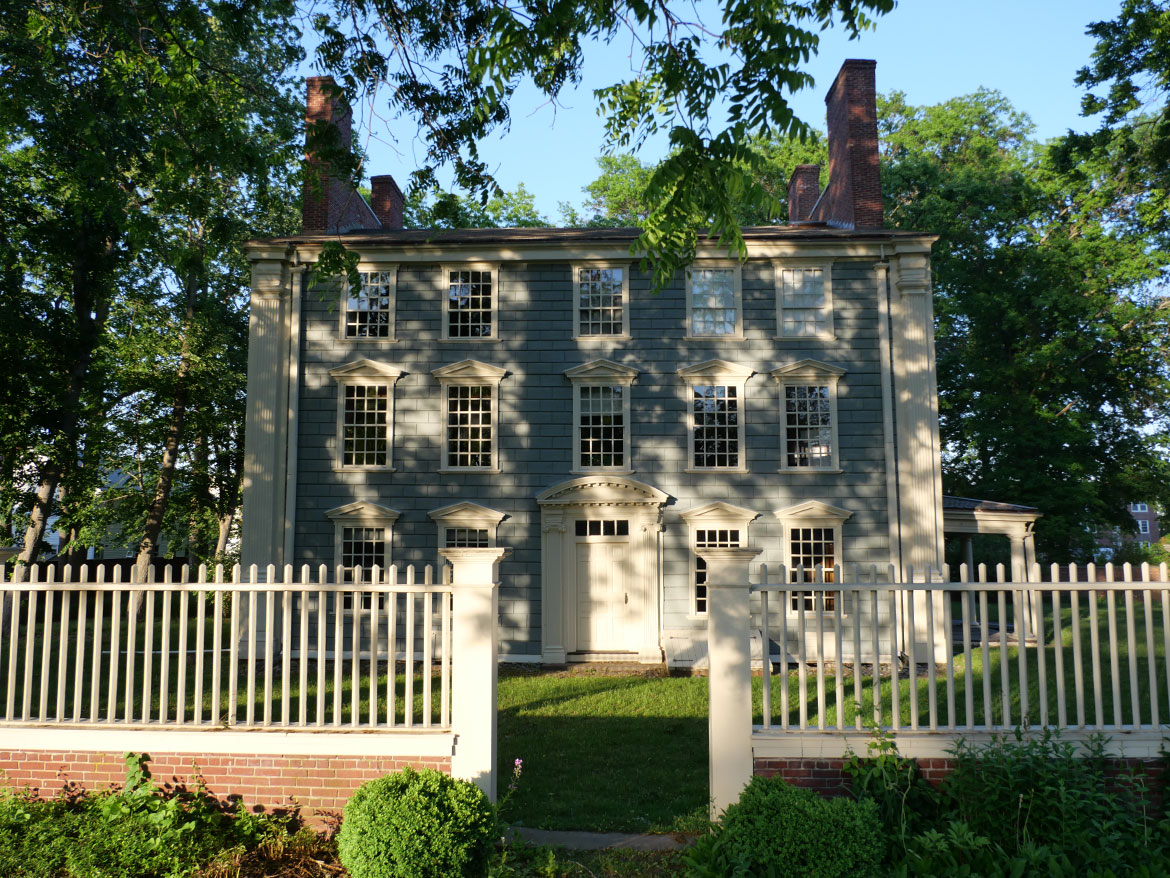
The following year, Royall and his family returned to his native New England, bringing “with them at least 27 enslaved Africans.” They settled into a (then) 500-acre property called “Ten Hills Farm” in Medford that Royall had purchased in 1732, and then expanded an existing c. 1690 brick house there into a three-story Georgian mansion. At least 60 people would be enslaved on the plantation, according to the museum.
Royall died in 1739. His 20-year-old son Isaac Royall Jr. (1719-1781) inherited the slave farm. “One of the colony’s wealthiest men and an active real estate investor, Isaac Royall Jr. held highly visible public offices and entertained lavishly,” according to the museum. “Although he was apparently sympathetic to the Patriot cause, Isaac’s wealth was based on his strong ties to powerful Loyalist families and the English crown. He left Medford three days before the [Revolutionary War] battle of Lexington and, failing to secure passage to Antigua, sailed to Nova Scotia where he remained for a year. He then joined his daughters’ families in England, where he died of smallpox in 1781.” A 1781 bequest to Harvard College from Royall Jr. “helped establish Harvard Law School,” according to the university.
“After Isaac Royall Jr. fled to England at the outbreak of the Revolutionary War,” the house museum reports, “the [Massachusetts] General Court confiscated his estate. The mansion was used during the early months of the Revolution by Generals Lee, Stark, and Sullivan, and was visited by George Washington who, according to legend, interrogated two British soldiers in the Marble Chamber.”
Massachusetts returned the property, these days a National Historic Landmark, to Royall Jr.’s granddaughter Elizabeth Royall Pepperrell Hutton in 1804, who sold it two years later.
If this is the kind of coverage of arts, cultures, and nature that you appreciate, please support Wonderland by contributing to Wonderland on Patreon. And sign up for our free, occasional newsletter so that you don’t miss any of our reporting. Follow us on Instagram and tell us what you really think on Facebook. (All content © Greg Cook 2026 or the respective creators.)