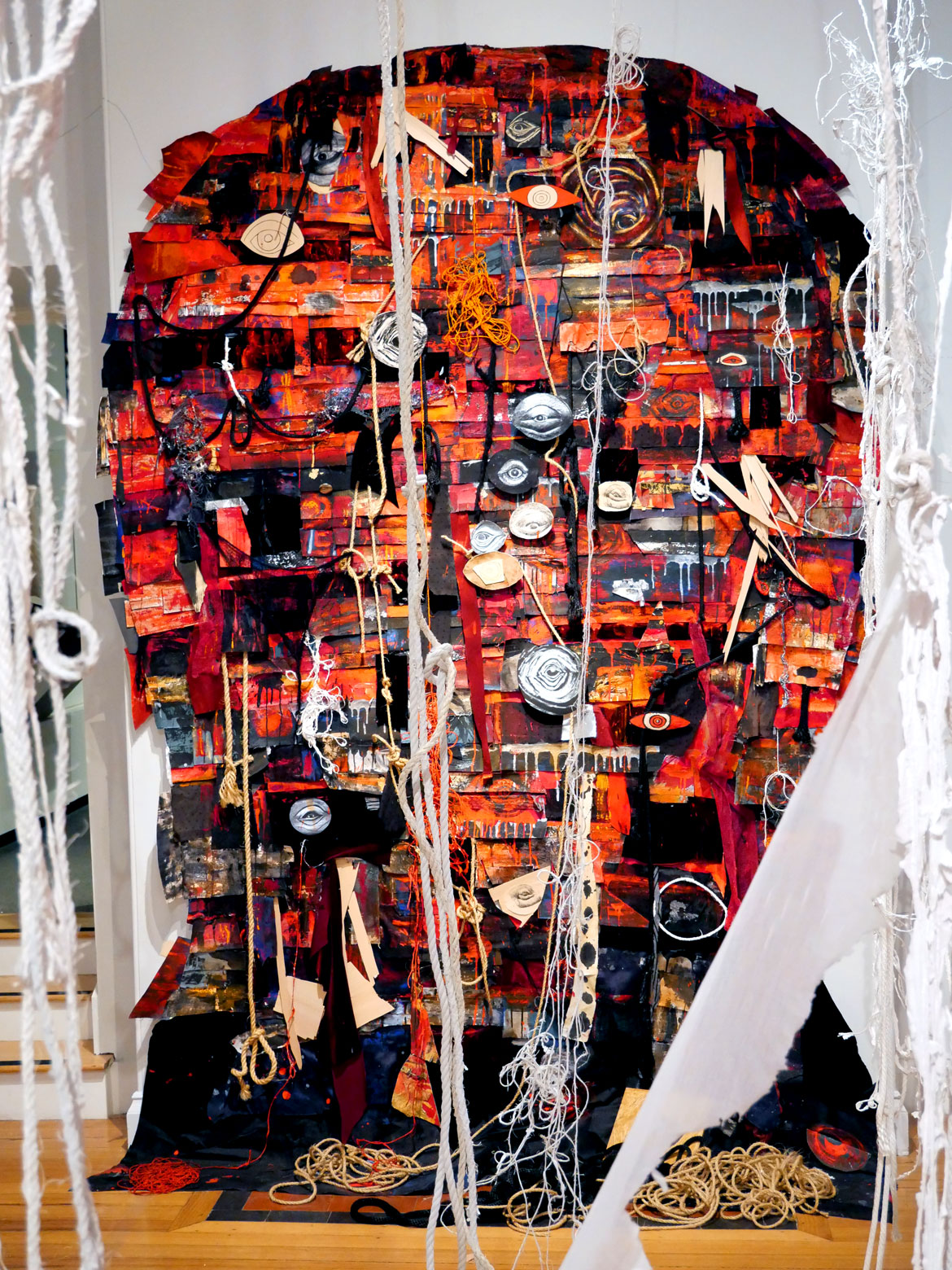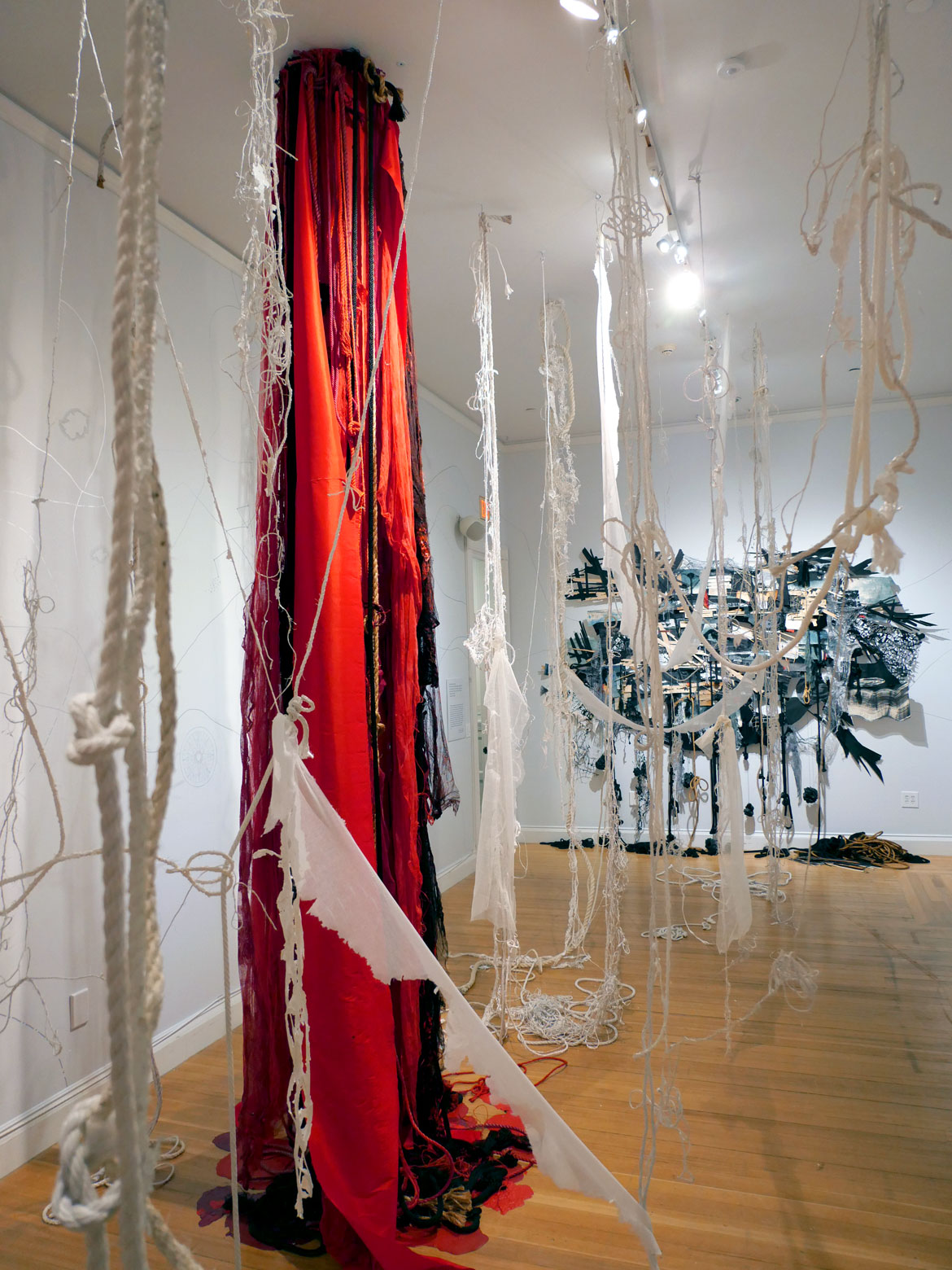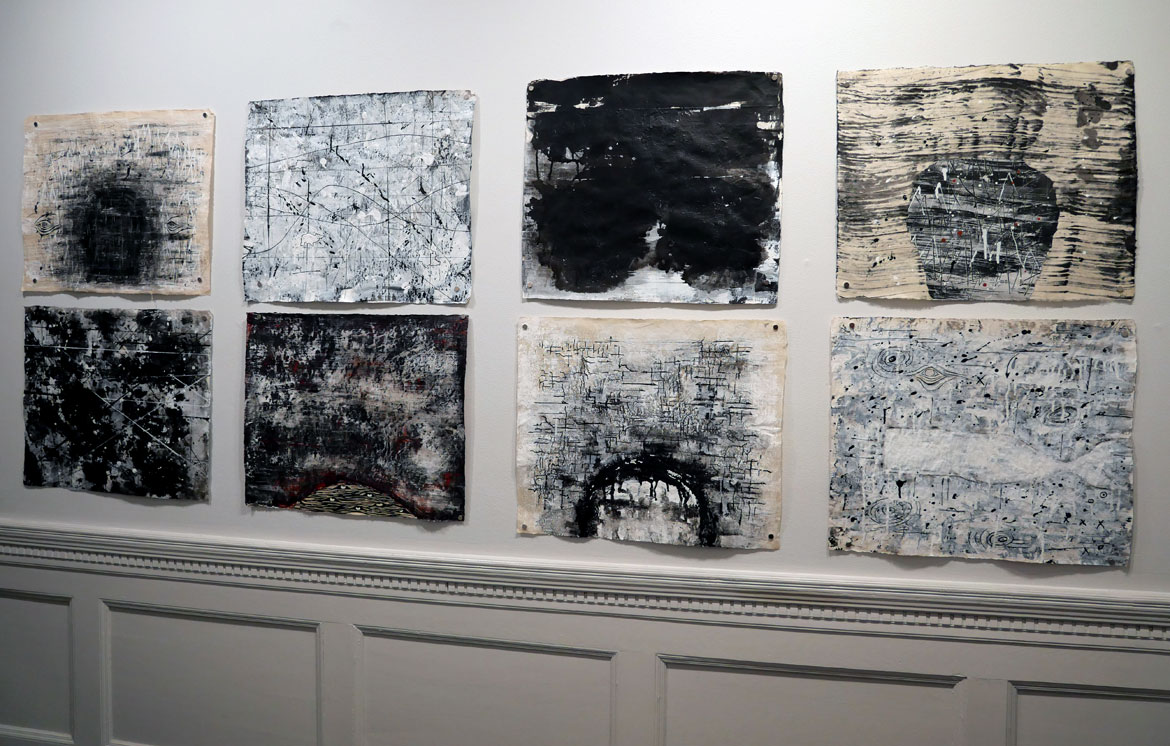
Blood. And destruction. Those are the central elements of Heidi Whitman’s 2025 one-room installation “Ahab’s Head: American Vengeance” at the New Bedford Whaling Museum from Dec. 13, 2025, to May 3, 2026.
The Boston artist’s installation is inspired by Herman Melville’s 1851 epic American whaling novel “Moby‐Dick.” And this museum is a good place to contemplate the tale since New Bedford is one of the stops the novel’s narrator makes—and where he attends church at a version of the Seamen’s Bethel across from the museum—before heading to sea.
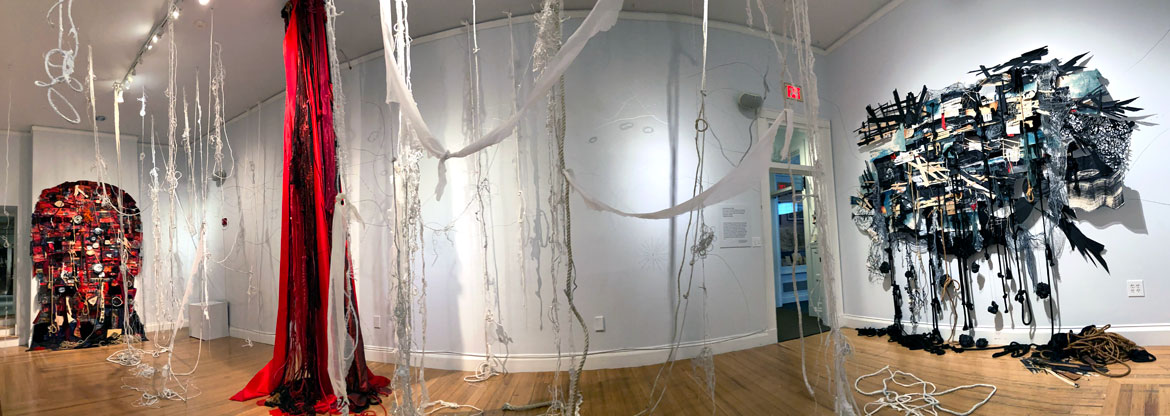
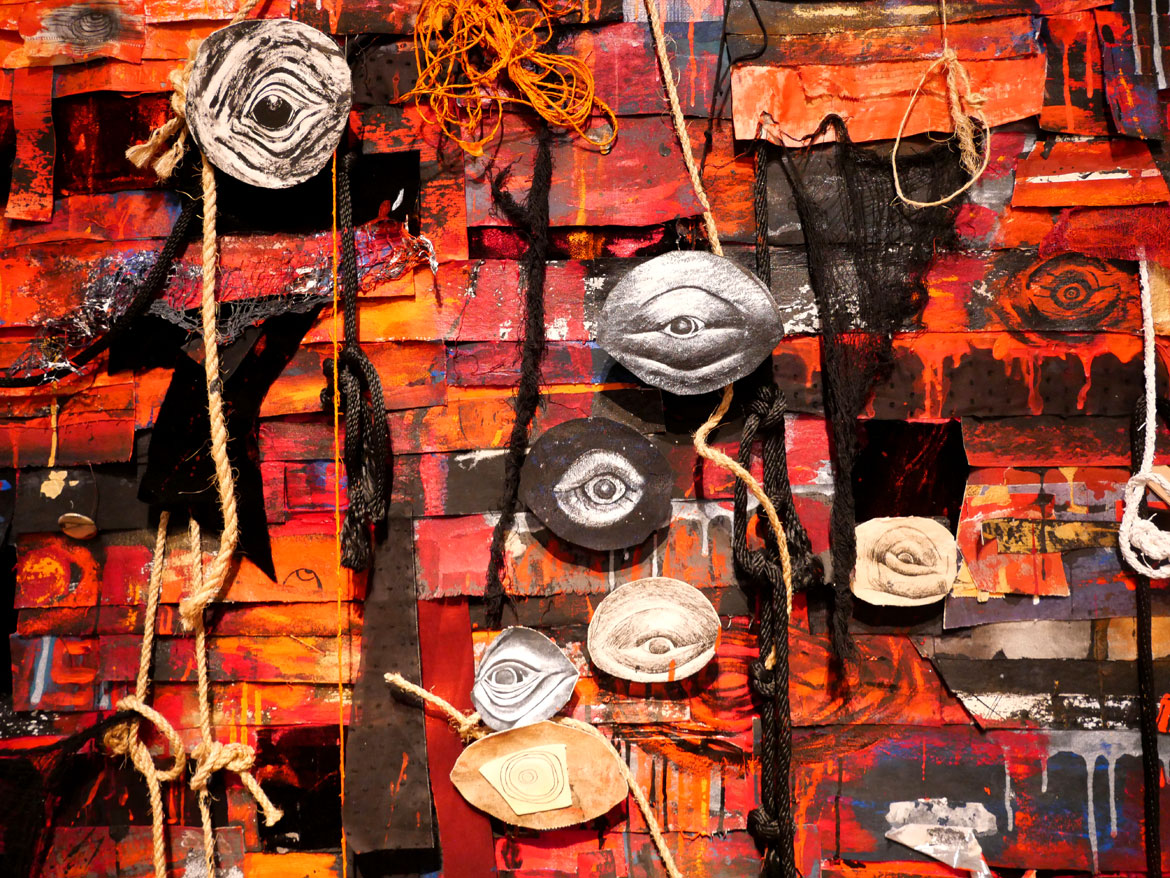
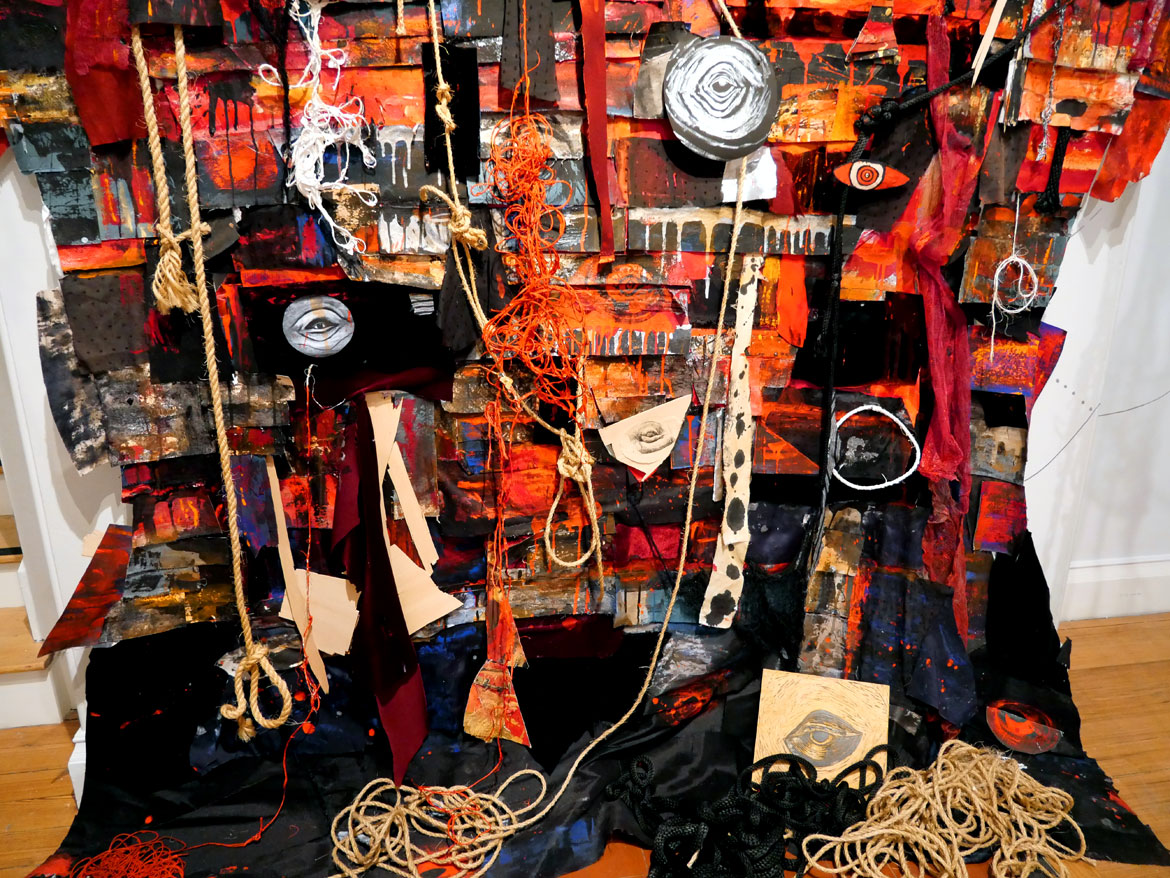
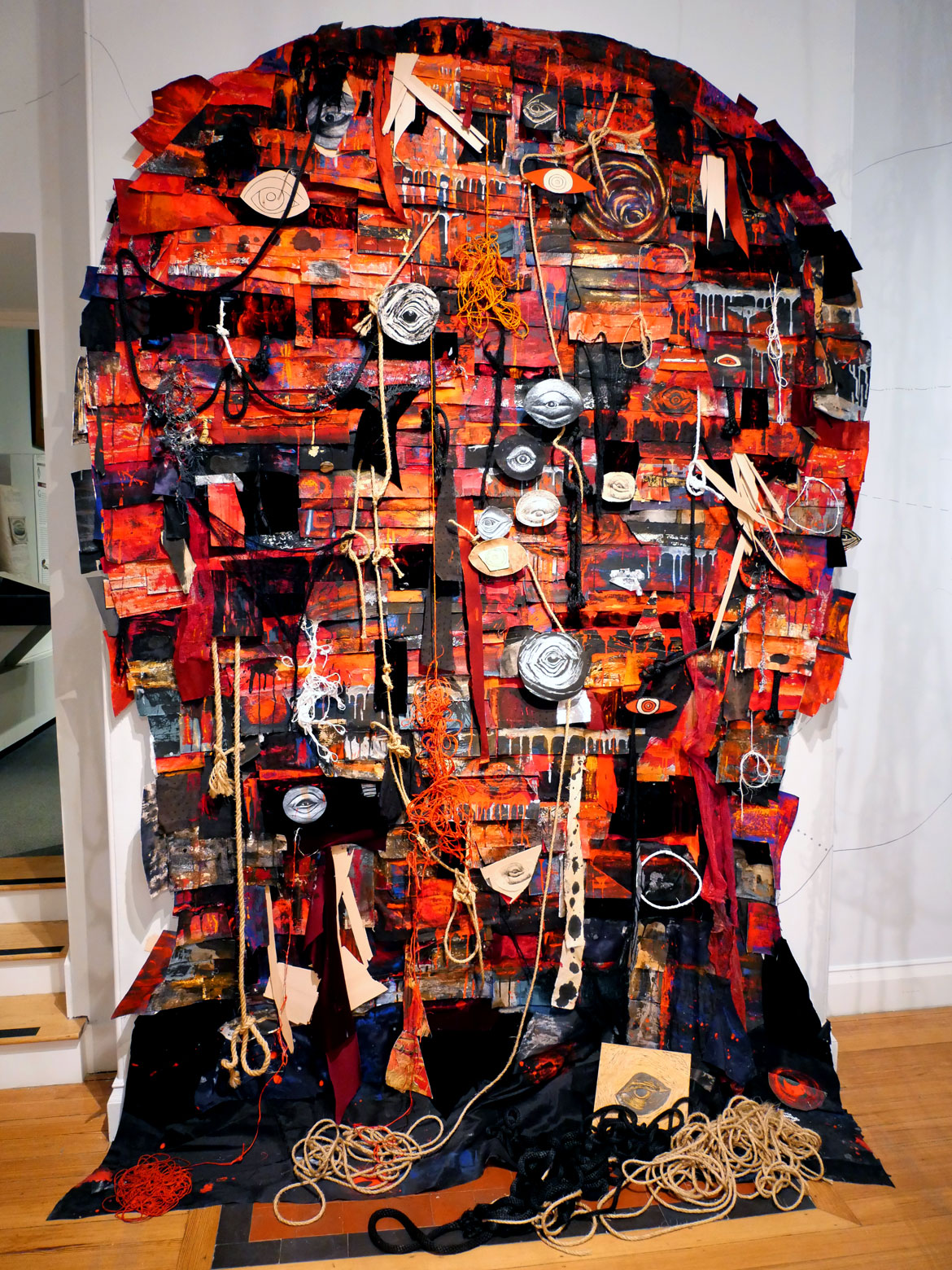
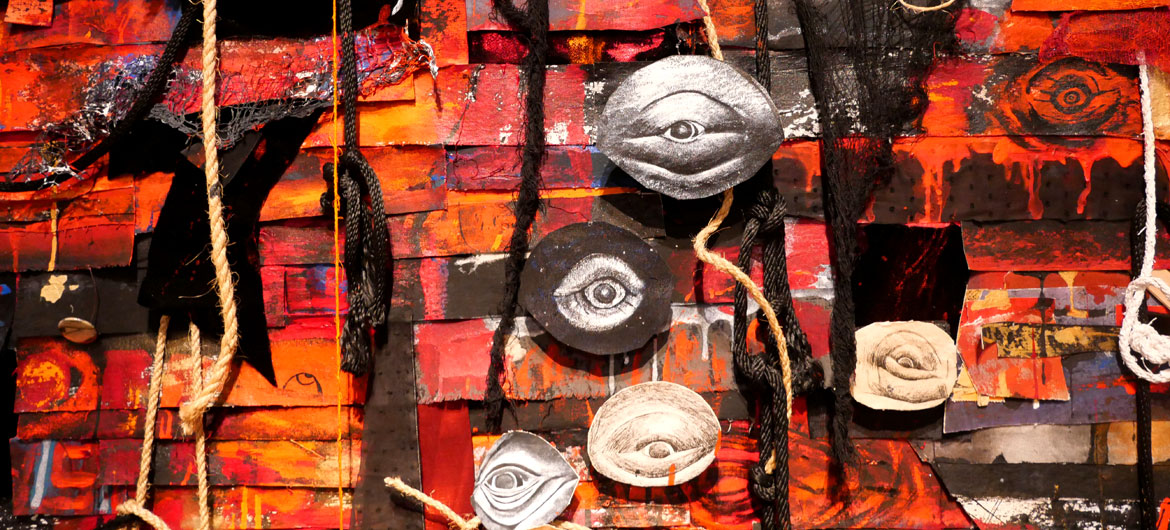
On one end wall of the gallery, Whitman’s installation has what looks like the bloody, monstrous silhouette of a head, presumably captain Ahab of the novel, the man fatally obsessed with hunting down the white whale Moby-Dick. The collage evokes a cross-section of bloody flayed red meat and viscera dotted with staring whale eyes.
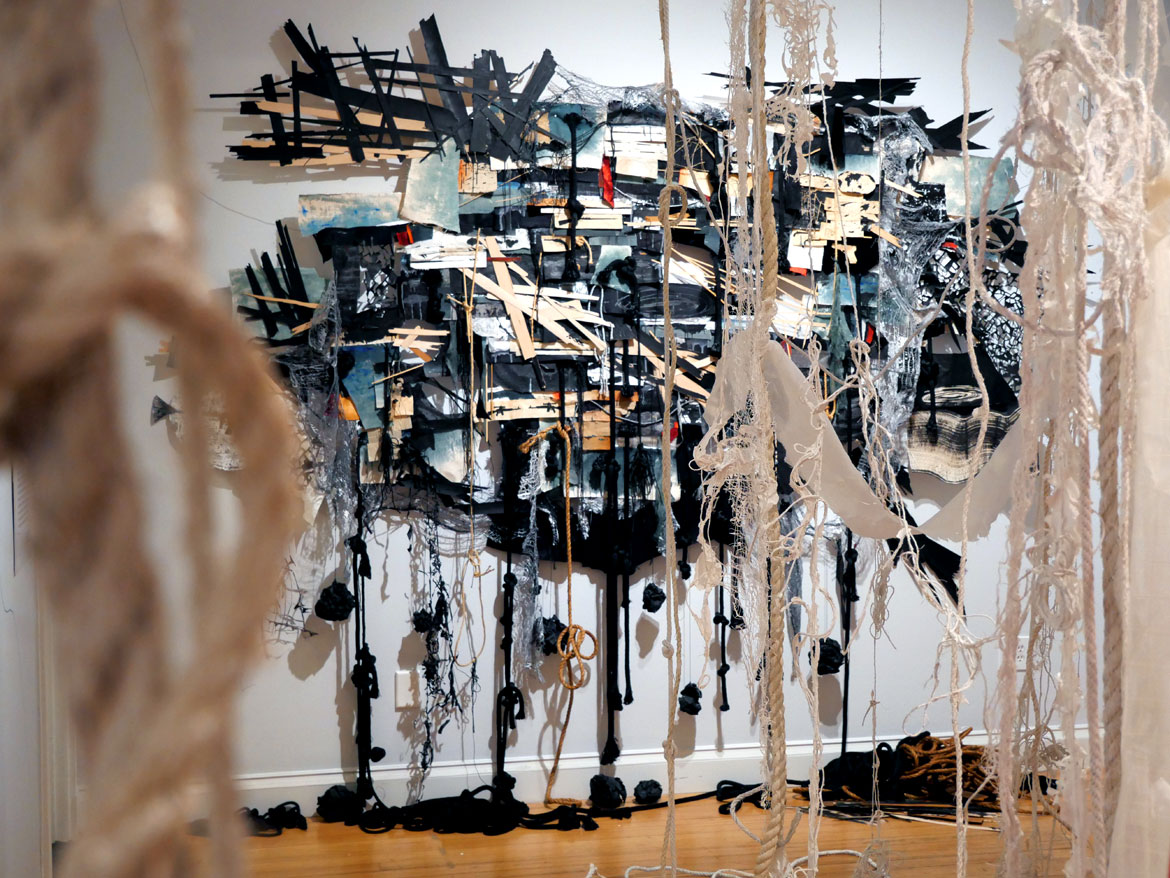
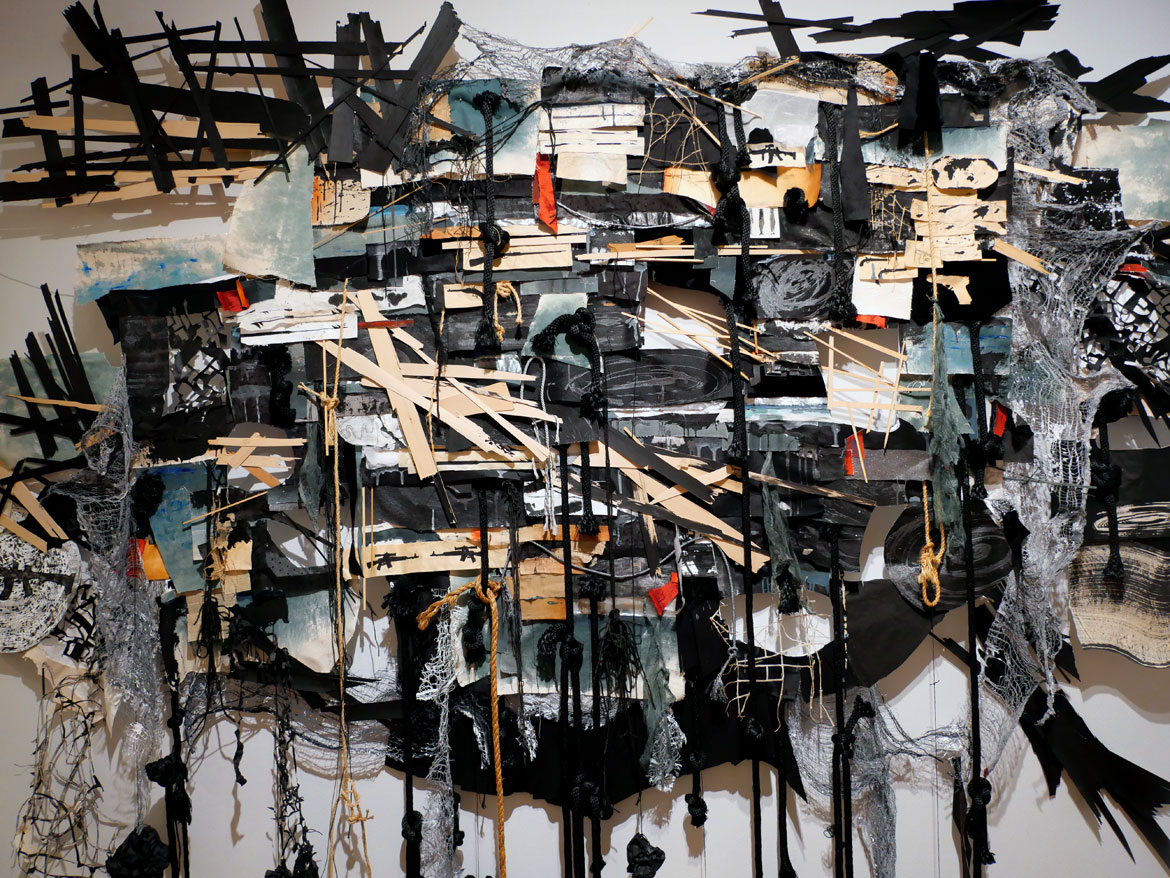
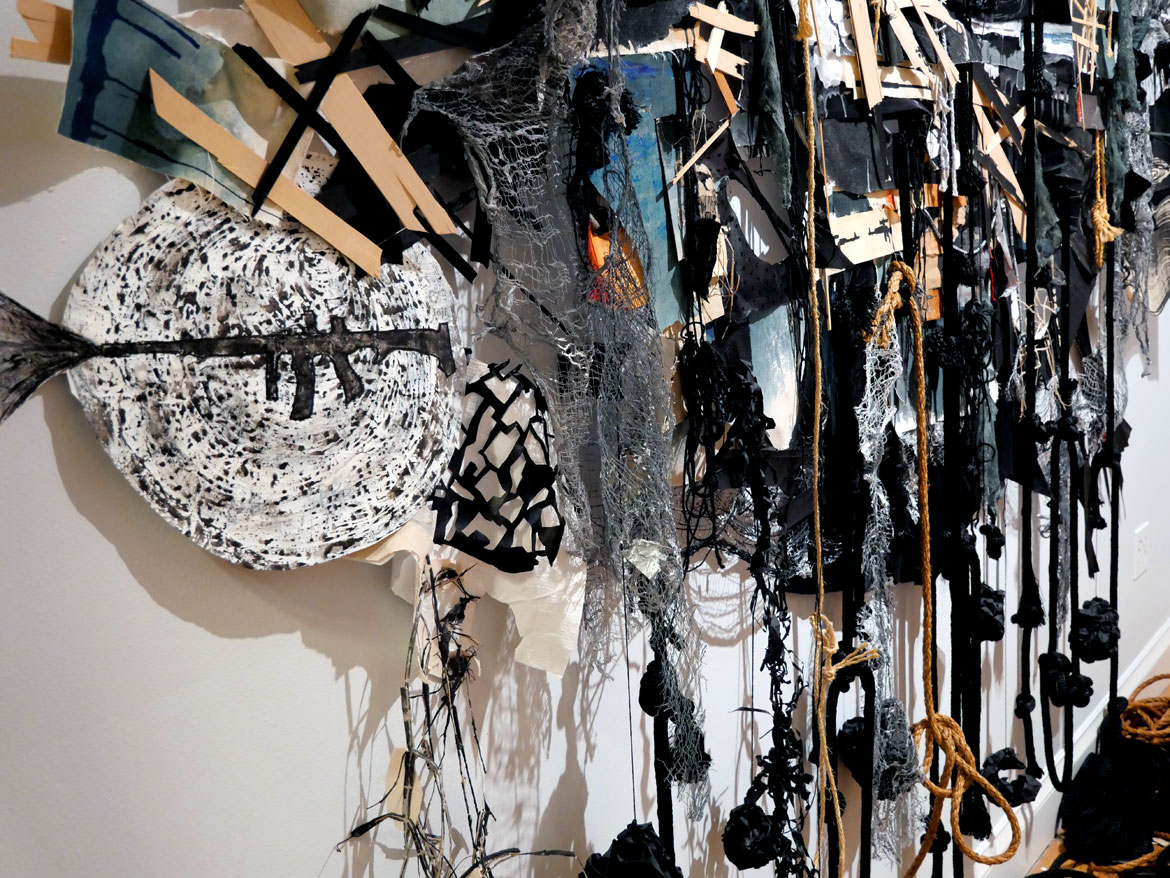
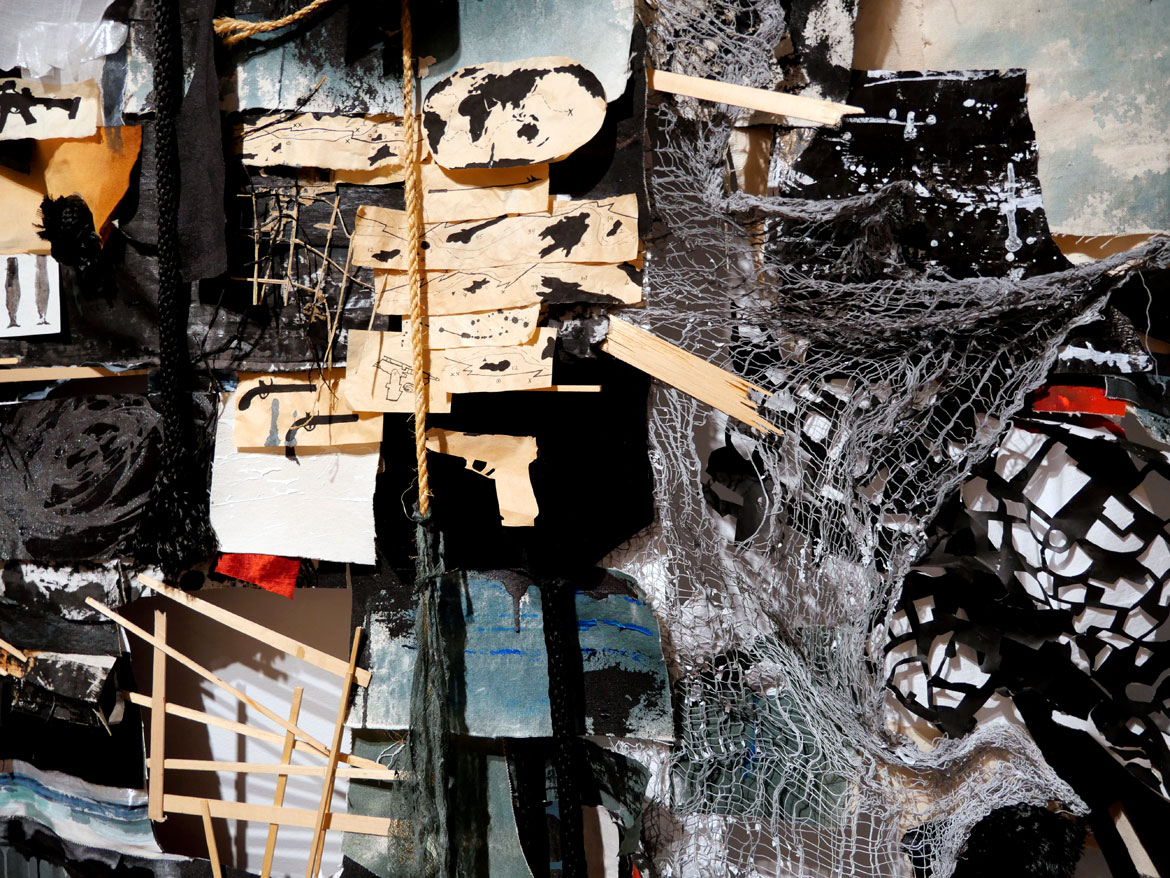
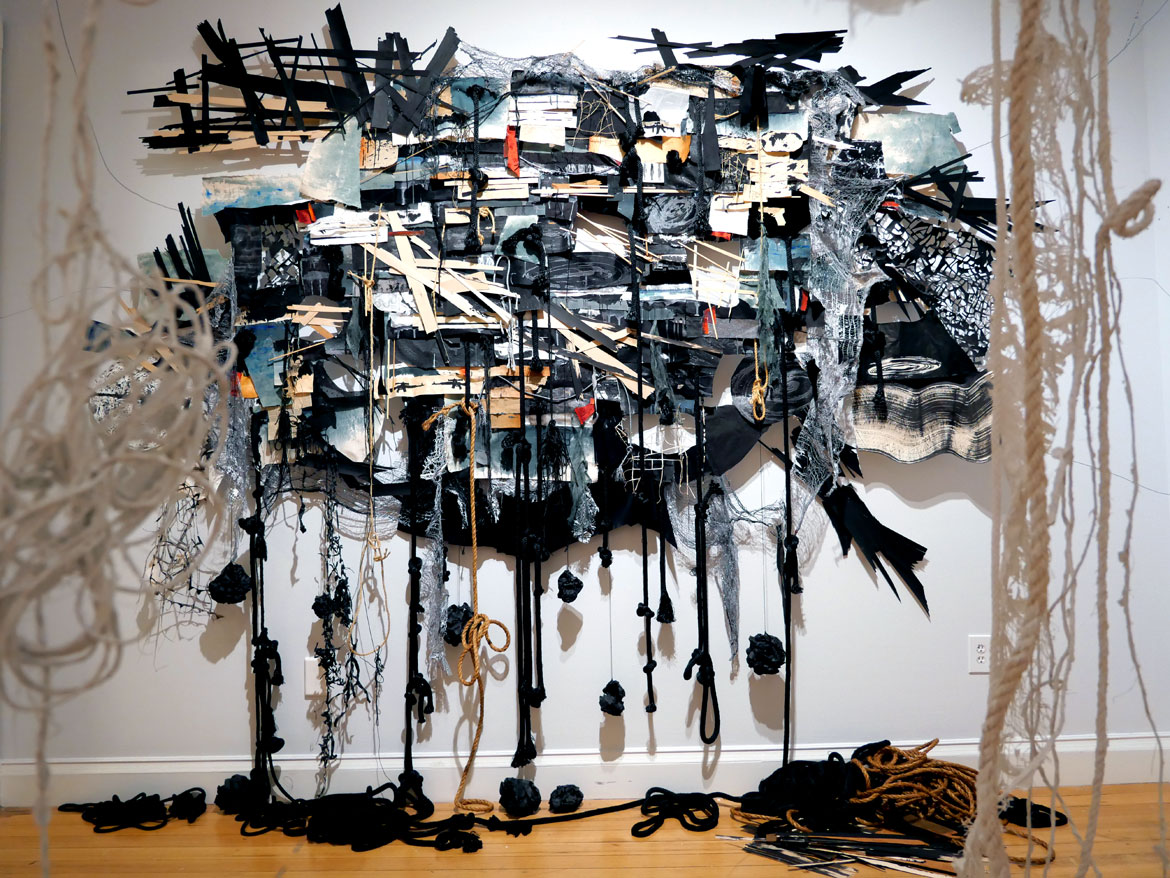
On the wall at the other end of the gallery is a collage depicting the shattered black stern of Ahab’s ship, the Pequod—an explosion of planking, actual black ropes and knots, and depictions of historic guns, contemporary automatic rifles, nets, globe maps, and whales.
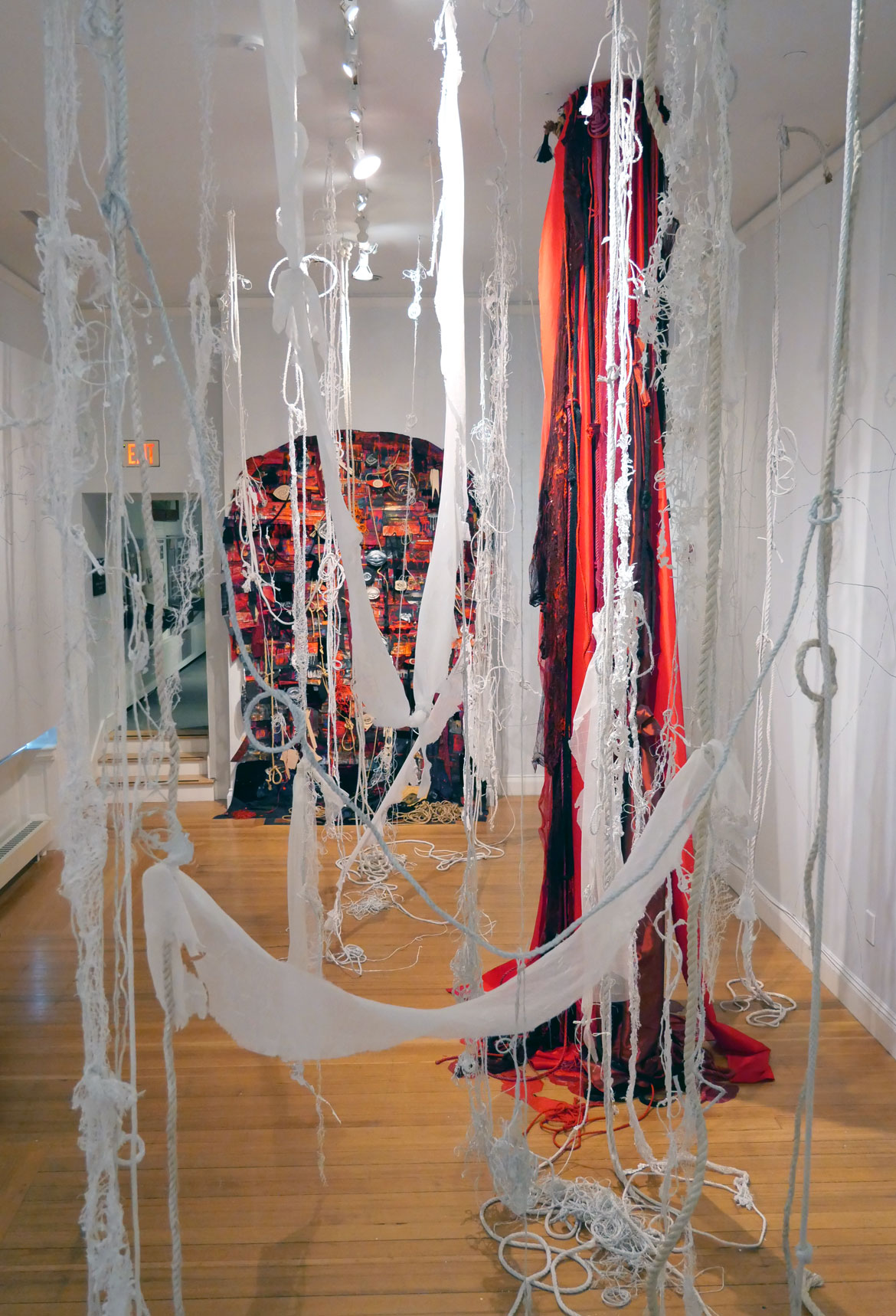
In between, white ropes and ripped shear fabric dangle from ceiling like smashed sails and rigging or haunted cobwebs or maybe bubbles floating up toward the surface of the sea. In the middle of it all is a pillar of red and black fabric, streaming down from the ceiling, that somehow brings to my mind blood torrenting down from a whale being butchered.
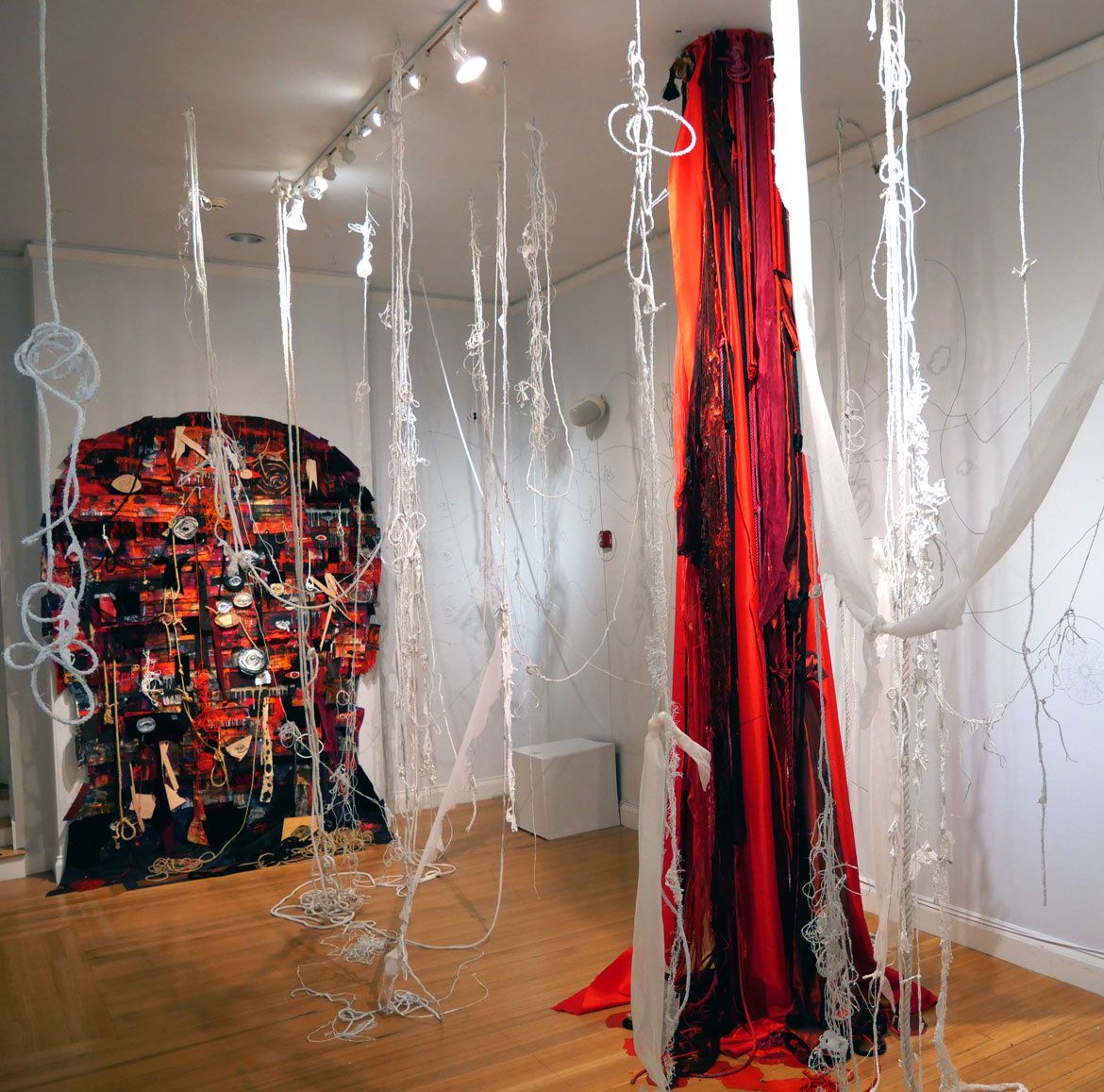
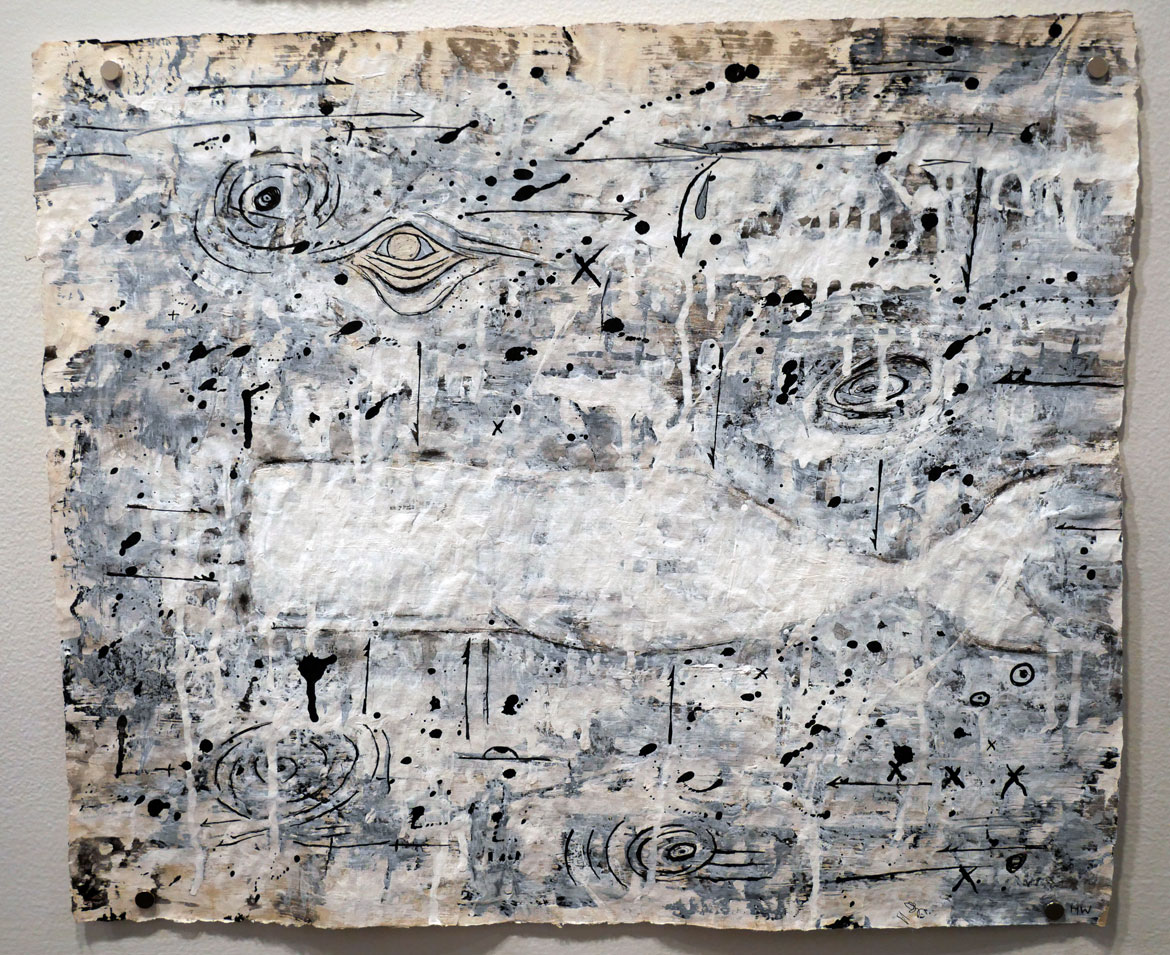
“In March 2020 I reread ‘Moby-Dick; or, the Whale,’ one chapter a day. The dread and obsession in this great novel of whaling and the ocean echoed how I felt at that time in the pandemic,” Whitman has written. “My installation, ‘Ahab’s Head: American Vengeance,’ in referring to ‘Moby-Dick,’ addresses the relentless American obsession with violence. White ropes and string hanging throughout the installation cast shadows on wall drawings depicting fictitious charts of whaling voyages. A sense of ominousness pervades the mapped space. The extraordinary chapter in ‘Moby-Dick,’ ‘The Whiteness of the Whale,’ particularly inspired this installation. Ahab and Moby-Dick are doppelgangers. As evil twins they’re out for mutual destruction. In their total focus they epitomize vengeance. A wall hanging/assemblage at one end of the installation bristles with whale and human eyes. Another large construction conjures up the sinking of the ship, the Pequod, and the darkness of violence.”
Whitman’s imagery is blood and the automatic weapons of our present wars and school shootings. Of late, I’ve come to think of the violence of “Moby-Dick” could also include a different sort. Maybe the book is a 19th century gothic novel about a toxic workplace as well as a global warming prequel—with all its mad, destructive business of decimating the whale population just to acquire oil to burn up in lamps.
Previously:
• How Puppet Magic Brings Plexus Polaire’s ‘Moby Dick’ To Life
• How I Ended Up In A Boat With Captain Ahab Chasing The White Whale In A.R.T.’s ‘Moby-Dick’
If this is the kind of coverage of arts, cultures and activisms you appreciate, please support Wonderland by contributing to Wonderland on Patreon. And sign up for our free, occasional newsletter so that you don’t miss any of our reporting. (All content © Greg Cook 2026 or the respective creators.)