By James Cook
Ocean Vuong grew up only a few blocks from The Wadsworth in Hartford, but he never went inside back then. The art museum was among the city’s austere and formidable buildings that “look like courthouses,” Vuong told me. The Vietnamese immigrants and other working-class folks he grew up with felt places like that were best avoided.
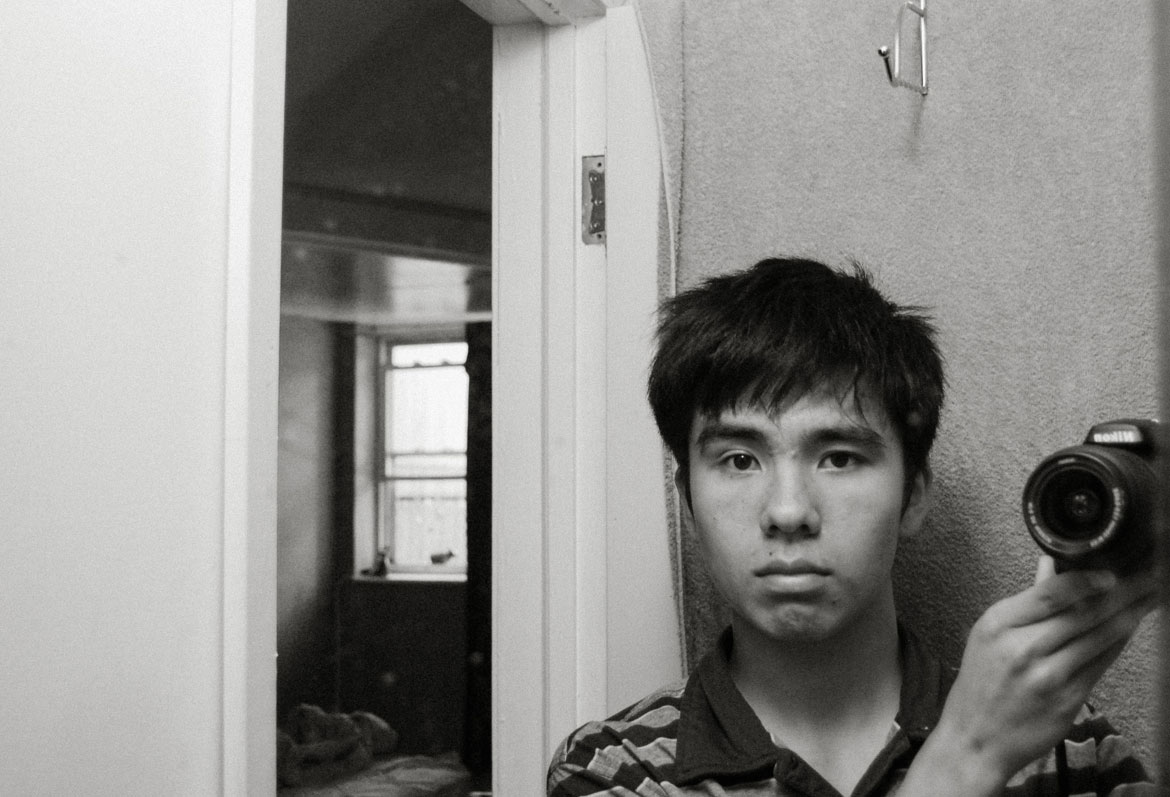
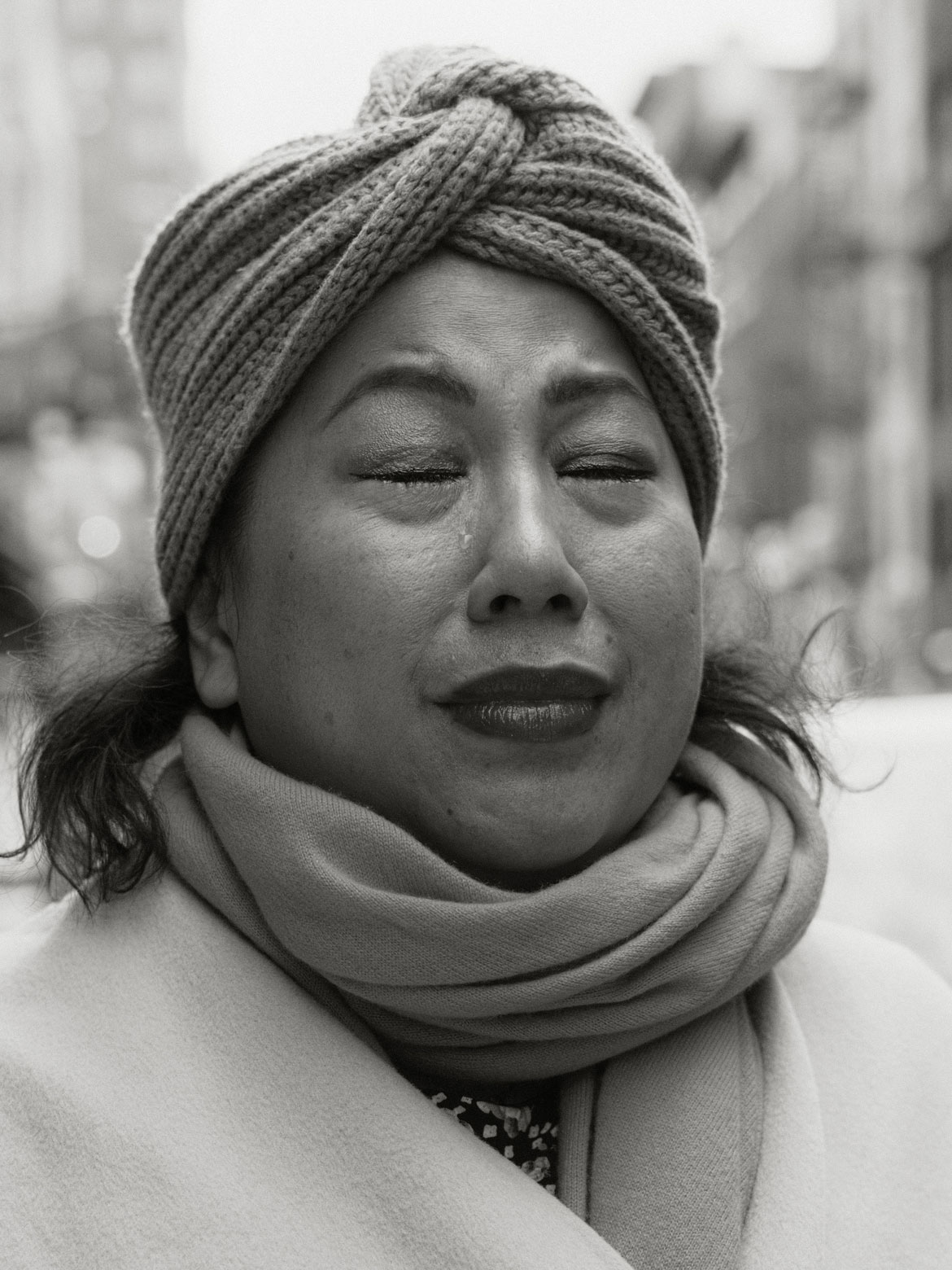
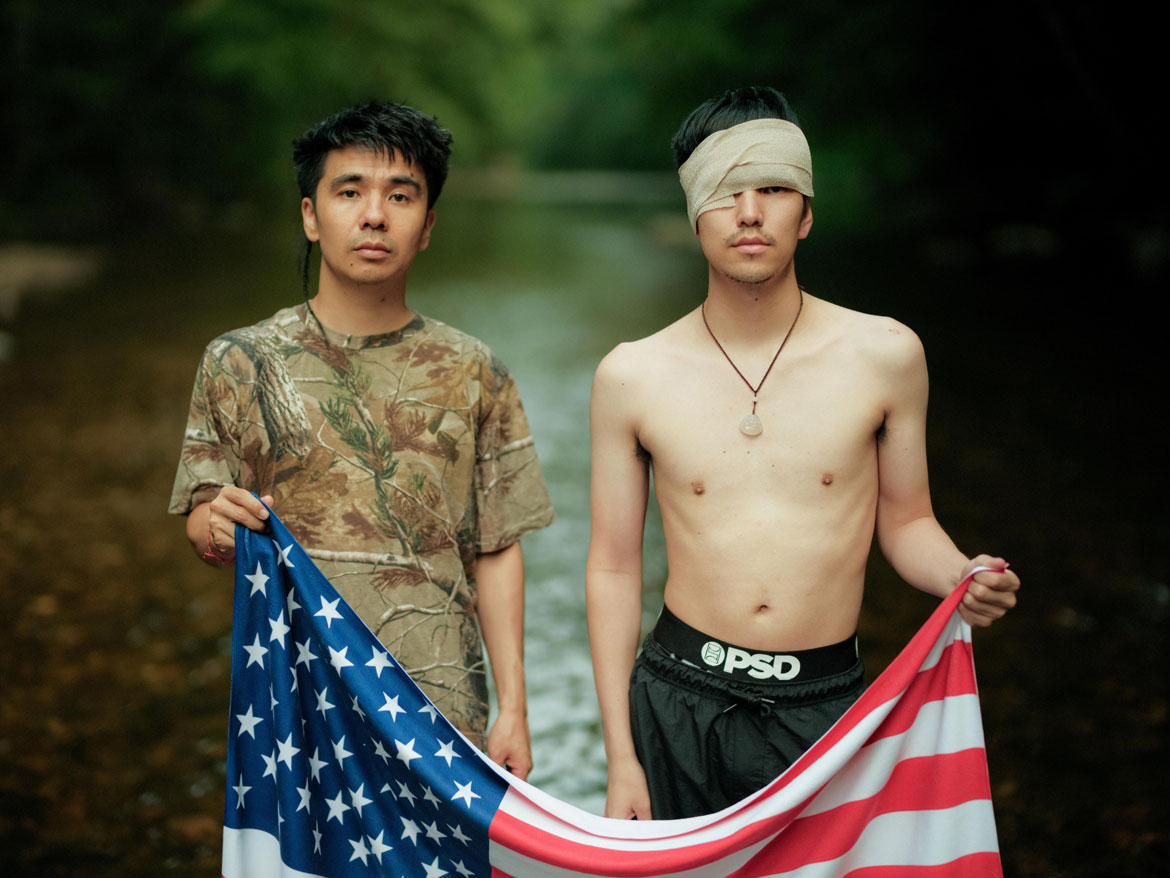
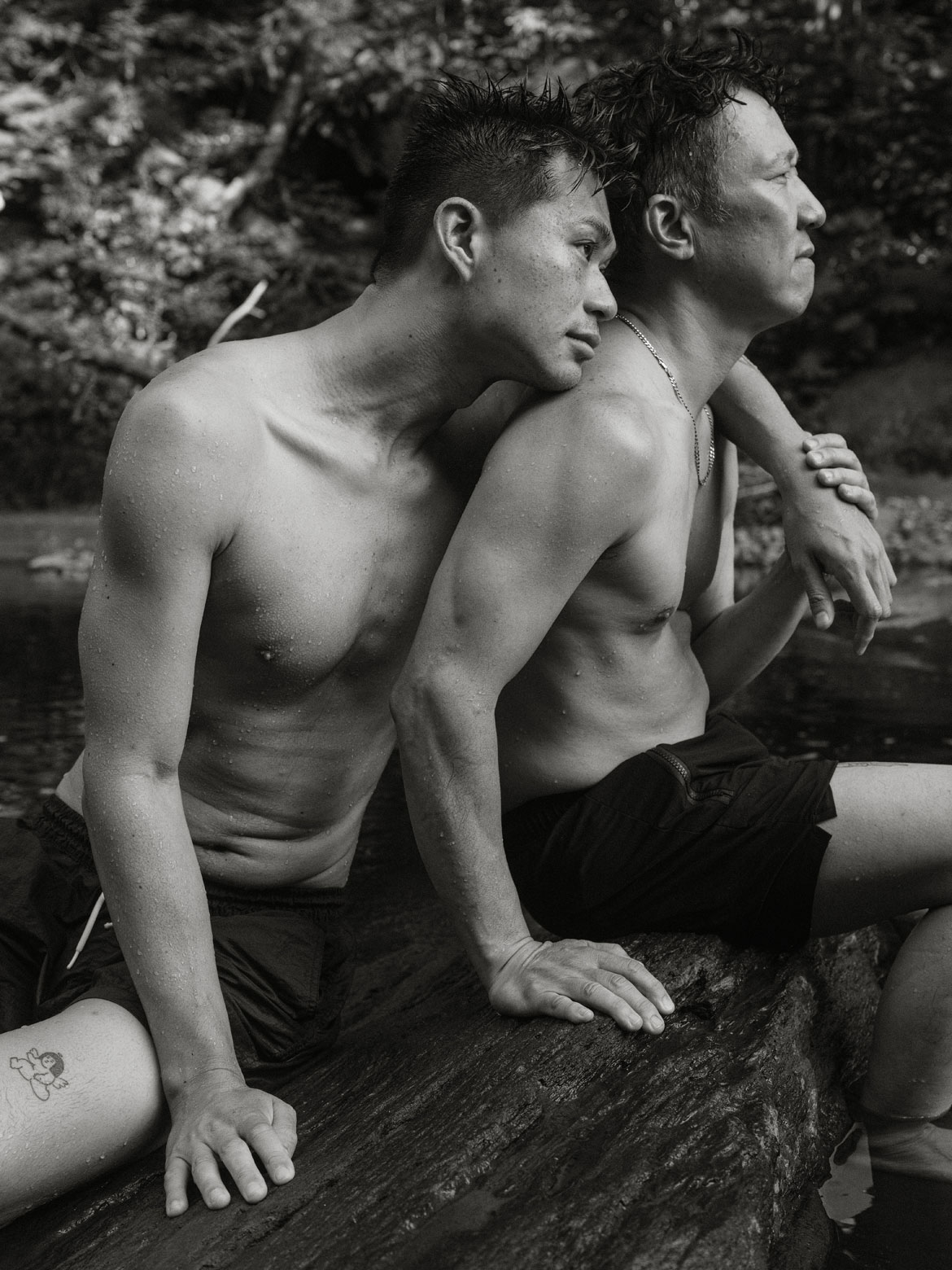
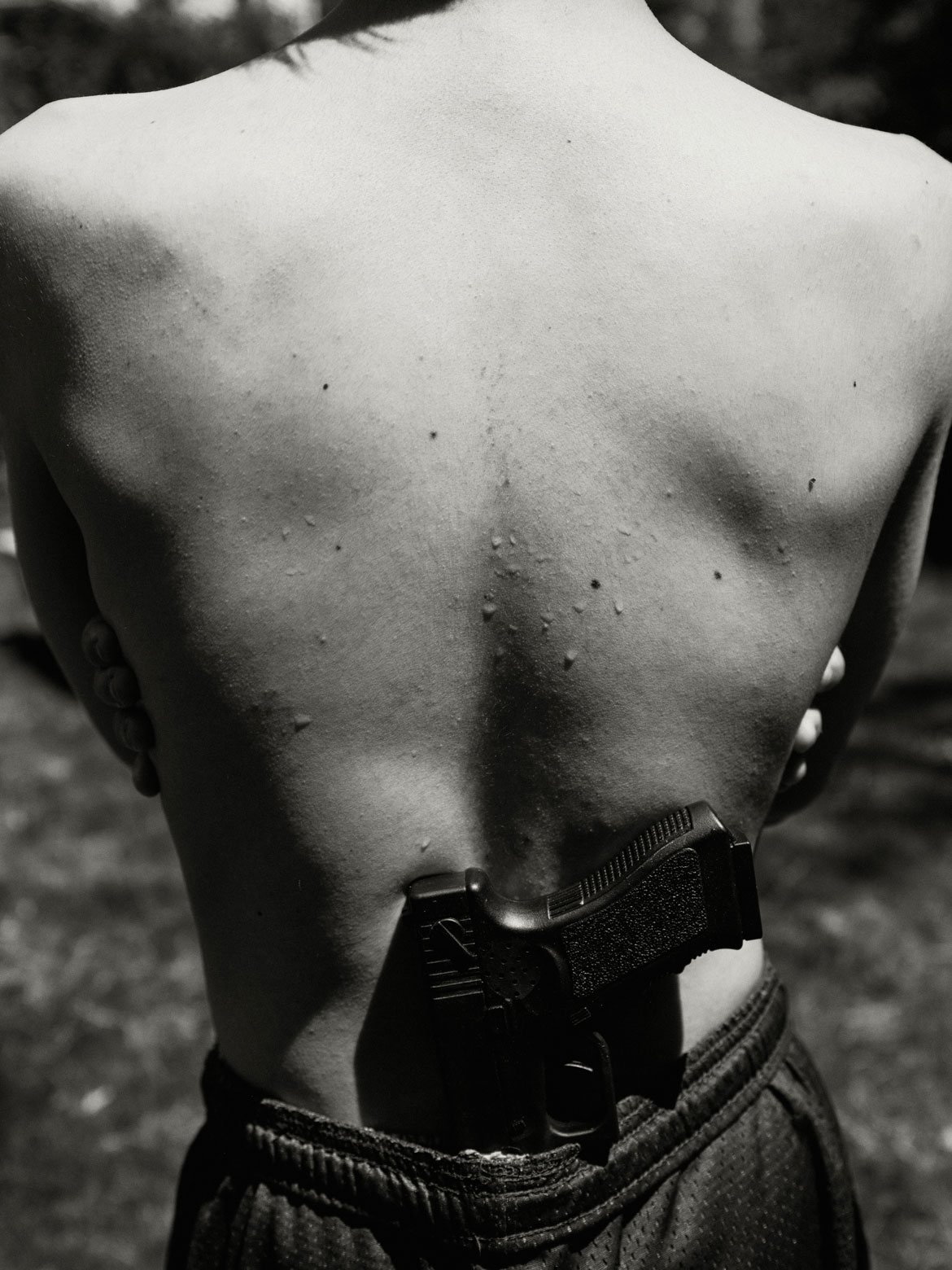
Vuong—a 2026-2027 fellow at Harvard University’s Radcliffe Institute, who has won the Pushcart Prize for his poetry, been honored with a 2019 MacArthur “Genius” grant, and had his 2025 novel “The Emperor of Gladness” selected for Oprah’s Book Club—was at the museum for a new creative venture, the debut of his solo photography exhibition, “I’m Sorry I Love You,” the 199th show in the Wadsworth’s long running Matrix series. A pre-showing for Vuong’s family and friends on Aug. 6 was followed by a rousing reception for the Hartford community. (The show runs through Jan. 24, 2027.)
The opening, which coincided with the Wadsworth’s First Thursday free admission, was spirited and festive, befitting a homecoming. Patrons poured into the museum. The line into the Matrix gallery spilled out into Avery Court.
Inside the gallery, museumgoers bumped into each other, chatted enthusiastically, and gestured towards the images on the walls in which they saw a familiar queer, immigrant, working class, post-industrial, river-dwelling, communal world reflected back to them. The space was transformed from courthouse to block party.
The evening’s fellow feeling felt like a concoction brewed from the caring and allusive photographs of “I’m Sorry I Love You” infused with the exuberant patrons’ familiarity with Vuong’s warmly intimate and piercing poems, novels, and talks. His photography and words share common ground and common cause.
With intimacy in mind, Vuong made the decision to leave all but one of the photographs unframed. (Only “Ocean and his uncle, Lê Duy Phương, State House Square, Hartford” (1993), taken by Vuong’s mother, is framed. Vuong’s uncle, only three years older than Vuong, died by suicide in 2012.) A pin at each corner holds the other images to the wall. In conversation with me, Vuong suggested the selection and arrangement of photographs in a gallery is akin to the way people expressively decorate bedrooms and living spaces with favorite images and objects (though the overwhelming white and empty spaces on the gallery walls muted the effect somewhat).
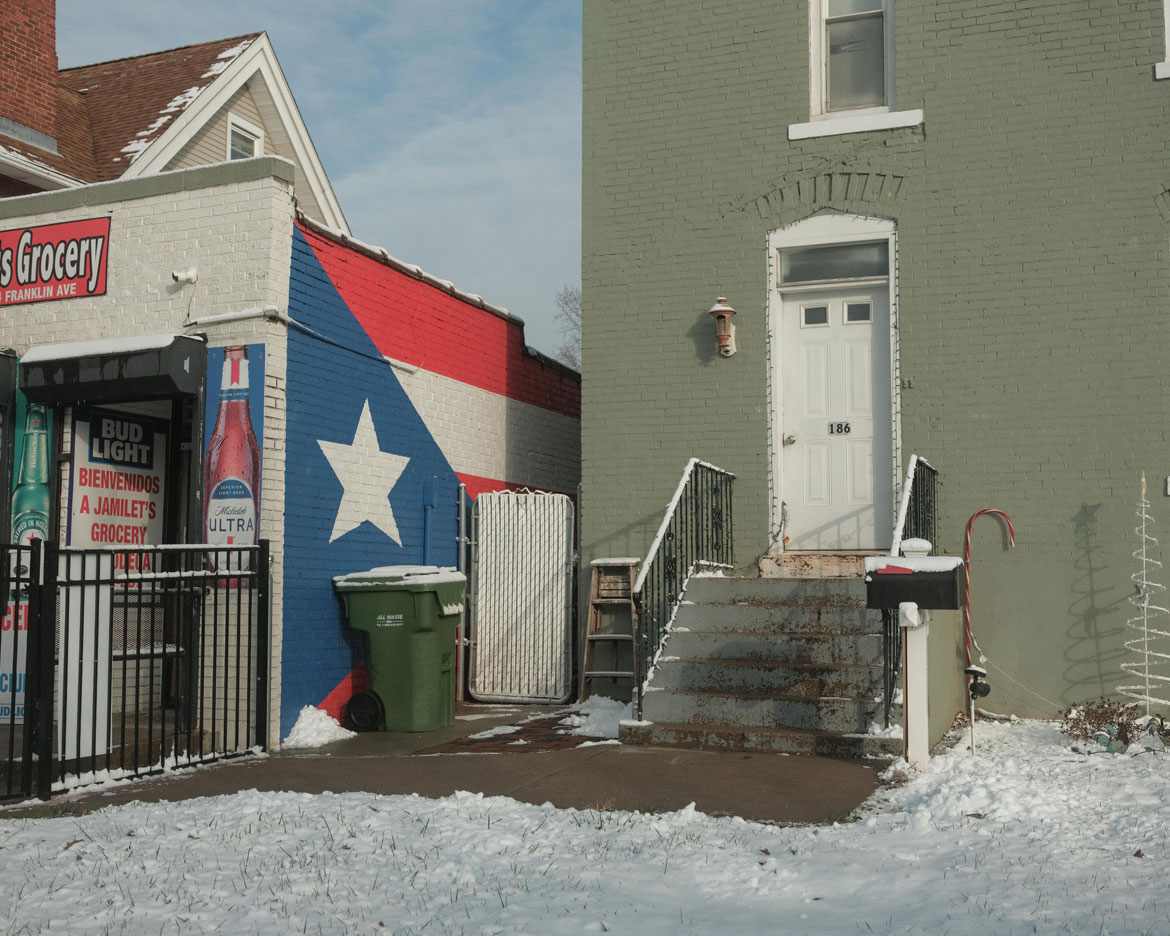
A clothesline running through the middle of the room heightens the sense of Vuong’s world made lovingly public. Two photographs printed on fabric hang on the clothesline, dividing the room into black-and-white images on one side and color on the other. A black-and-white fabric print of skatepark marker graffiti—“I’m sorry I love you”—announces Vuong’s love for intimate ambiguities and street art. The color fabric print—“Franklin Avenue (i)”—seconds that love for street art (a mural of a Puerto Rican flag adorns the sidewall of a groceria) and calls back to Vuong’s childhood neighborhood (Franklin Avenue begins just a few blocks south of the Wadsworth).
The clothesline dividing the room brought to mind the duplexes in my own childhood neighborhood. Clothes come before the wearer; just as Vuong told me, the world we turn into photographs comes before the photographer. But what we select—to display on our bodies and frame with the camera—expresses in some way what we want to share with others. Our clotheslines make our laundry public, as Vuong’s photography makes personal moments public too. The pushpins holding his photographs in the walls and clothespins holding the fabric-printed photographs to the clothesline were apt touches. Vuong invites us to think about the ways we pin our favorite things—things precious and meaningful to us—to show others our world.
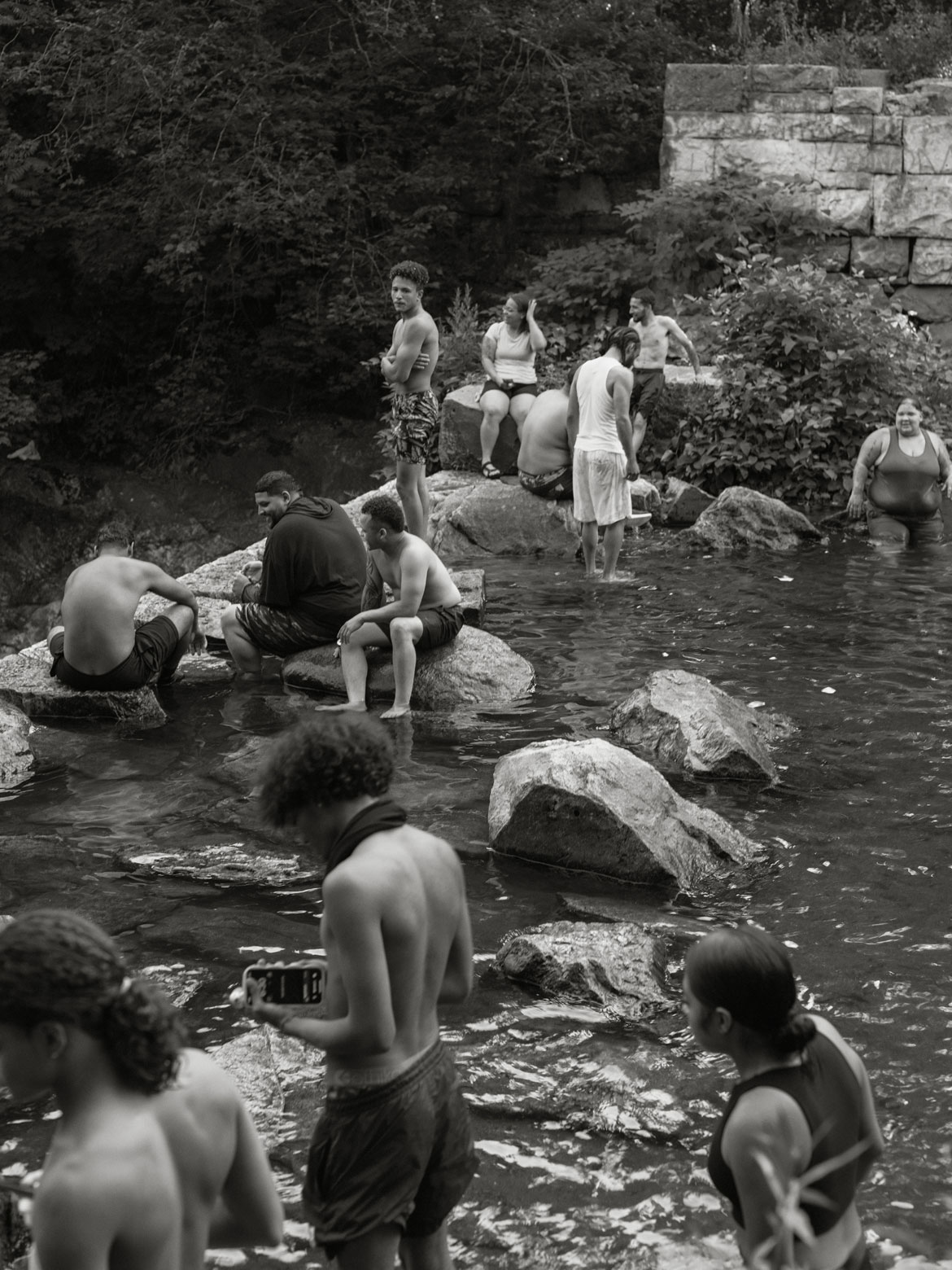
The Connecticut River Valley, Vuong’s ground, provides the setting for both of his novels, and he has remarked about the region being the home of his becoming, a home to which he has returned literally and artistically again and again. One wall of the exhibit brings this to our attention with a passage from fellow Hartfordian (and insurance executive) Wallace Stevens’s poem “The River of Rivers in Connecticut”:
“Call it once more, a river, an unnamed flowing,
Space-filled, reflecting the seasons, the folk-lore
Of each of the senses; call it, again and again,
The river that flows nowhere, like a sea.”
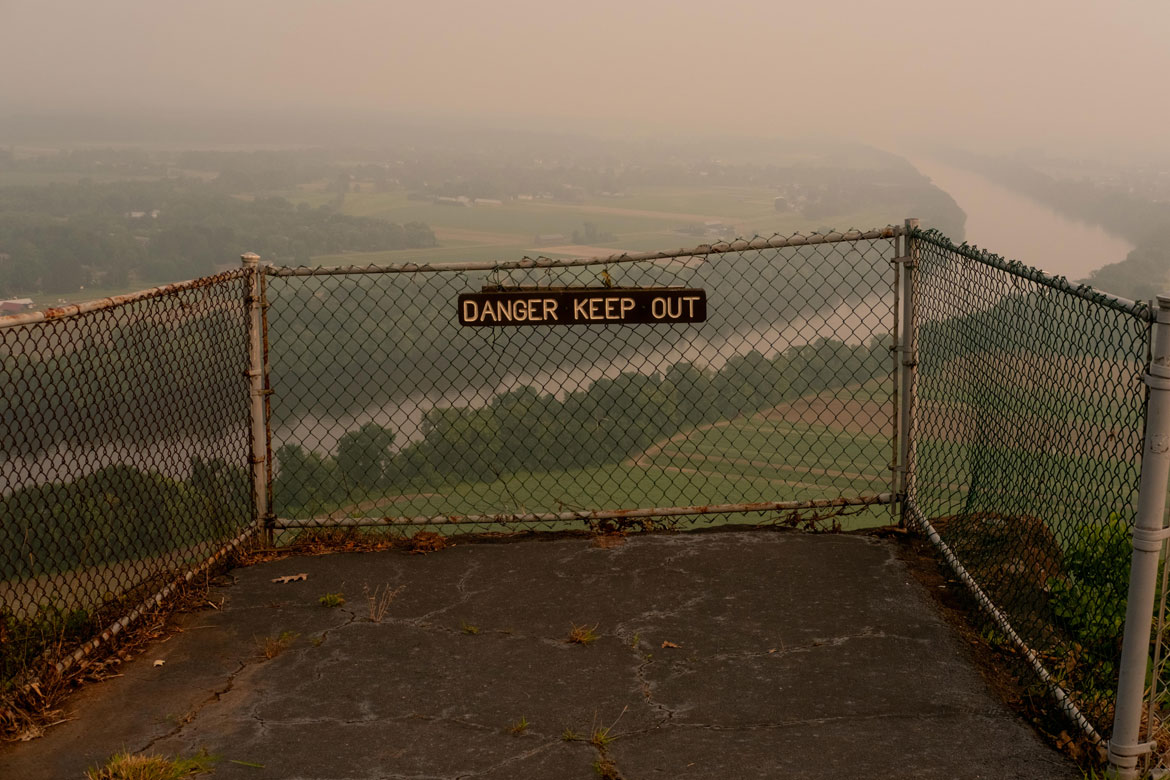
Vuong now lives a bit further north in the valley in Northampton, Massachusetts, (as well as New York City). His last novel, “The Emperor of Gladness,” is set in fictional Gladness, Connecticut, in the Valley outside of Hartford. One road trip in the novel takes the protagonist and co-workers nearly the full length of the Valley into Vermont. In “I’m Sorry I Love You,” the photographs find their home in the Valley too.
When I spoke with Vuong before the opening, he showed me “Nicky after 12-hour shift” (2025). In the image, Vuong’s brother, exhausted from a shift a Dick’s Sporting Goods, collapses in a field by the Connecticut River. Vuong recalls recognizing the moment’s expressive and mythic potential, finding higher ground, and capturing the image. He observed that his brother “seems to be dreaming the river.”
Later, during the post-opening talk, Vuong shared his artistic interest in the fleeting leisure time of the working class: “I’ve never seen my mother walk in a park.”
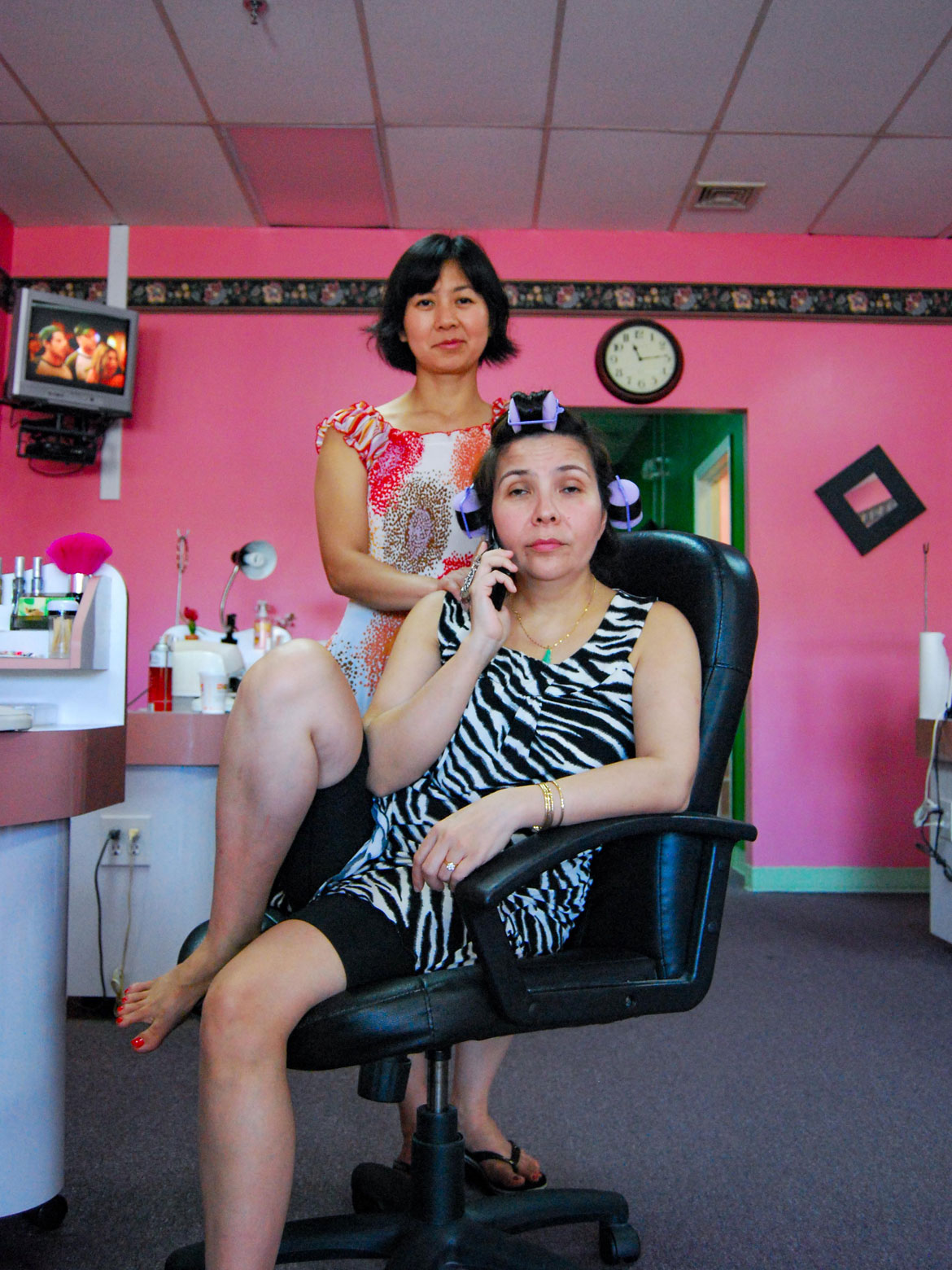
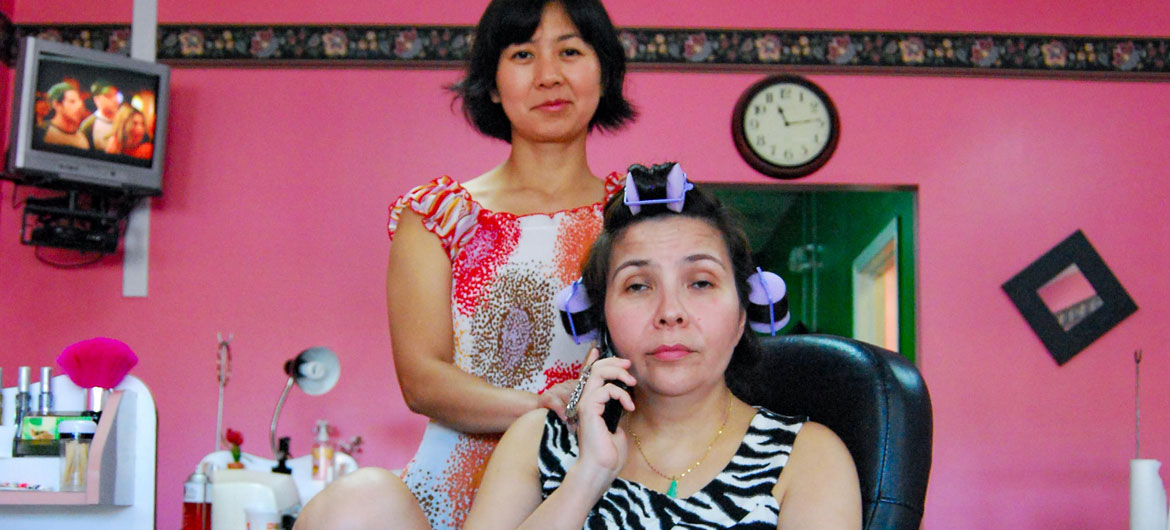
In another image “Rose and Phuong (ii),” which he later explicated at length, Vuong captures his mother and aunt at his mother’s nail salon. A moment of repose–composed as if a court portrait–is disrupted by a customer (out of the frame) entering the salon. The image captures his mother, Rose, responding, leisure becoming labor, as his aunt remains posed. A companion photograph, “Rose and Phuong (i),” captures the pair at stately, composed rest within the salon: bemusement and wry suspicion mark their faces, and Rose is on the phone–at rest but with work to do.
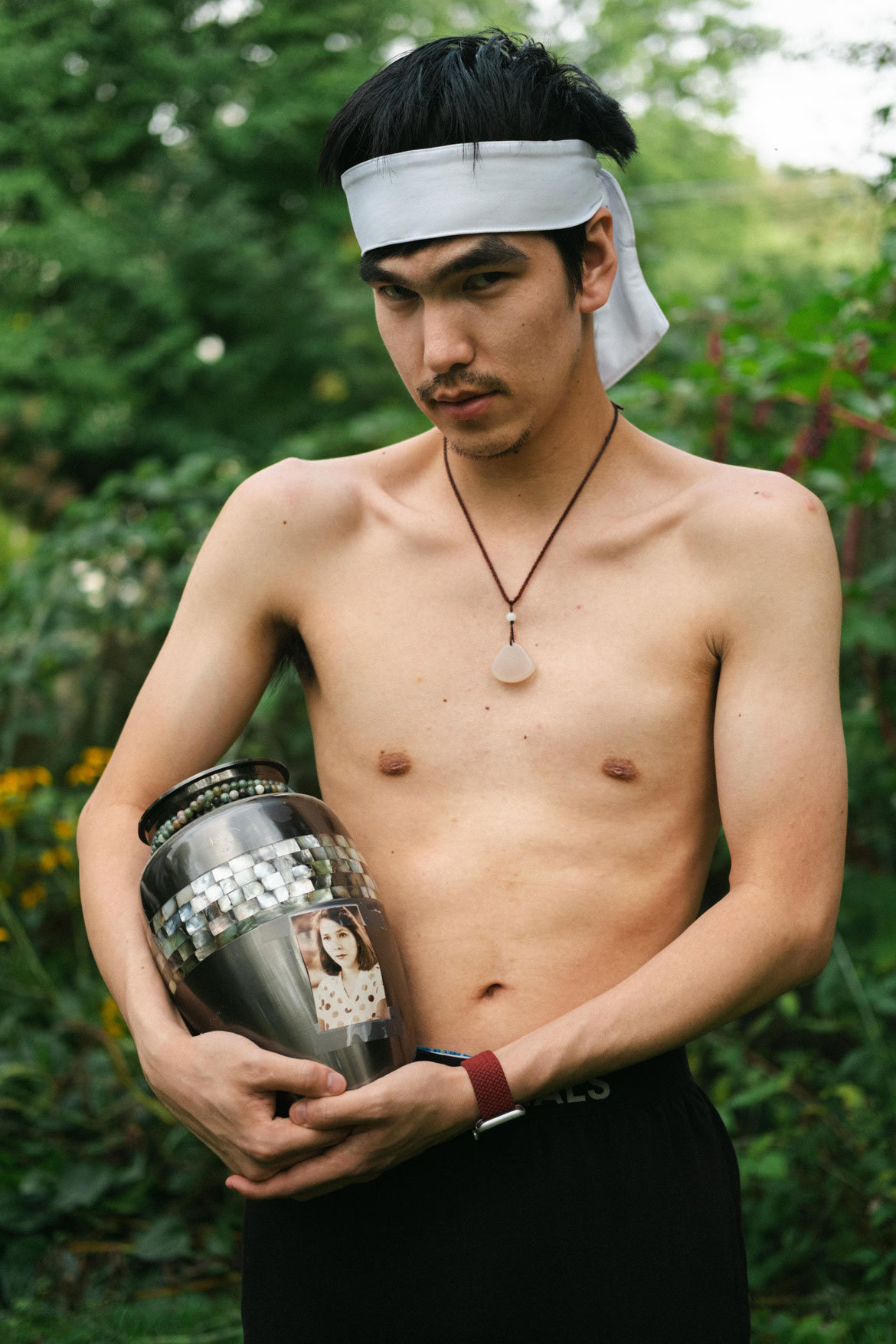
Vuong’s mother is the co-star of the exhibition. His brother, Nicky, is the other star. The cluster of images from 2009 in which his mother features are the most richly colorful, vibrant, and pictorially animated photographs in the show. Her personality comes through as it does in Vuong’s 2022 poetry collection “Time is a Mother,” a title as poetically mercurial as “I’m Sorry I Love You.” The images are devastatingly poignant too: Rose, so alive in the photographs, died from breast cancer in 2019. An image “Nicky and Mom” shows Vuong’s brother shirtless cradling an urn upon which is taped an old photograph of their mother. The image is paired with a collage entitled “Mom’s ER notes”; the caretaking notes are accompanied by two pictures of Rose stretching back to when she was younger. Time is a mother.
In the gallery, after showing me the image of his brother by the river, Vuong brought me over to look at an image from a community festival, “tri-county fair.” He pointed out the gesture of an outstretched arm. Compositionally, the arm reaching from the right towards (and almost meeting) a receiving hand on the left, bent gently at the wrist, recalls, Vuong suggests, God reaching for Adam in the Sistine Chapel. It sure does. No doubt. But in Vuong’s photograph the hand reaching across holds money to be exchanged. A motorcycle demonstration at the fair, another sort of artistic performance, is about to begin.
These images without additional context (“like poems,” Vuong pointed out to me) interact with mythic imagery and icons. With context, the mythic echo is complicated and enriched, not unlike the American odysseys in “The Emperor of Gladness,” in which participation in grand quests leads to resonant, revelatory disappointment at darkly and vividly iconic places, the Stonewall Jackson House and a regional pro wrestling show. Vuong does not traffic in irony. Each questing Odysseus is granted due dignity. Each photographic subject, an icon in myth.
Vuong has talked about the role of mimesis and metaphor in writing, particularly how metaphor conveys interiority and subjectivity. When I asked him about these concepts in relation to his photography, he again referenced myth and told me photography “punches a hole in time.” The place is there “before you”; the photographer frames it. The writer, conversely, encounters a blank page and must make it all up. The word “poet,” Vuong reminded me, comes from the Greek word for “maker.”
Vuong then led me through a thought experiment. If the earth were destroyed and we made it out, we would still be able to write novels about the earth from memory. We wouldn’t have the photographs though. “I can only be a photographer of earth if earth is intact,” he said.
After the opening, in a conversation with Dr. Quan Tran, Senior Lecturer in Ethnicity, Race, and Migration at Yale University, held in the Wadworth’s Avery Memorial Theater, Vuong told the buzzing audience that the vitality of the arts can be found in skateparks, punk shows, basketball courts (Vuong is a terrific basketball player), and nail salons.
Vuong, also extraordinarily adept at situating his art within artistic and literary precedents, evoked photographers William Eggleston and Nan Goldin, writer Ta-Nehisi Coates, poets Natalie Diaz (in the text of a friend’s tattoo), Yusef Komunyakaa (evoked for his mentorship, self-naming, and resistance to empire), and Jupiter Hammon (an enslaved person hailed as the first published African-American poet). To listen to Vuong is to encounter a fresh, provocative, and essential mesh of cultural references and ideas every time.
All of this rhymes with his writing and photography in which the long-lasting effects of war and migration, queer consciousness, tobacco picking, fast food labor, and various forms of family and found-family caretaking are at the center of his capacious and generous creative life.
James Cook is a poet and teacher in Gloucester, Massachusetts.
If this is the kind of coverage of arts, cultures and activisms you appreciate, please support Wonderland by contributing to Wonderland on Patreon. And sign up for our free, occasional newsletter so that you don’t miss any of our reporting. (All content © Greg Cook 2026 or the respective creators.)