In the late 1950s, Nell Blaine’s art career was on the rise. She was profiled in the May 1957 Life magazine article “Women Artists in Ascendance” alongside “notable artists who happen to be women” Helen Frankenthaler, Grace Hartigan, Joan Mitchell and Jane Wilson. For the article, photographer Gordon Parks pictured Blaine looking at a drawing while seated on the floor of her studio.
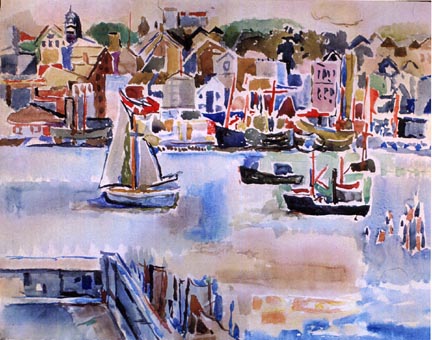
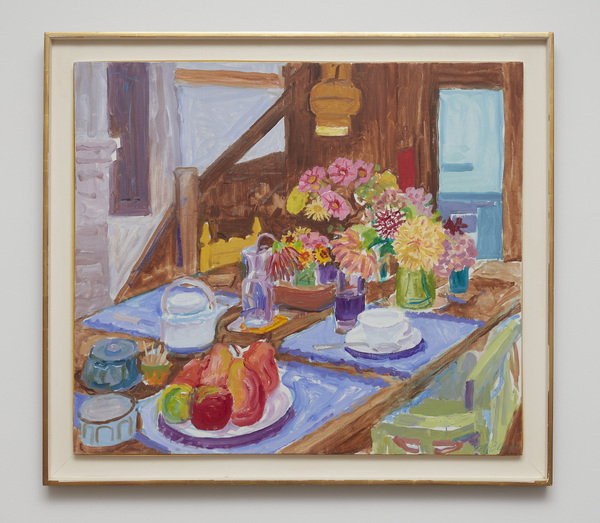
The May 1959 issue of ARTNews’s esteemed “X Paints a Picture” series recounted Blaine’s “brush poised, then striking and darting” as she painted “Harbor and Green Cloth I,” an arrangement on her studio table and looking out the windows to the harbor beyond, in her rented accommodations at Gloucester’s Rocky Neck during the summer of 1958. Later that year, New York’s Whitney Museum of American Art purchased her second attempt at painting the scene.
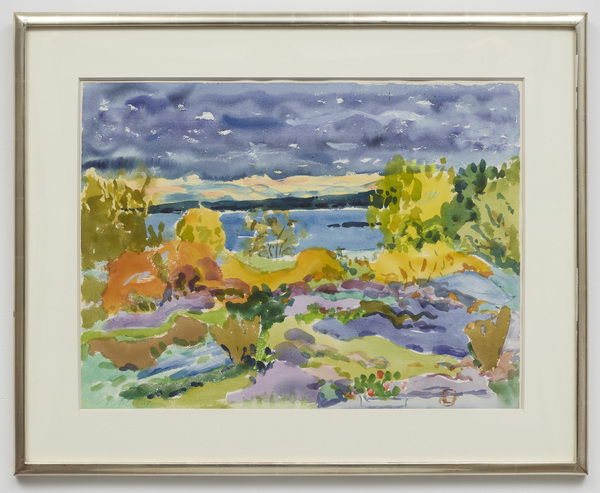
But while staying on the Greek island of Mykonos in 1959, Blaine contracted polio. Returning to the U.S., she was hospitalized for eight months–five of them confined inside an iron lung. Polio left her in a wheelchair and unable to lift her right arm to an easel. So she taught herself to paint oils with her left hand and, following surgery, relearned to use her right hand to paint watercolors on flat surfaces.
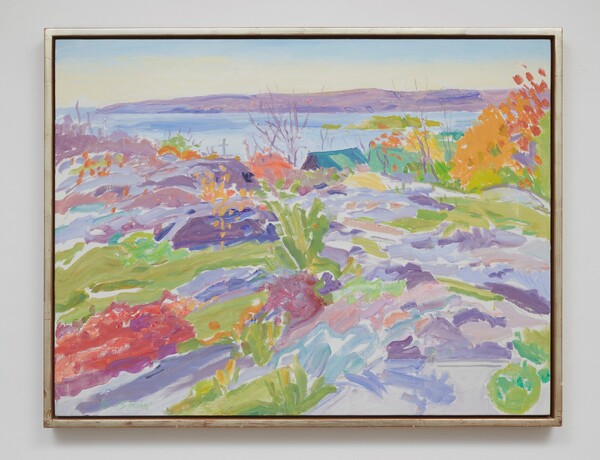
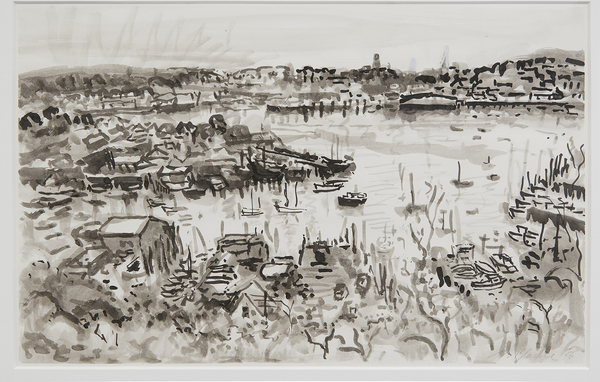
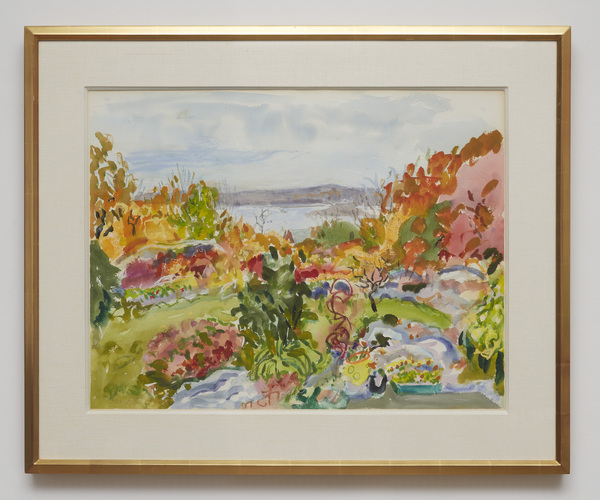
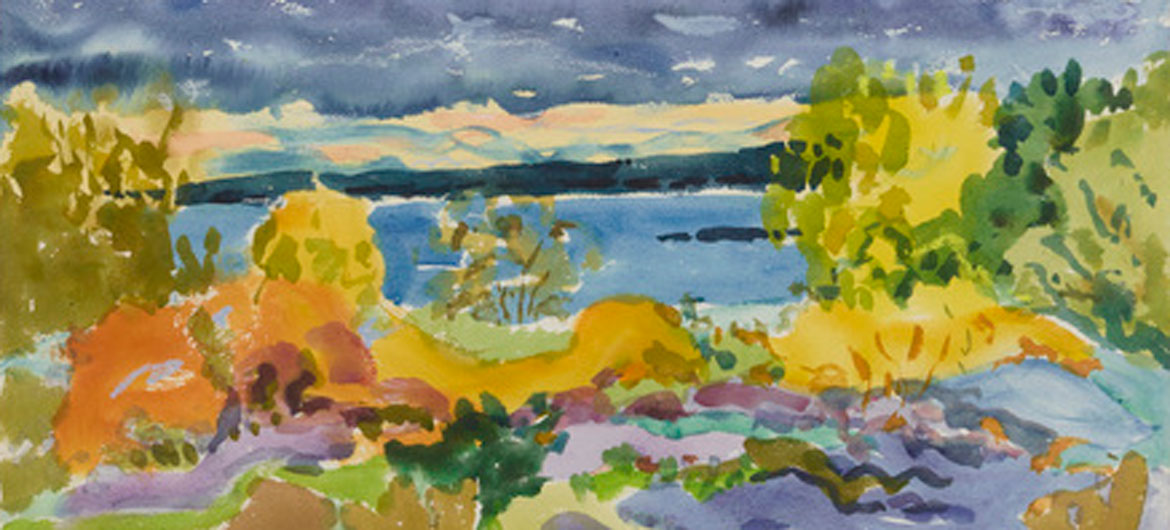
The exhibition “Nell Blaine: Gloucester Harbor and Other Works” at New York’s Tibor de Nagy Gallery from March 14 to April 18, 2026, featured her signature floral still-lives, interiors and Gloucester landscapes from the mid-1950s to the 1990s.
Blaine (1922–1996) arrived in New York City in 1942 to study with Hans Hofmann. Late that decade, she transitioned from hard-edged abstraction to a loose, brushy, colorful realism inspired, in part, by Pierre Bonnard. Gloucester, which she first visited in the summer of 1943, became one of her central subjects. “Recalling that period as ‘magic and productive,’ Blaine was so charmed by the maritime life that she eventually purchased a home there,” Tibor de Nagy reports. “She maintained a dual residence, spending summers and autumns in Gloucester while remaining a fixture of the New York City art world.”
If this is the kind of coverage of arts, cultures and activisms you appreciate, please support Wonderland by contributing to Wonderland on Patreon. And sign up for our free, occasional newsletter so that you don’t miss any of our reporting. (All content © Greg Cook 2026 or the respective creators.)