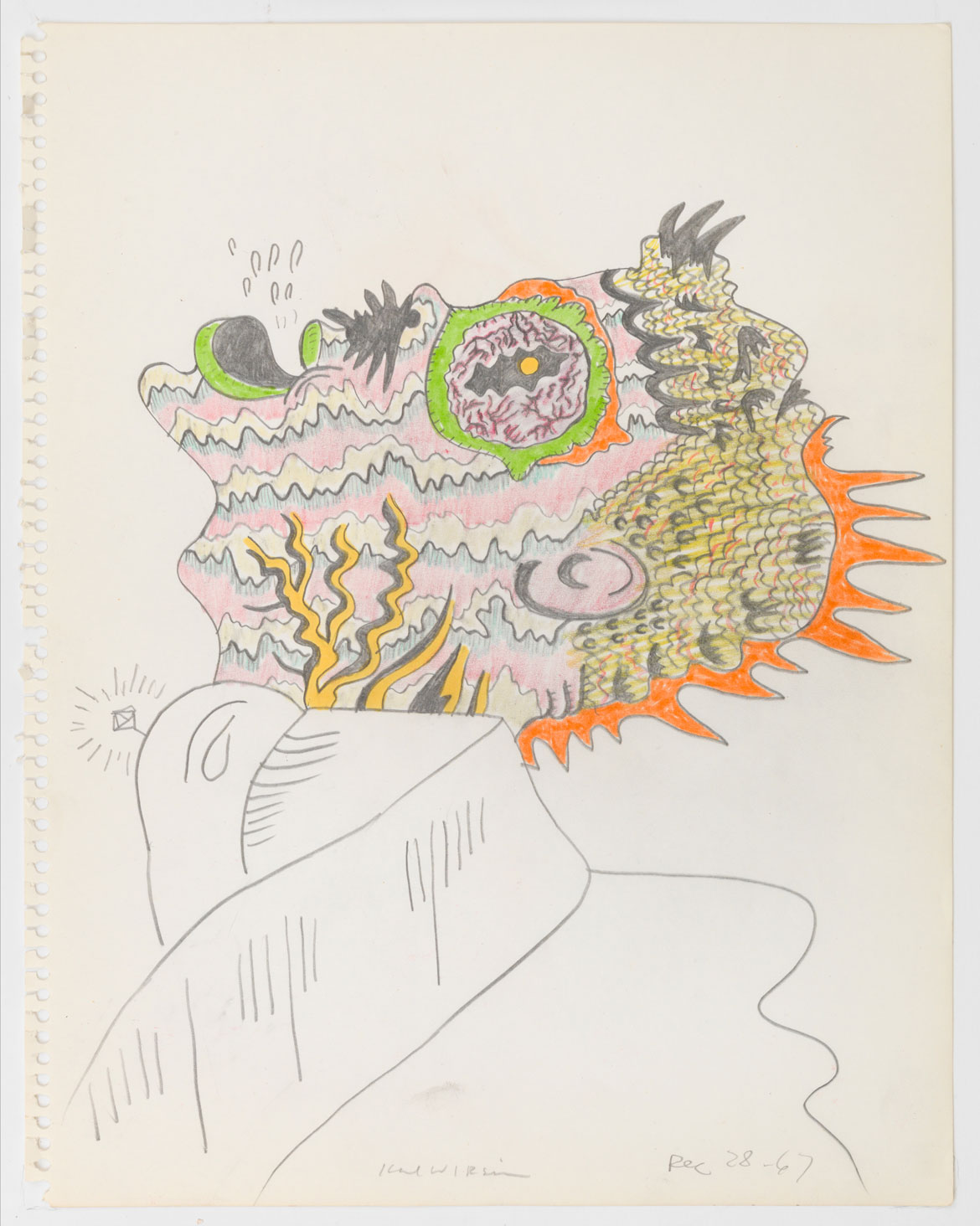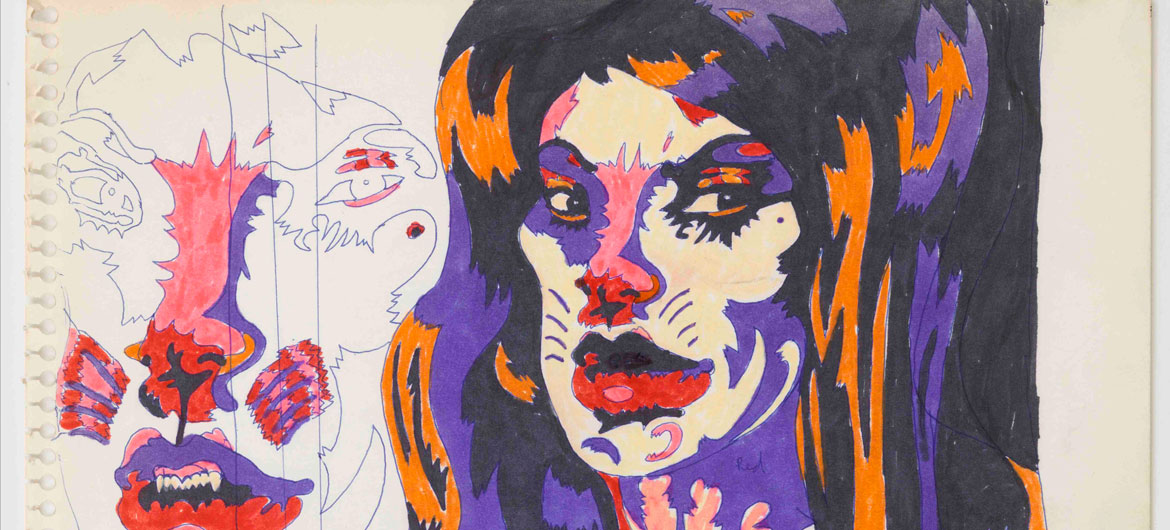
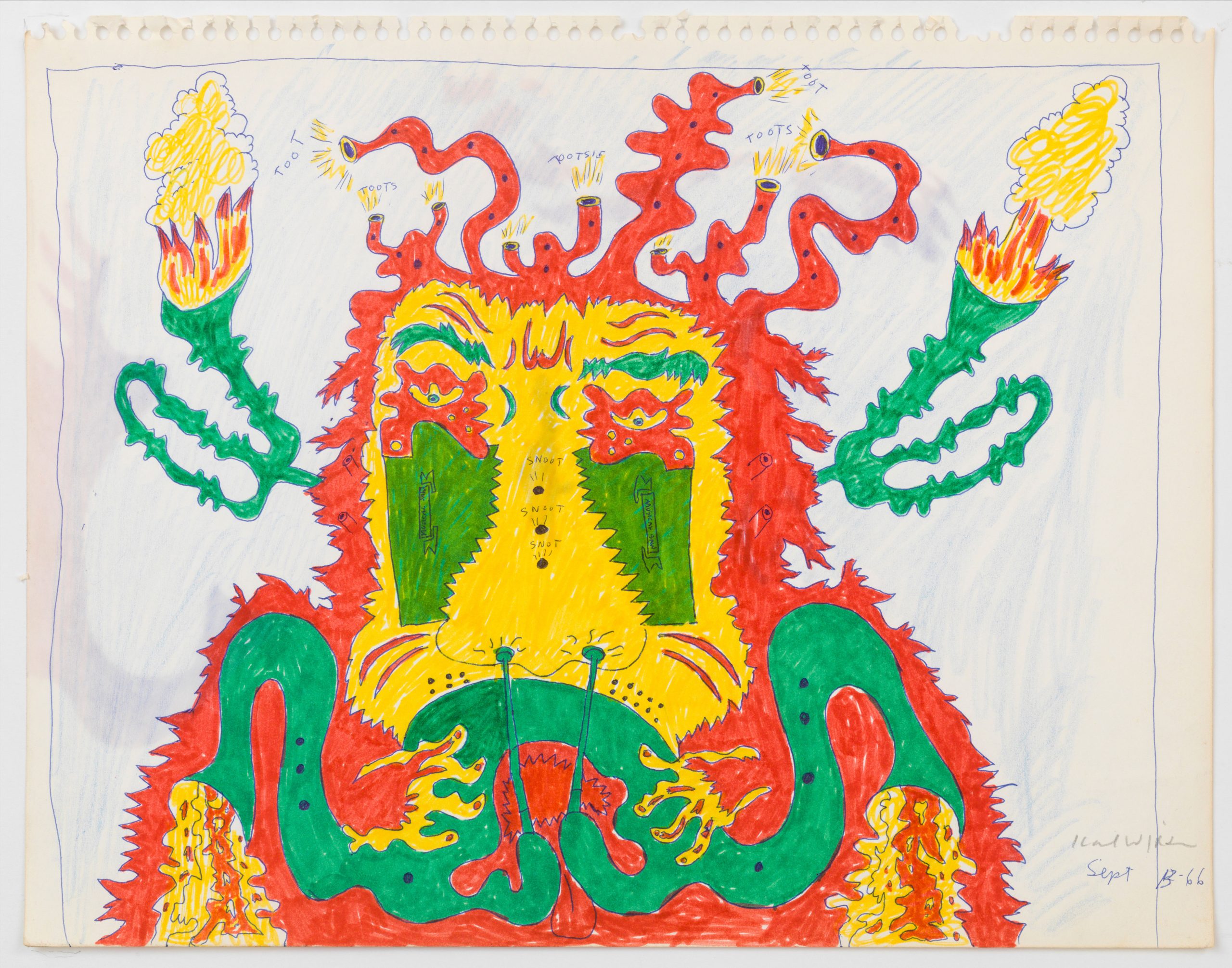
The late 1960s drawings of dazzling weirdo psychedelic Chicago artist Karl Wirsum create pop icons. His neon electric free-association visionary style is astoundingly unique, bringing to mind “Space Invaders” video game graphics of later decades, tattoos, comics drawn in some secret Dick Tracy code, melting monsters, Mexican street and indigenous art, folk art, the visionary landscape drawings that Black artist Joseph Yoakum created in a storefront on Chicago’s South Side, paint-by-numbers from the wrong side of the El tracks, jitterbugging Mesoamerican graphics.
Wirsum told Nicole Rudick for Hyperallergic in 2015 that my “drawings are more playful, and the paintings are more like washing dishes.”
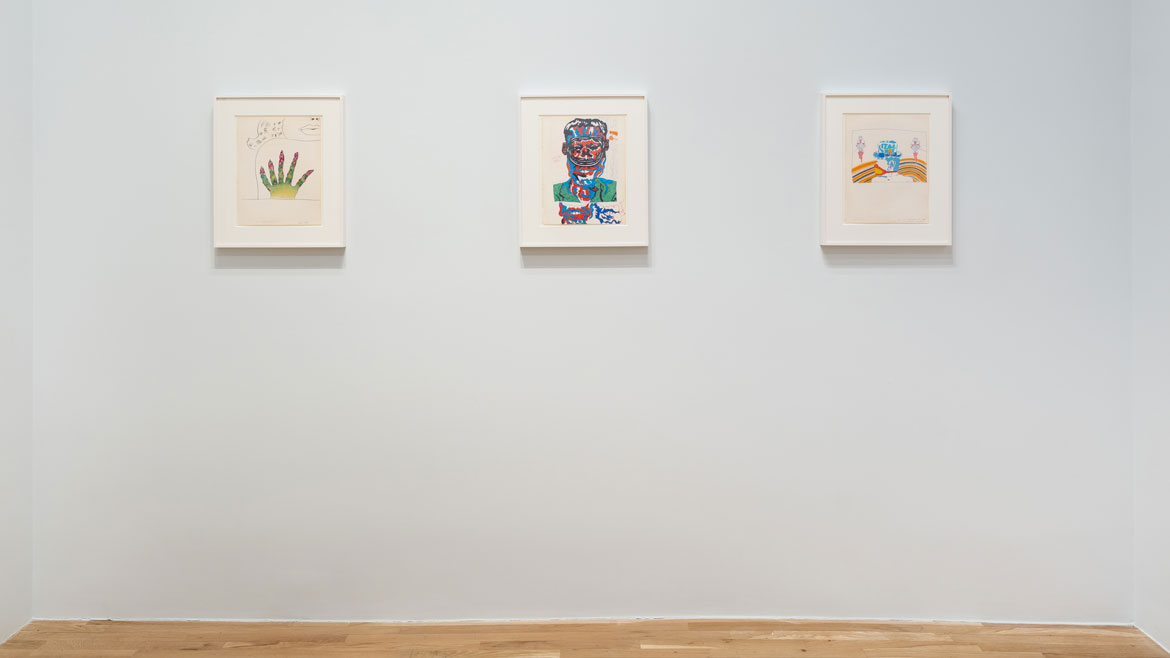
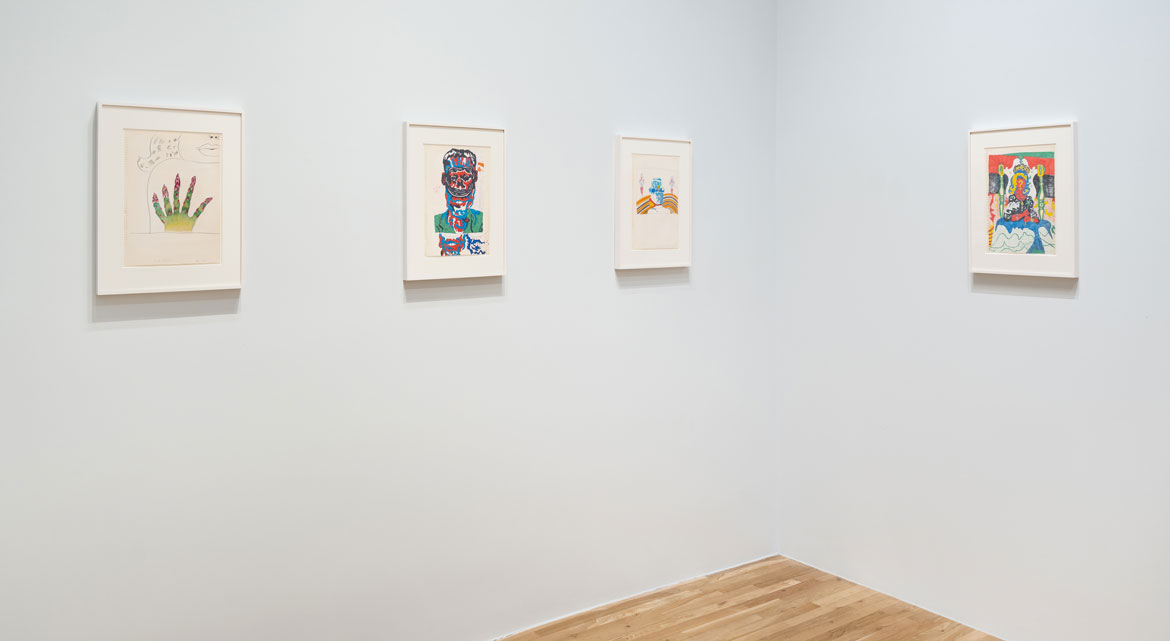
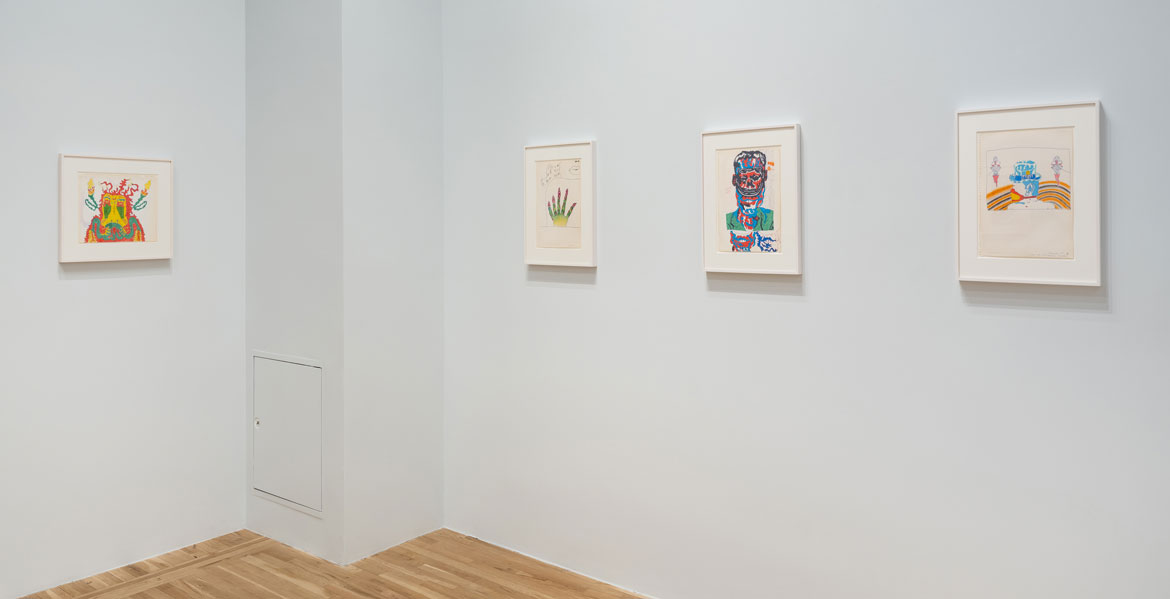
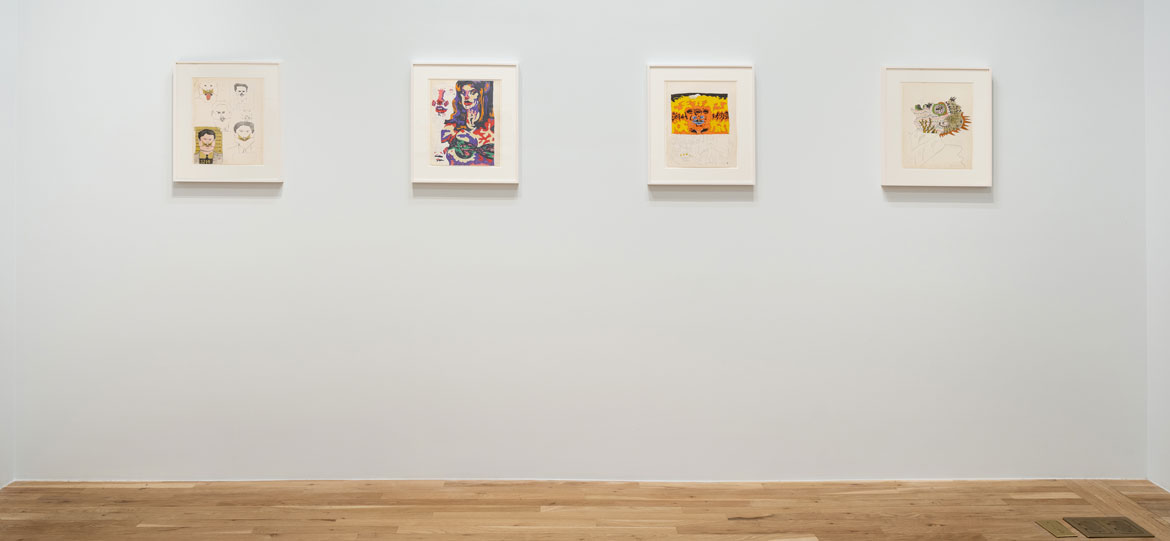
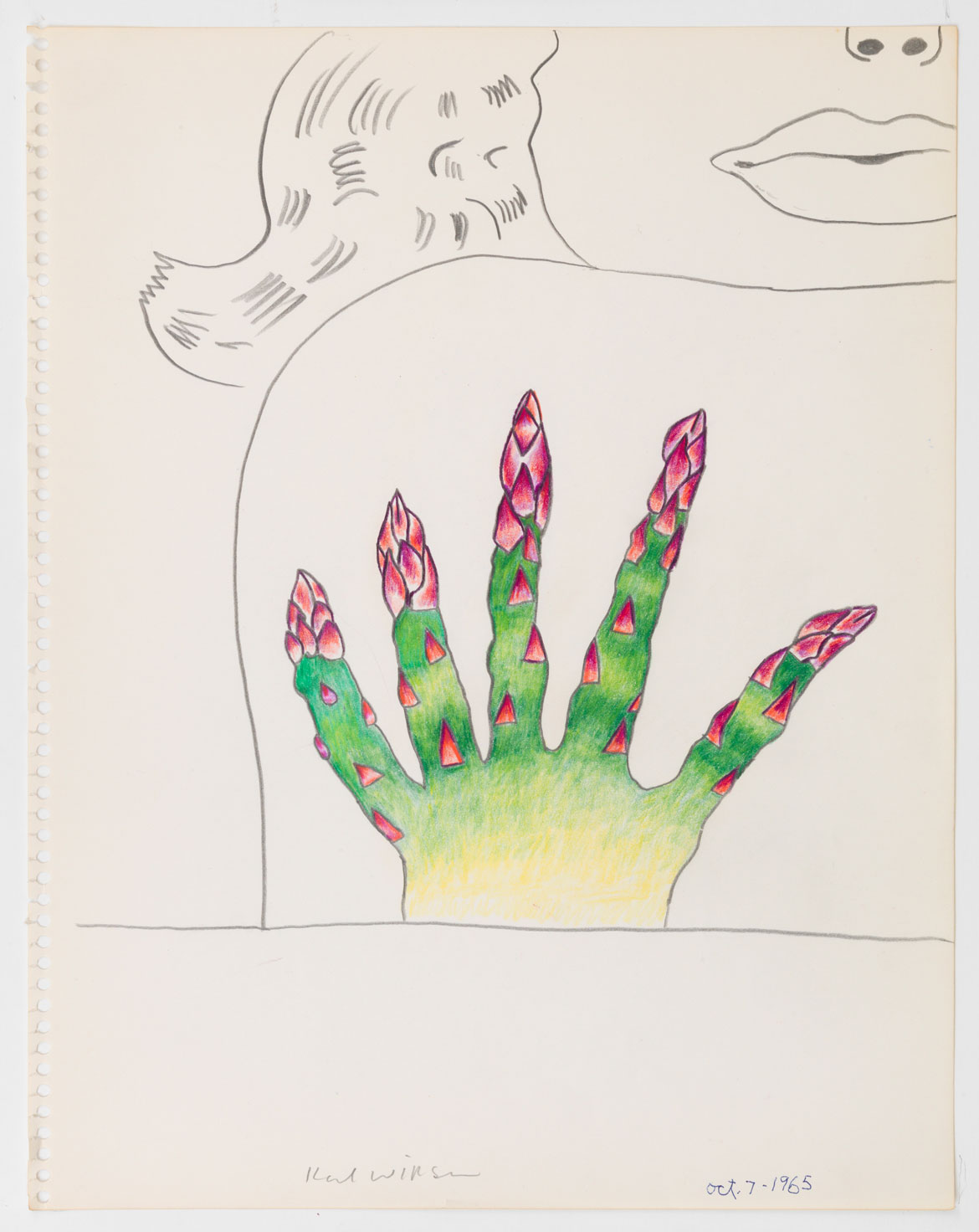
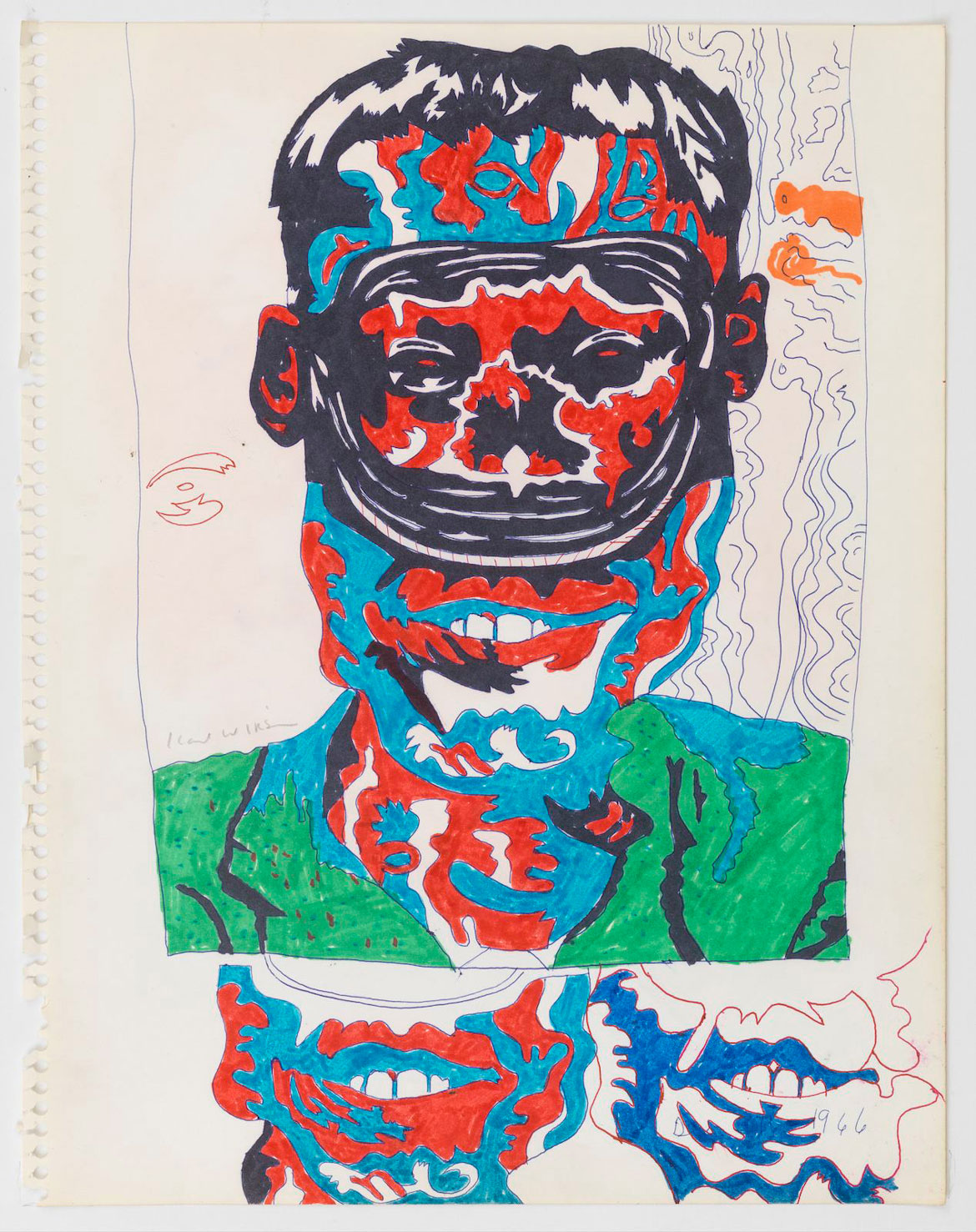
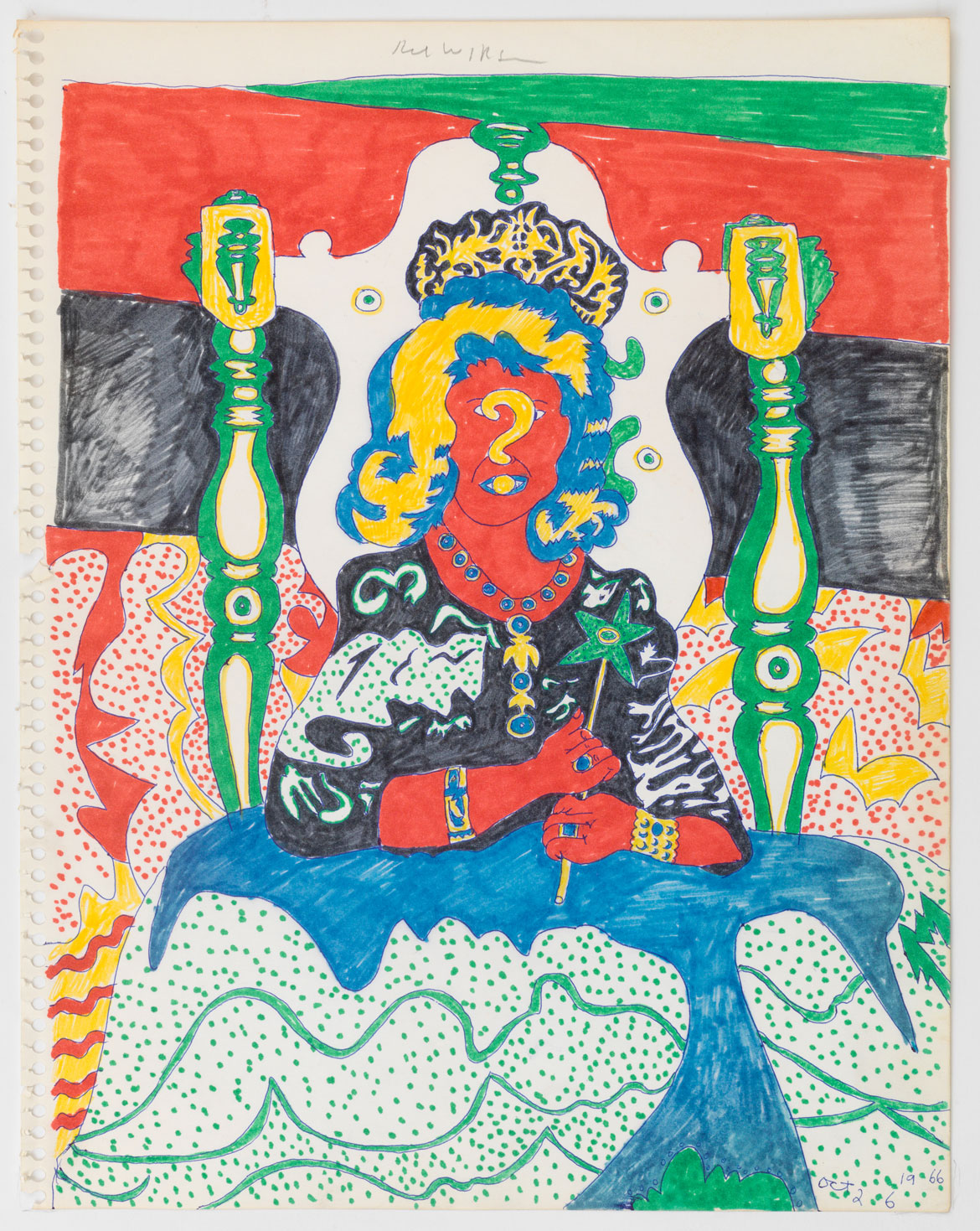
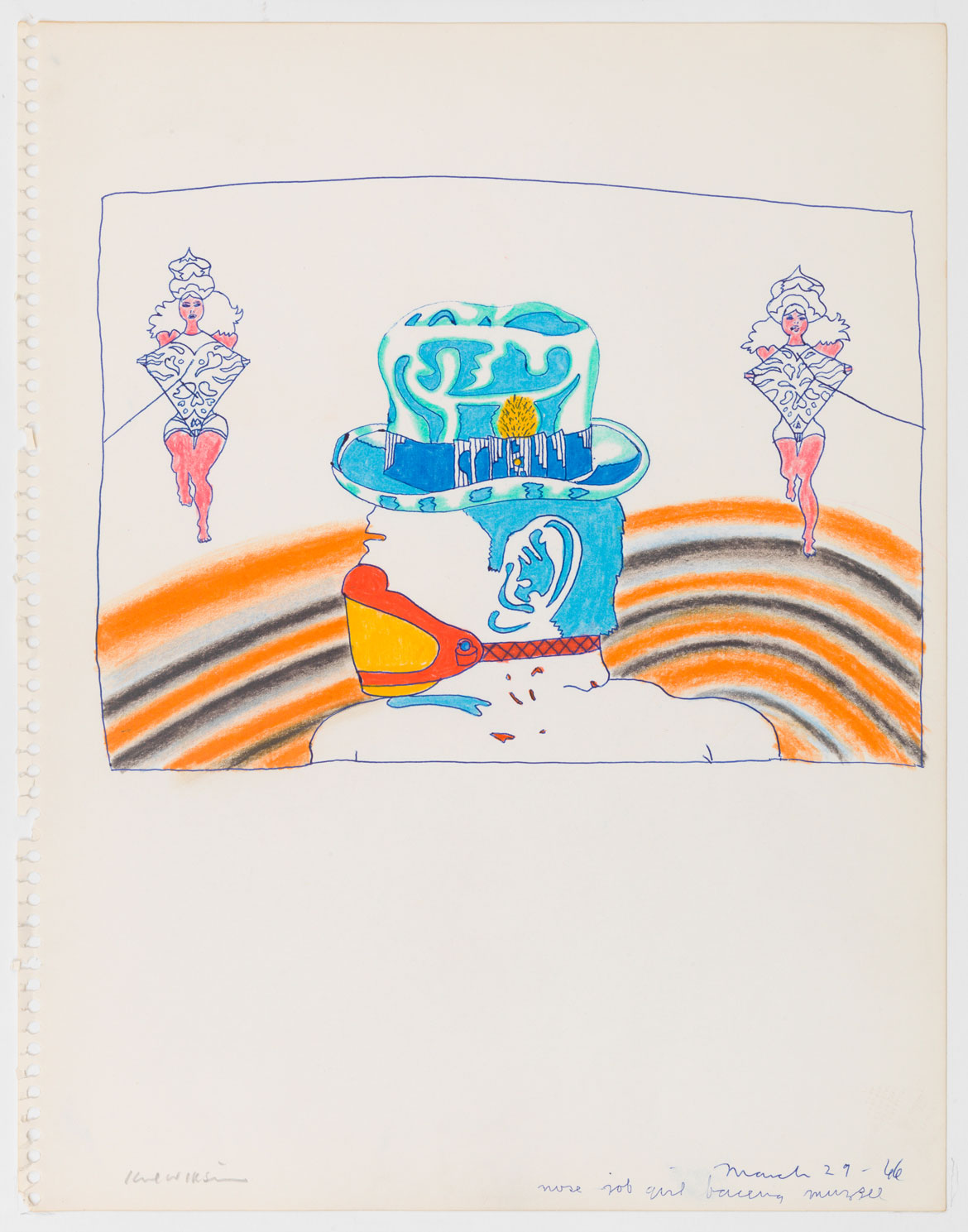
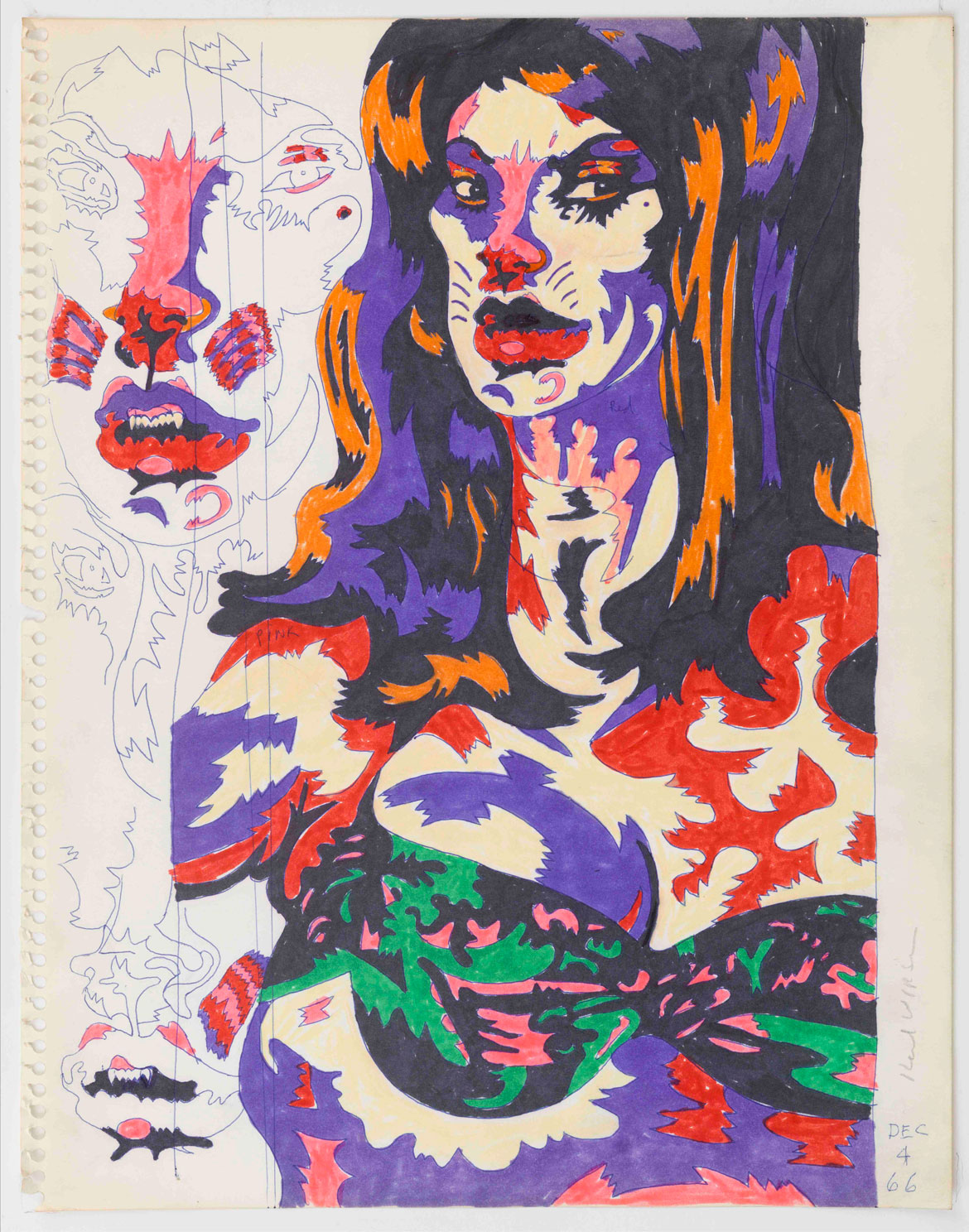
Nine 1960s sketchbook drawings by Wirsum are featured in the exhibition “Sideshow: Drawings from the Sixties” at New York’s Derek Eller Gallery from Nov. 21, 2025, to Jan. 10, 2026.
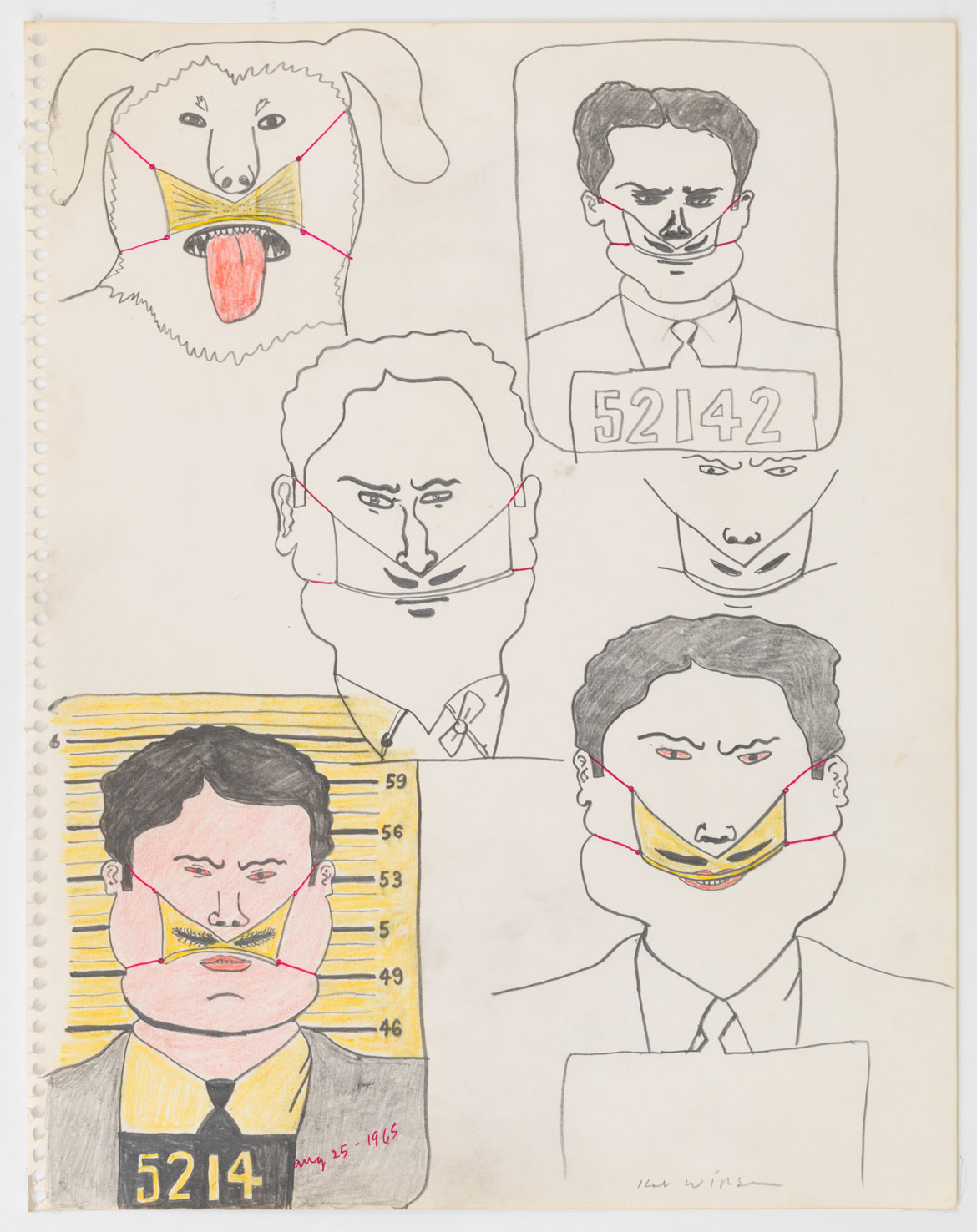
Wirsum rendered these drawings from 1965 to ’67 in pencil, ballpoint pen, maker, colored pencil, and ink on paper. He was fond of puns. The show includes his 1965 study for his painting “Got a Spare Gus?,” 1966 studies of a woman for his painting “Cat’s Me Ow” and a face for his “Doggerel Series,” and 1967 sketch for “Gargoyle Gargle Oil.” Like many of the artists in his circle, he painted with great care: “I preferred the more controlled application of paint as seen in the work of Kandinsky and Klee,” Wirsum told Hyperallergic in 2015. “I was interested in precision.”
Wirsum, (1939-2021), was born and raised in Chicago, and lived his whole life there except for some years in Sacramento, California, in the early 1970s when he felt Chicago had become “too pizzazzy.” He was orphaned at age nine when he was riding in a car with his parents, a German immigrant machinist and a seamstress, when a crash killed them and he escaped without a scratch. He was taken in by his parents’ best friends.
“Halloween has always been my favorite holiday,” Wirsum told Hyperallergic in 2015. “The people you see everyday are all costumed up, and carnivals, like Mardi Gras — that transformation of the everyday appealed to me.’
As a teen, he explored Chicago’s Maxwell Street flea market, finding treasures and hearing blues and R&B musicians, many of whom had arrived in Chicago as part of the Great Migration to escape the oppression and violence of the Jim Crow South.
Wirsum graduated from the School of the Art Institute in 1961, attending on a full scholarship, and began exhibiting alongside Jim Nutt, Suellen Rocca, Art Green, Gladys Nilsson, and Jim Falconer under the name Hairy Who? in exhibitions in Chicago, New York, San Francisco, and Washington, D.C., between 1966 and 1969. Their weirdo influence slowly spread across the land.
Wirsum had a quiet, kind, curious, sort of impish demeanor as a teacher when I studied painting with him at the School of the Art Institute of Chicago years ago. He kindly allowed me to publish some his drawings in my early art zines.
Wirsum and friends were part of a movement of psychedelic pop painting by white artists in the Hairy Who, Nonplussed Some and other Chicago Imagist white folks art gangs residing on Chicago’s North Side who banded together for group exhibitions at the Hyde Park Art Center on the South Side. Meanwhile the African-American collective AfriCobra was creating psychedelic socially-engaged art on Chicago’s South Side and struggling for attention. The white pop psychedelic artists—including Ed Paschke, Roger Brown, Chris Ramberg, Phil Hanson, Ed Flood, Ray Yoshida—drew inspiration from comics, burlesque shows, vernacular shop signs, folk art, Chicago’s Riverview amusement park, but unlike detached New York Pop artists, who mostly directly ripped off their commercial sources, the Chicago artists favored passionate invention, transforming their inspirations into their own new crazy language.
Wirsum is credited with the inspiration for the group’s name: Hairy Who. As the story goes, the gang had gathered at the home Nutt and Nilsson to brainstorm names for their 1966 Hyde Park Art Center exhibition, organized by gallery director and artist Don Baum. The artists got to talking about a local art critic on WFMT radio by the name of Harry Bouras, whom they found kind of silly. Wirsum didn’t know whom they were talking about and finally asked,”Harry who?” The rest agreed, “That’s it!”
If this is the kind of coverage of arts, cultures and activisms you appreciate, please support Wonderland by contributing to Wonderland on Patreon. And sign up for our free, occasional newsletter so that you don’t miss any of our reporting. (All content © Greg Cook 2025 or the respective creators.)
![Karl Wirsum, "Untitled [Study for Doggerel Series]," 1966, ink on paper. (Derek Eller Gallery)](https://gregcookland.com/wonderland/wp-content/uploads/2025/12/KW_5438SFWw.jpg)