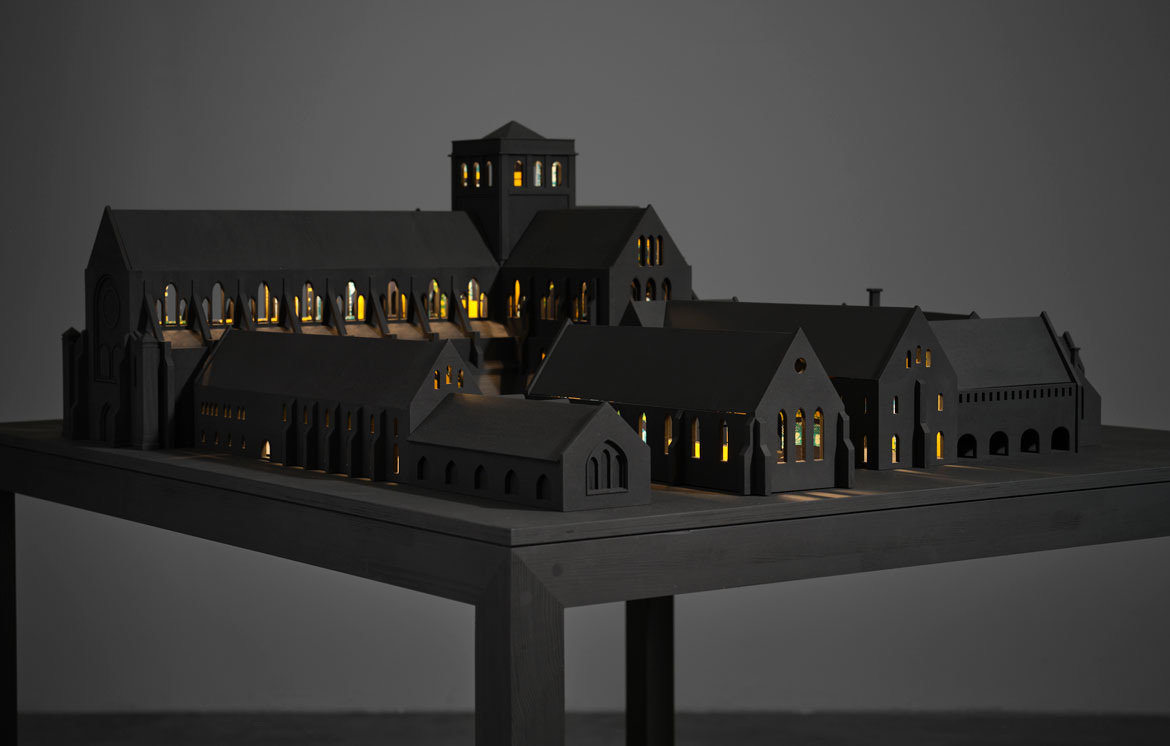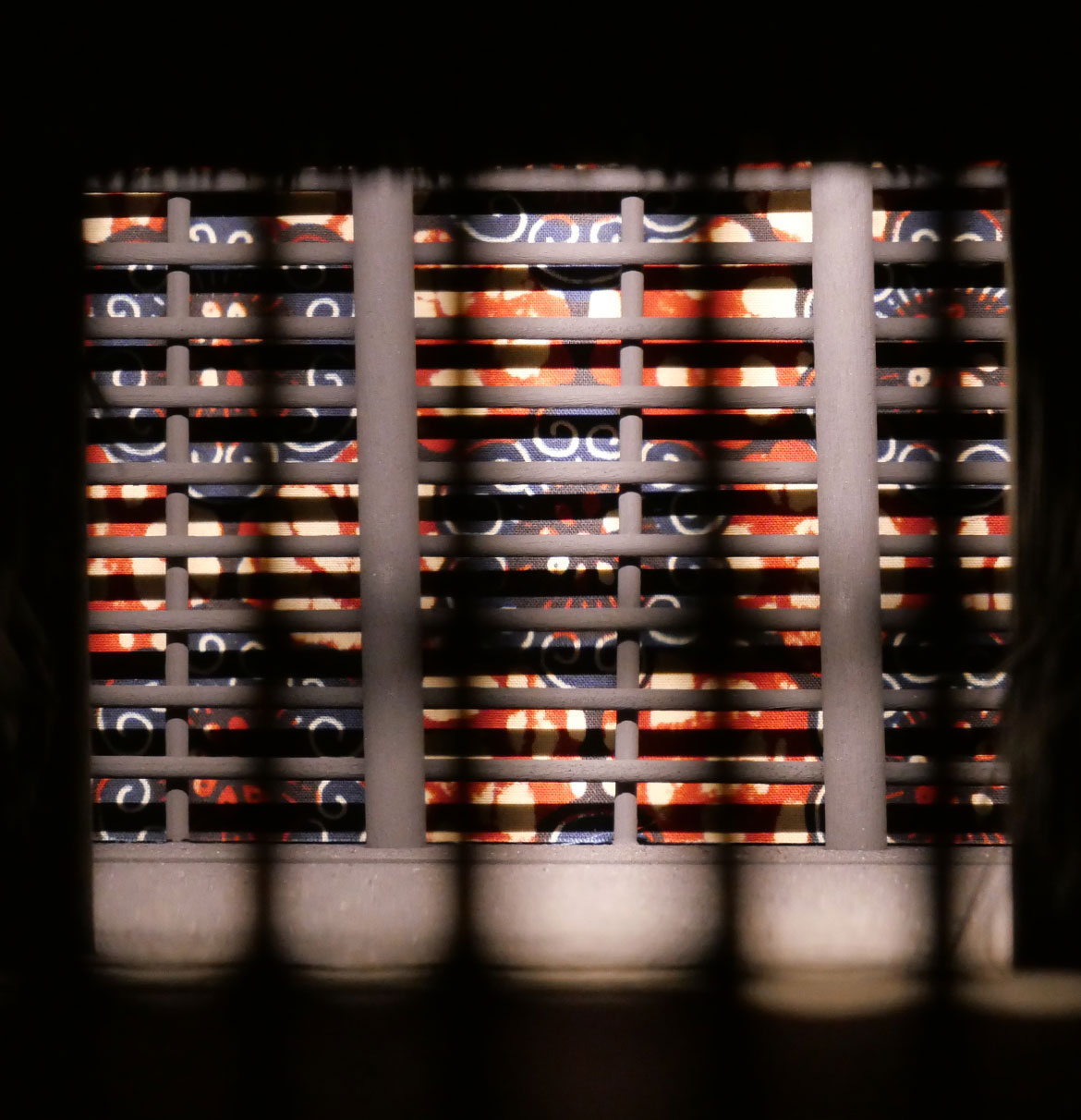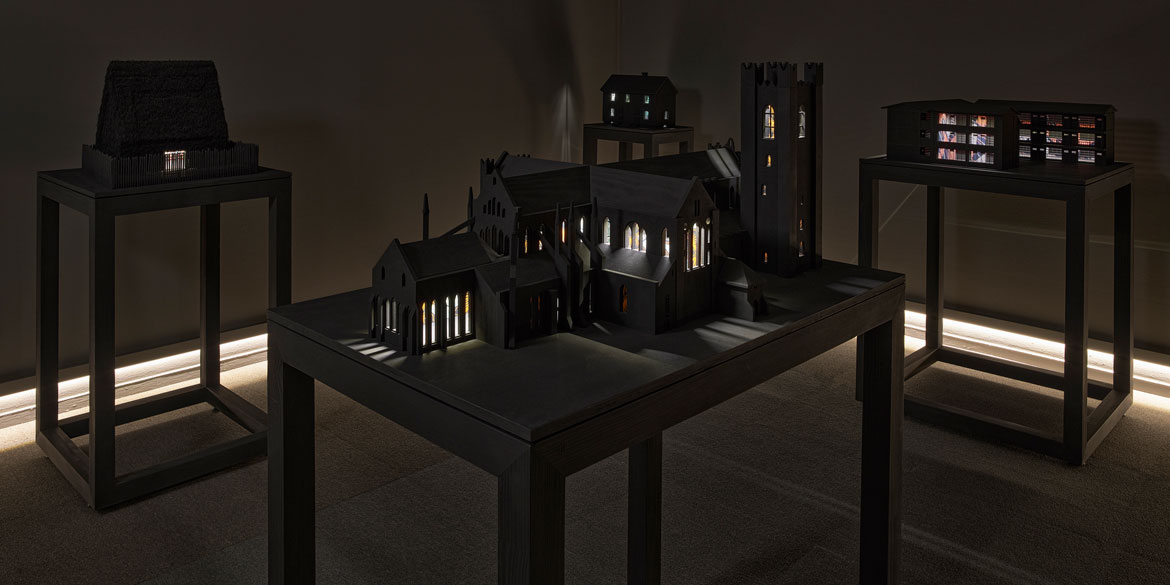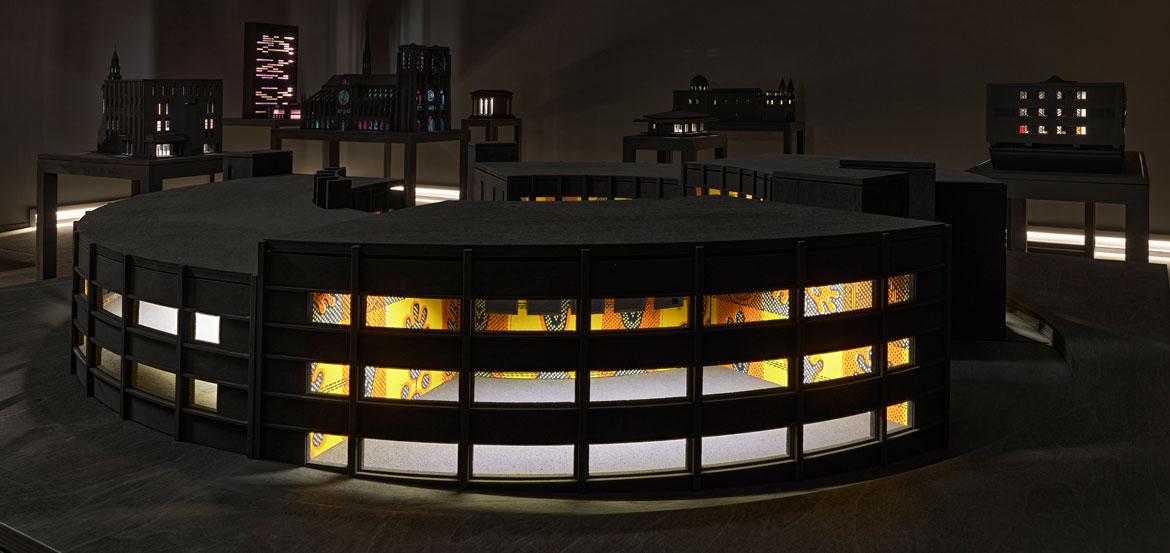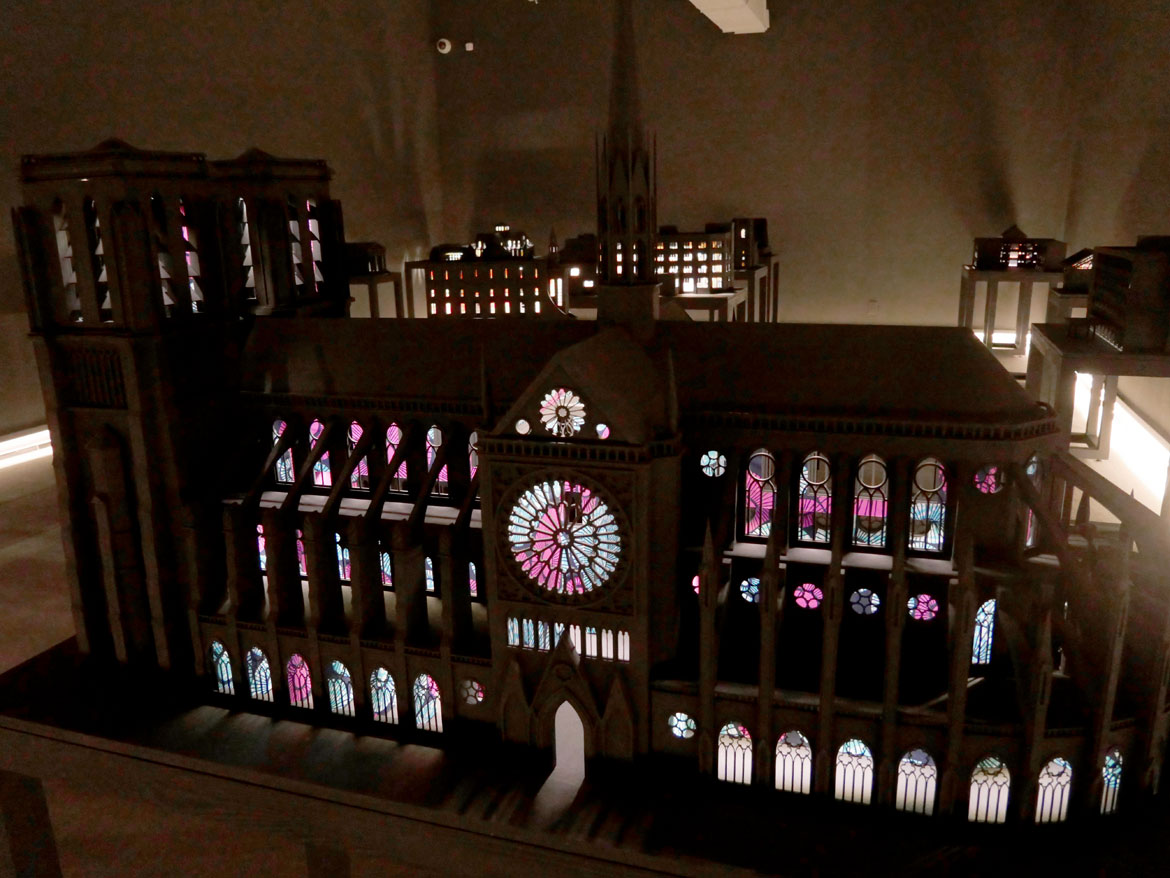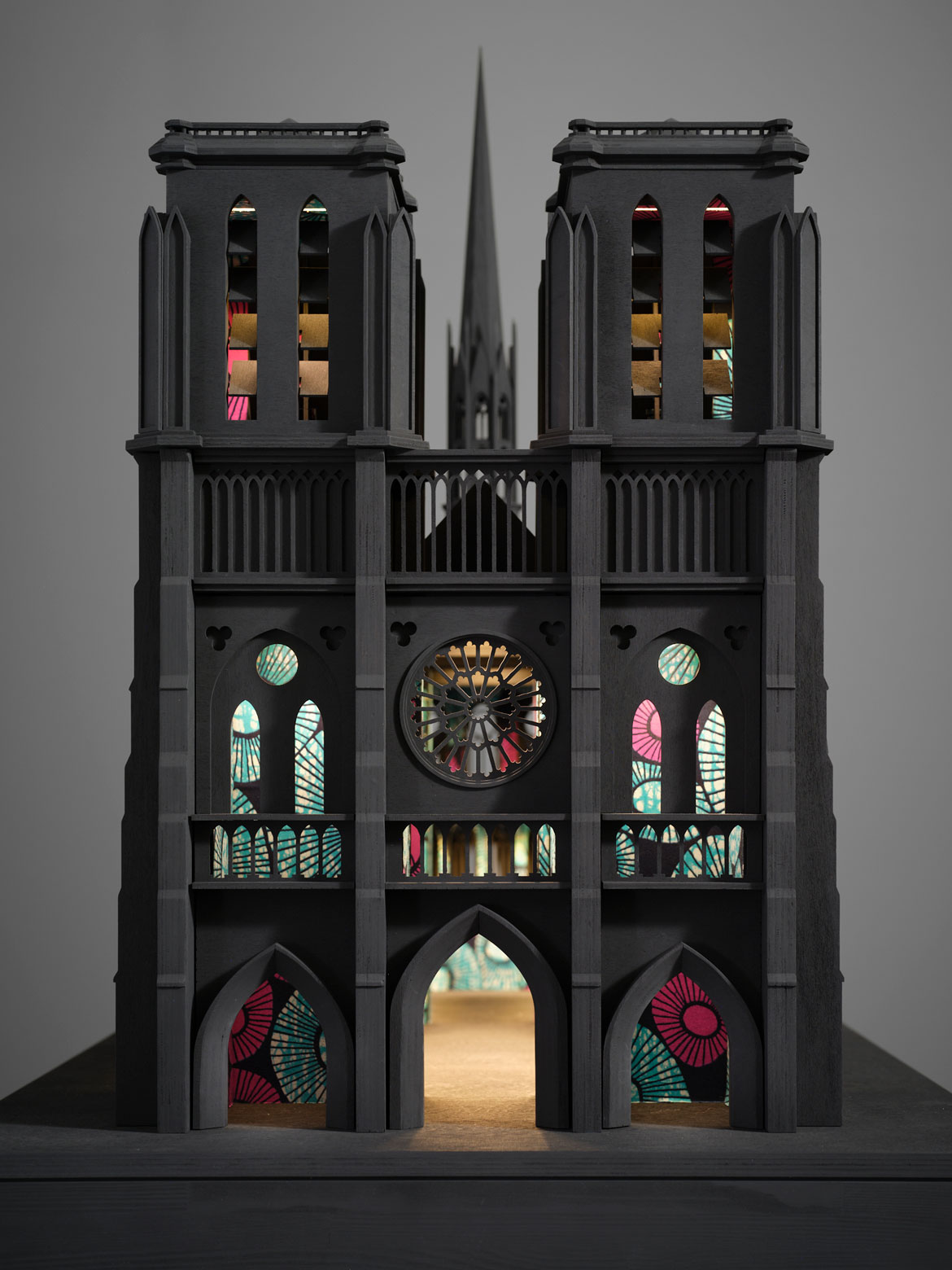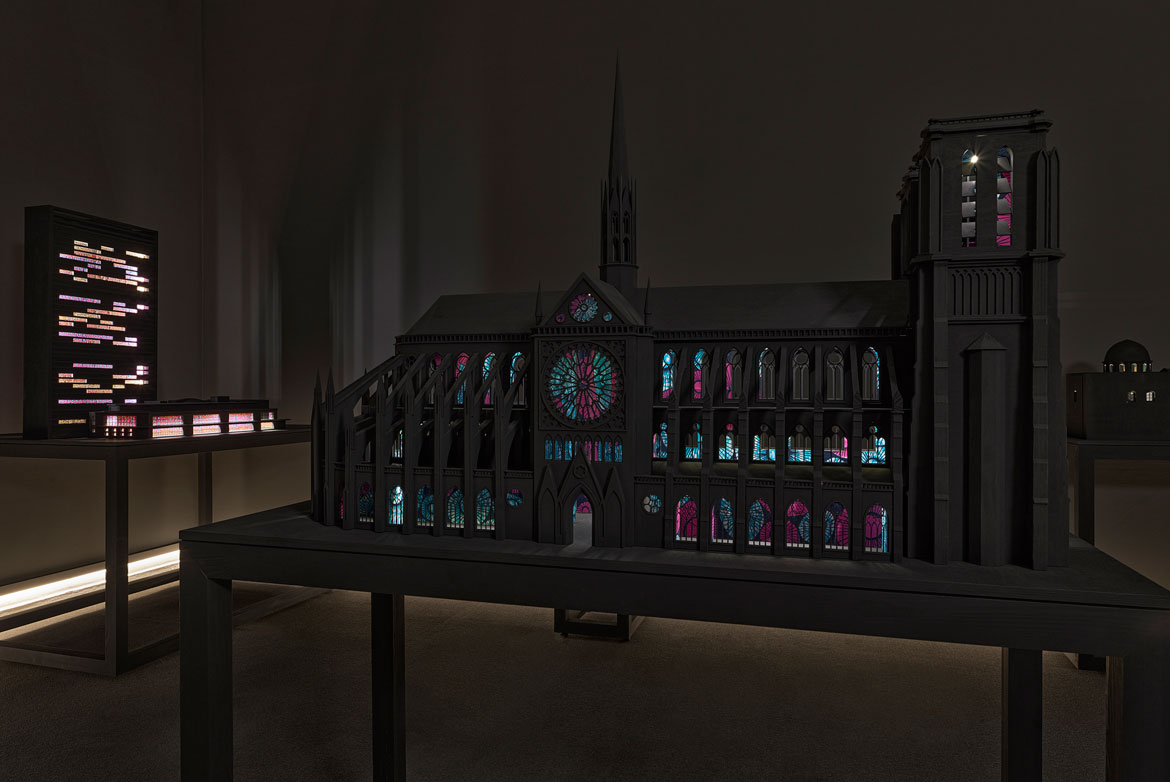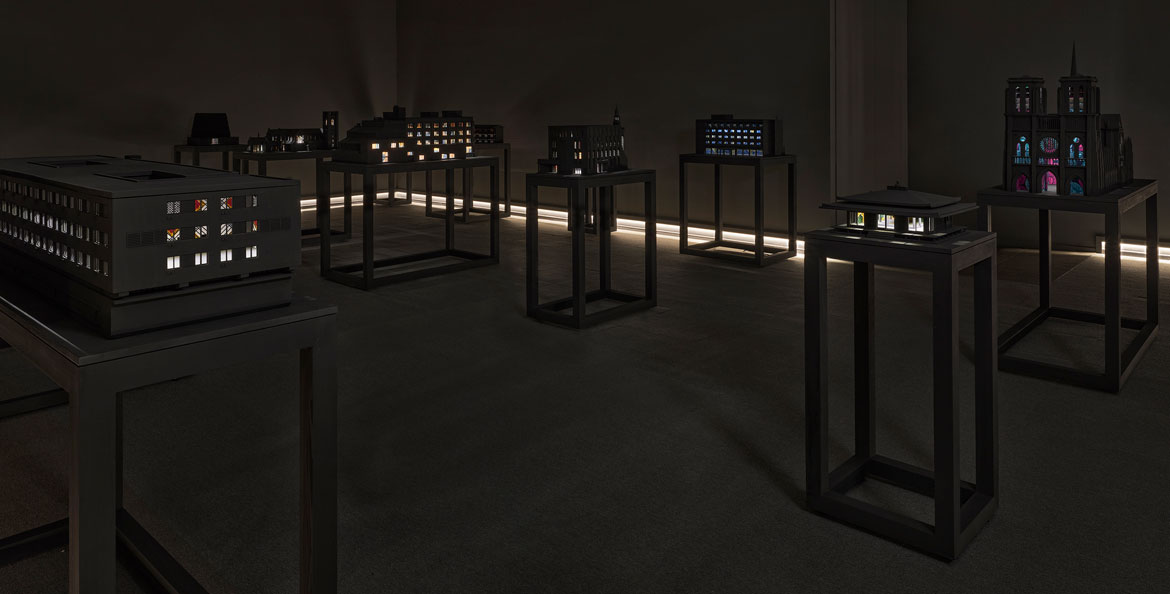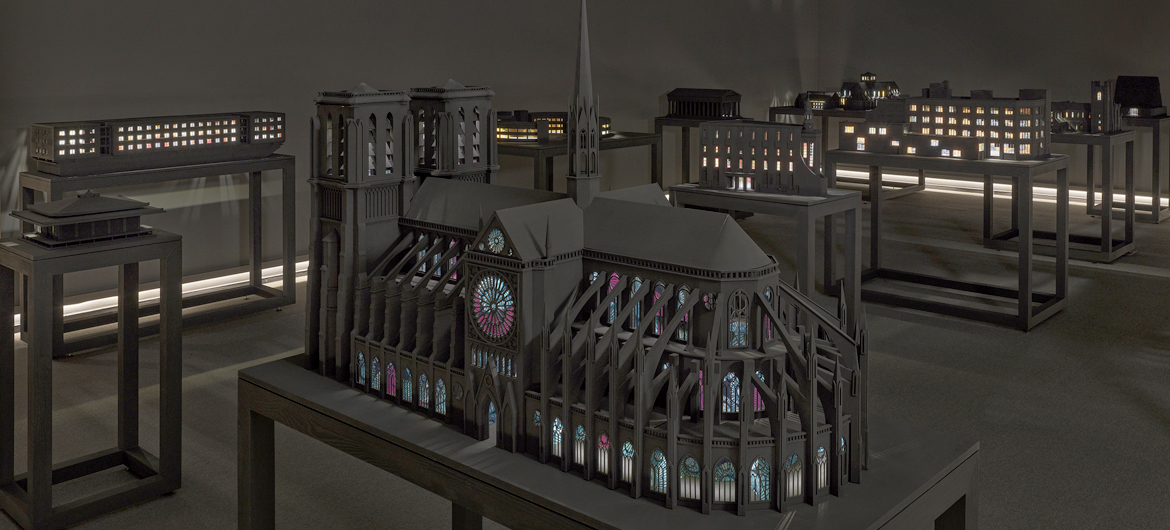
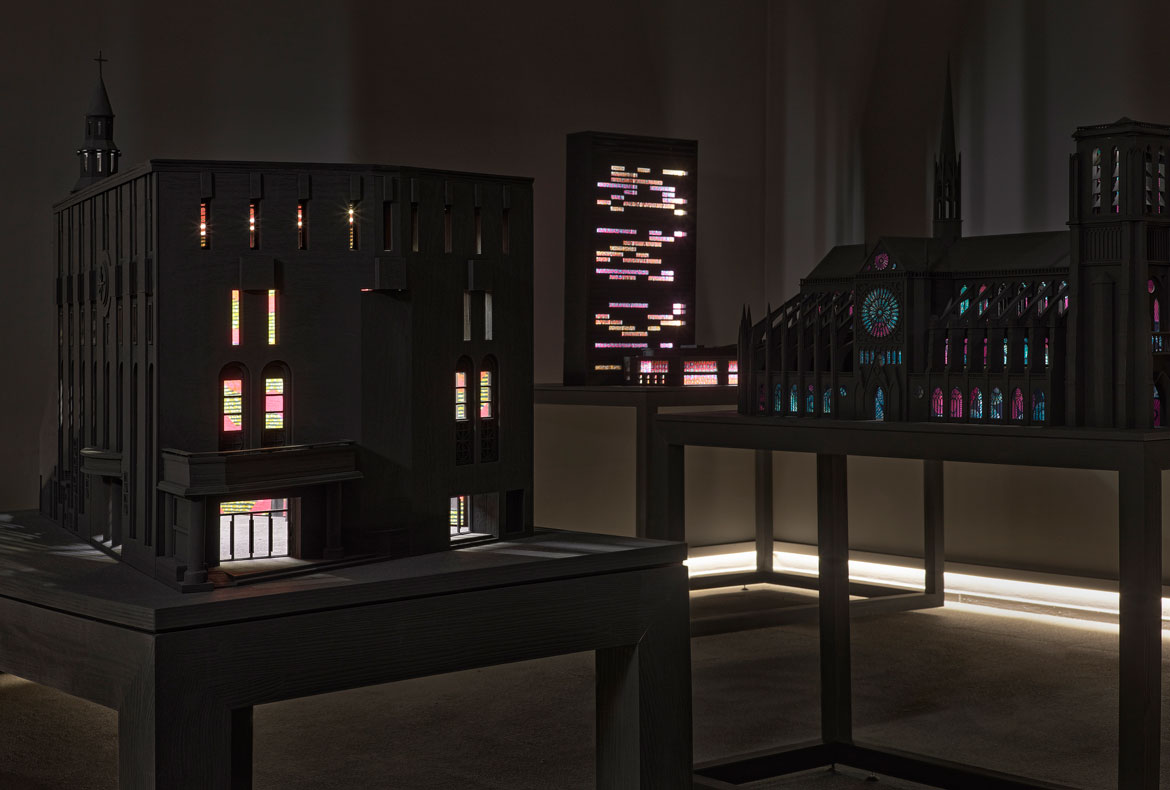
In a darkened gallery, black-painted model buildings glow from within. Looking in the tiny windows of 18 little buildings—Notre Dame cathedral in Paris, the United Nations skyscraper in New York, buildings from Syria, Mexico, Hawaii, Japan, China, Bangladesh and ancient Greece—one sees walls swirling with Shonibare’s signature colorful African textiles (Dutch wax textiles) that evoke vibrant possibilities within these spaces.
This 2024 installation called “Sanctuary City” is the sole focus of the exhibition “Yinka Shonibare: Sanctuary,” on view at Brandeis University’s Rose Art Museum in Waltham, Massachusetts, from Feb. 11, 2026, to Jan. 3, 2027. (This presentation was organized by Rose Director Gannit Ankori.)
Here is the Underground Railroad stop Peter Mott House in New Jersey; the Chiswick Women’s Aid Refuge, the first in Britain; Notre-Dame cathedral in Paris, which has “sheltered plague victims, offered refuge in wartime, and has endured as a symbol of hope and resilience for the French people”; the Buddhist temple Tōkei-ji in Japan which has “offered shelter to women fleeing domestic violence”; the Temple of Hephaestus in Athens, Greece, which “offered refuge for the enslaved, debtors, and the oppressed seeking asylum” during ancient times; and Hôtel des Mille Collines, which was a refuge for 1,268 Tutsi and moderate Hutu during the 1994 Rwandan genocide.
The model buildings are intended to represent “sites of refuge for persecuted and vulnerable individuals across centuries,” according to the exhibition website—enslaved people seeking freedom, refugees, persecuted religious sects, unhoused people, victims of sex trafficking, domestic violence survivors. It’s part of a career by the British-Nigerian artist, born in London in 1962, challenging the rapacious legacies of European colonialism.
“If you go around London in the past couple of years, you’ll notice that there are many, many more homeless people,” Shonibare told the UK’s London Evening Standard newspaper in 2004. “And then of course, we’ve had the war in Ukraine, the war in Syria. … As a result the refugee problem is multiplying and there are people dying at sea. So as a society, how do we deal with that issue?”
“‘Sanctuary City’ focuses on places of refuge, highlighting various sanctuaries that offer protection to those displaced by conflict,” Shonibare told the New York quarterly publication Whitewall in 2024. “The installation includes illuminated models of buildings that serve as sanctuaries, such as churches, religious buildings, and other institutions. This work underscores the current global refugee crisis and the importance of compassion and support for displaced individuals. It challenges the increasing hostility towards immigrants and refugees, prompting viewers to reflect on their responsibilities towards those seeking safety. By presenting these sanctuaries, the installation emphasizes the human stories behind displacement and encourages a dialogue about humanitarian aid and the ethics of refuge.”
“Tracing the concept of sanctuary from ancient temples to modern safe houses, ‘Sanctuary City’ reflects on the fragility of protection in a time of global displacement, rising nationalism, and humanitarian crisis,” the exhibition website explains. “The artist notes, shelter is “one of the most pressing political concerns right now,” prompting viewers to consider who is granted safety, who is excluded, and what responsibility societies bear in offering refuge today.”
If this is the kind of coverage of arts, cultures and activisms you appreciate, please support Wonderland by contributing to Wonderland on Patreon. And sign up for our free, occasional newsletter so that you don’t miss any of our reporting. (All content © Greg Cook 2026 or the respective creators.)
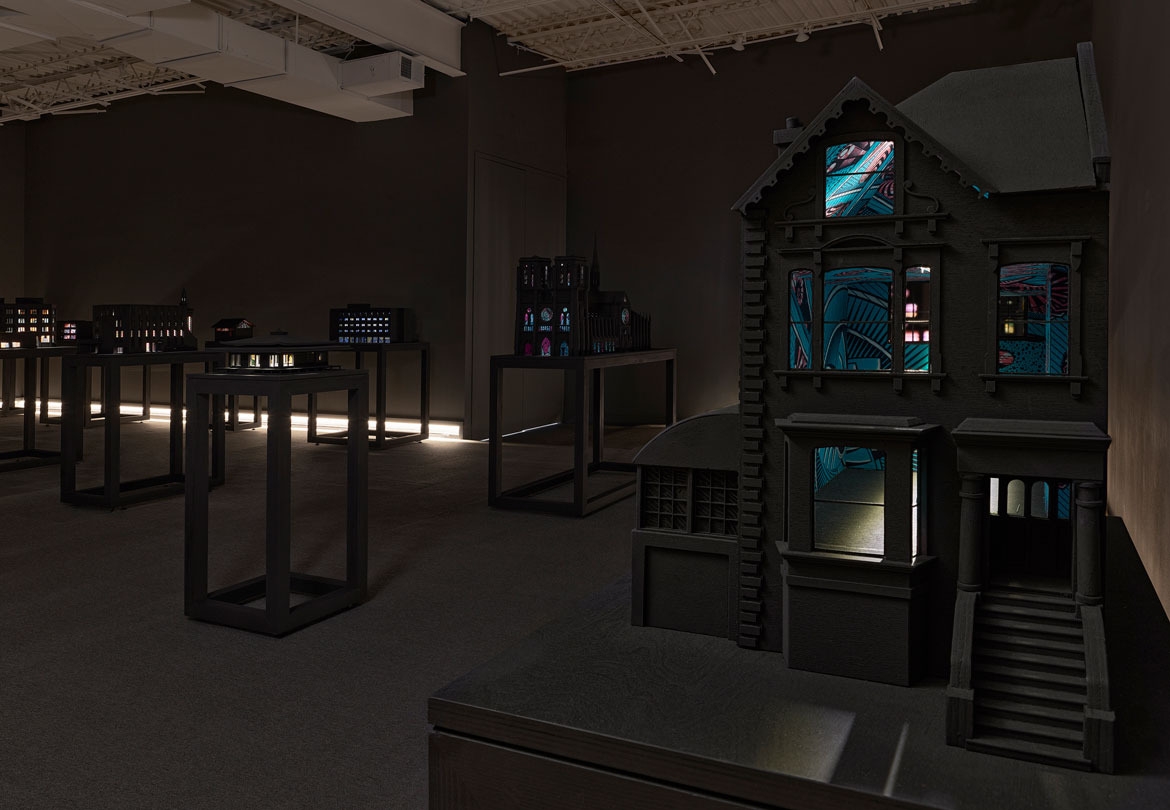
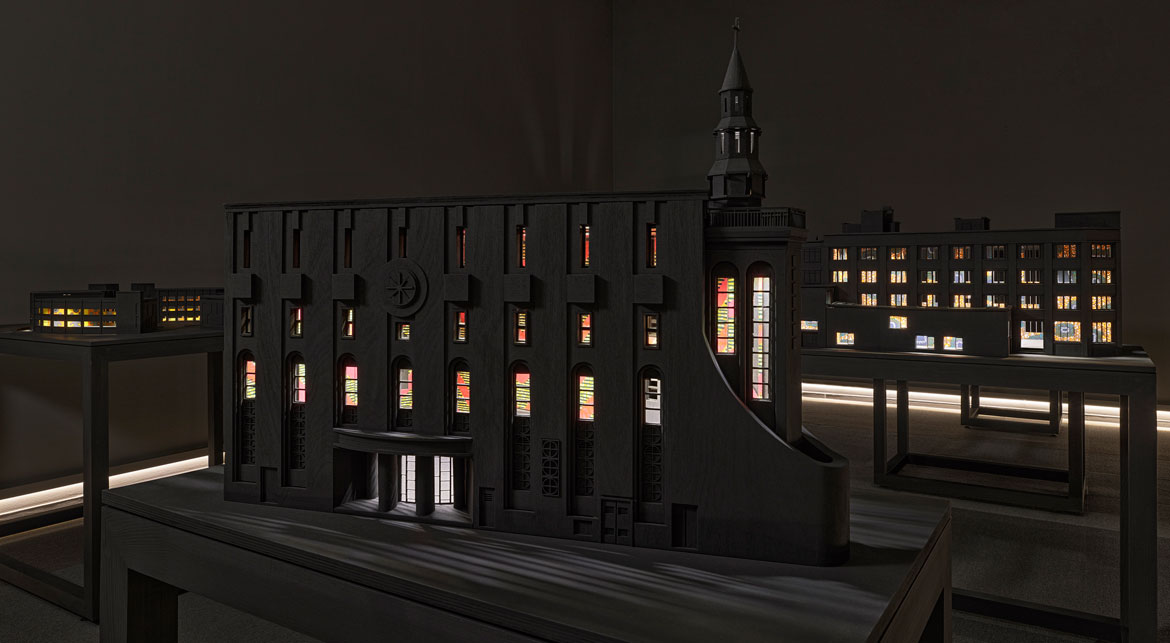
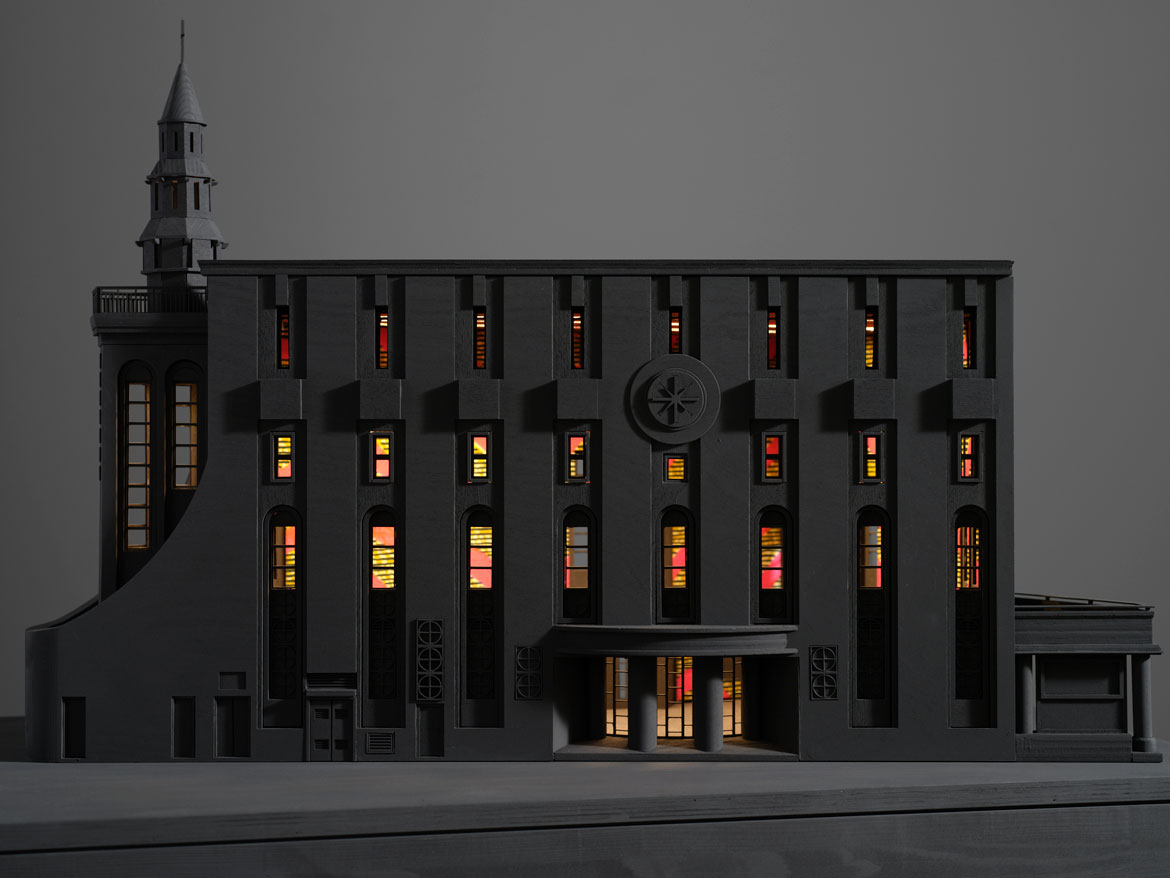
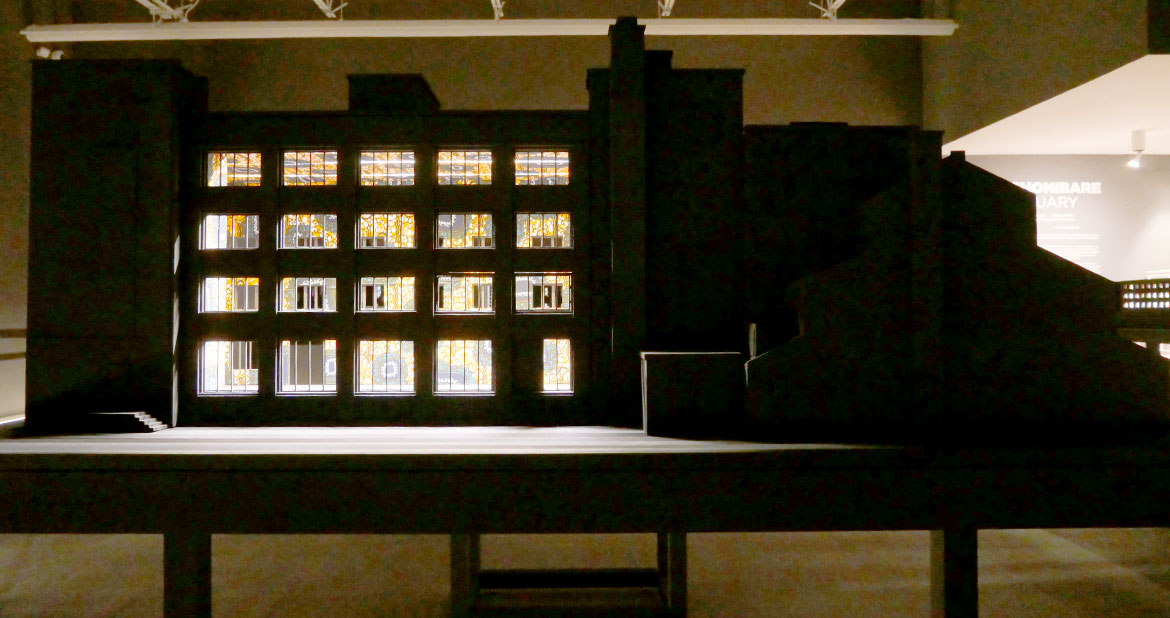
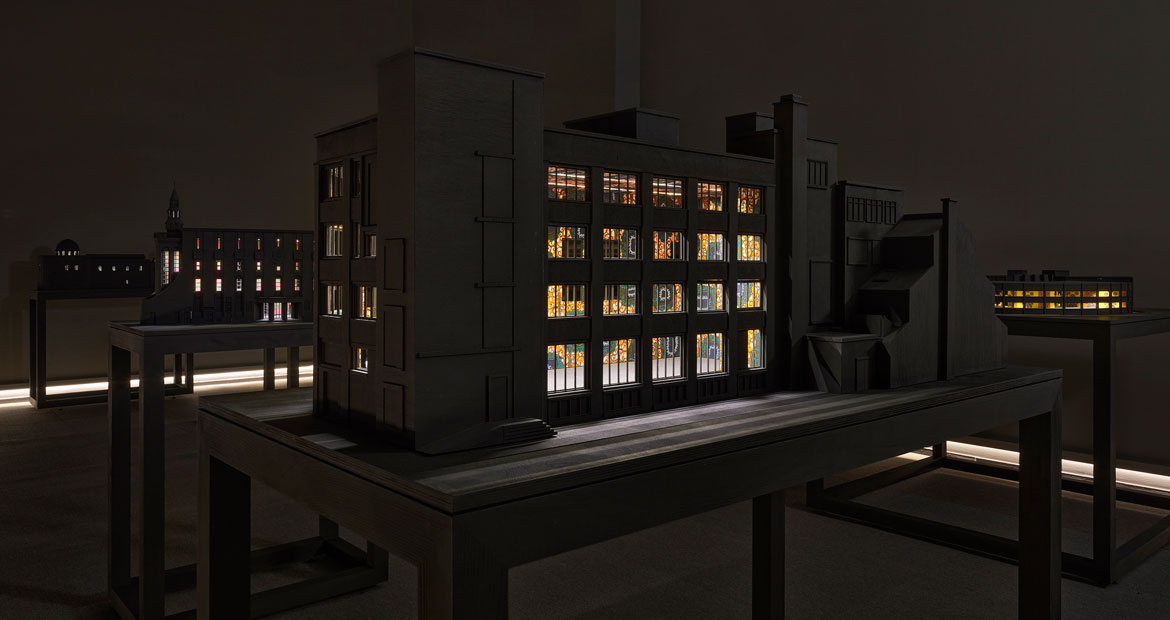
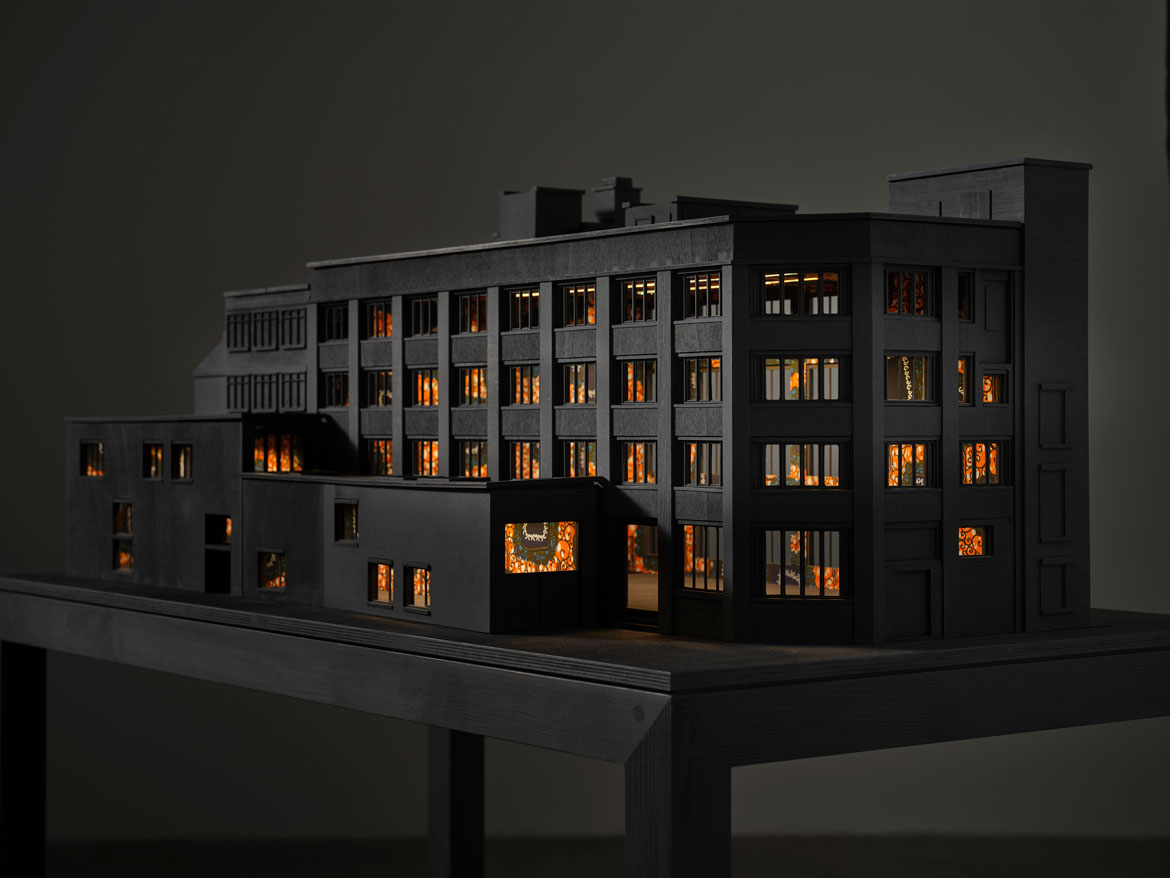
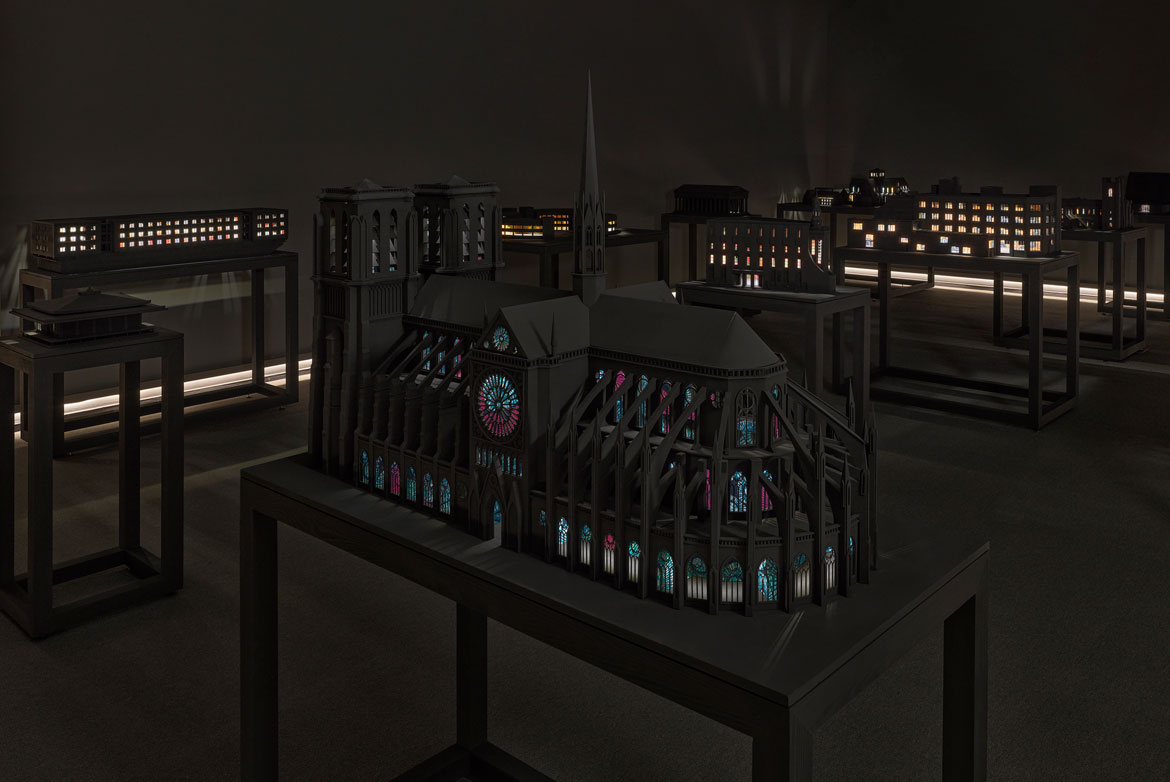
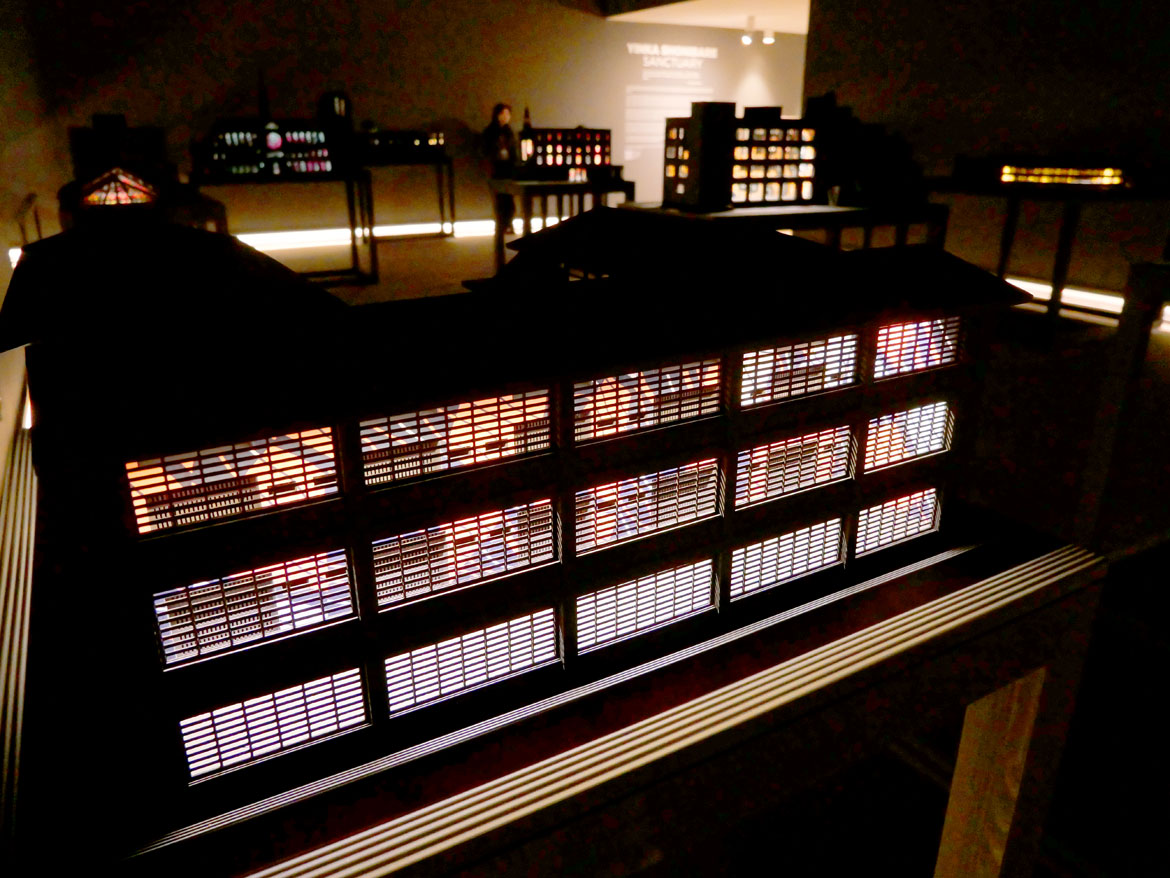


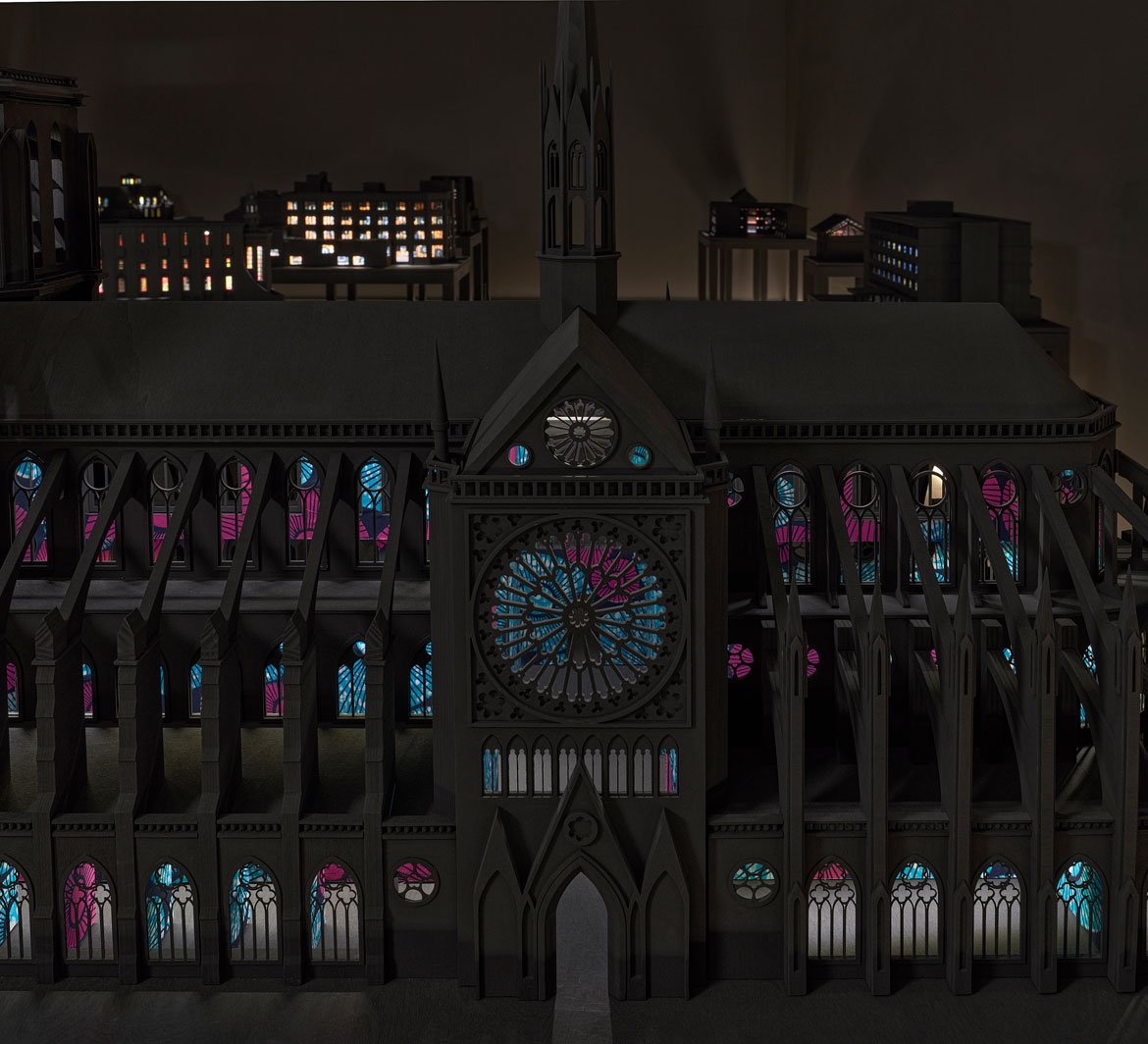


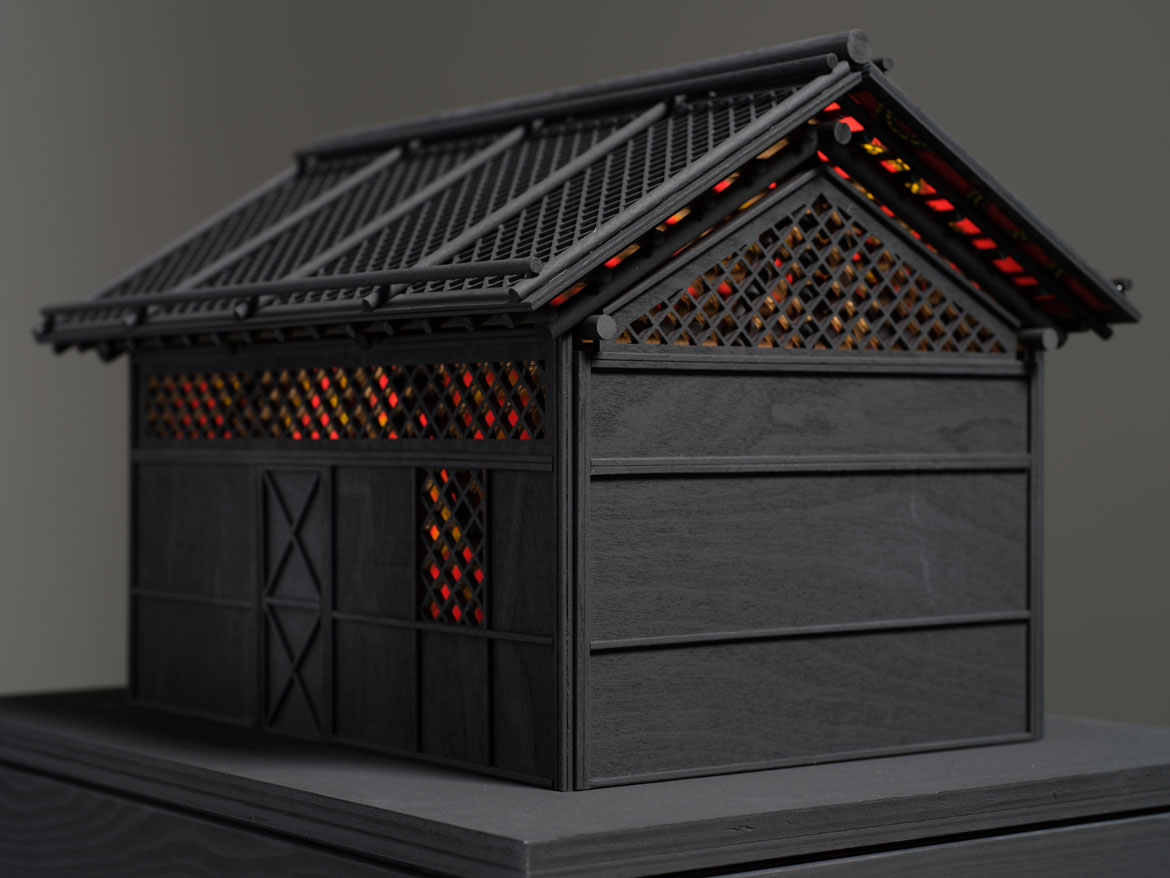
Society of Muslim Aid for Humanity) in Bangladesh from “Yinka Shonibare: Sanctuary” at Brandeis University’s Rose Art Museum, 2026.